B-Lines: Species on the Edge/RSPB Orkney,
Interpretation Board Illustration work
Location: Churchill Barrier 4, Orkney
Introduction
Species on the Edge is a collaboration of eight conservation organisations working with communities across Scotland’s Coast and Islands to save our rarest and most vulnerable species for the benefit of both the natural world and human population. The project is National Lottery Heritage Funded and consists of; Amphibian and Reptile Conservation, Bat Conservation Trust, Buglife, Bumblebee Conservation Trust, Butterfly Conservation, NatureScot, Plantlife and RSPB Scotland. There are 37 target species across Scotland, with nine identified for Orkney; Four birds (Arctic and Little Tern, Curlew and Lapwing), two plants (Scottish Primrose and Oysterplant); two Invertebrates (Great Yellow Bumblebee and Plantain Leaf Beetle) and the Bat species Common pipistrelle. Although some of these species are locally abundant across the Isles, they are nationally or globally under treat, some are ICUN-red data listed (such as Great Yellow Bumblebee) and others such as the Terns are under constant threat from Avian Flu. The Scottish Primrose, Oysterplant and Plantain Leaf Bettle are currently only found around Yesnaby and The Great Yellow Bumblebee (GYBB) is restricted to the northern coastlines of Caithness, Sutherland, Orkney and Shetland where its wildflower-rich open grassland can be found. It is a species associated with another globally rare habitat, the Machair due to its replacement with fast growing monospecies grassland for grazing and the loss of traditional crofting practices that have been in decline since the Highland Clearances, so reinstating these species-rich grasslands is as important as planting trees.
B-Lines are an imaginative and beautiful solution by Buglife to the problem of the loss of flowers and pollinators. The B-Lines are a series of ‘insect pathways’ running through our countryside and towns, along which they are restoring and creating a series of wildflower-rich habitat stepping stones. They link existing wildlife areas together, creating a network, like a railway that will weave across the UK landscape. I discovered the B-Lines project when I was asked to provide a link for a Creative Scotland VACMA application to link my proposed bikepacking project along the John Muir Way with my Illustration work, it seemed like a perfect way to combine illustrating pre-existing natural pollinator plant communities, with those being established through community work.
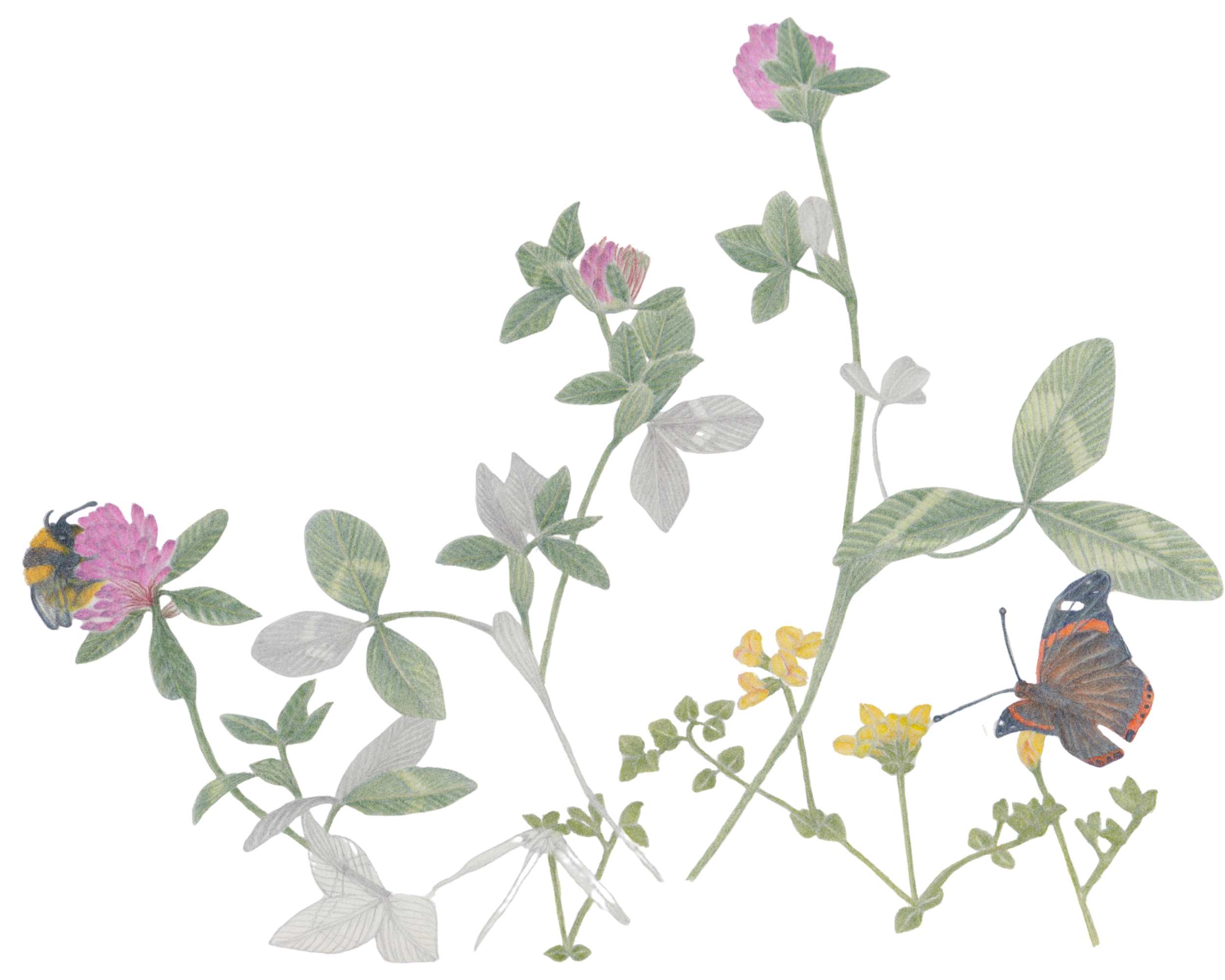
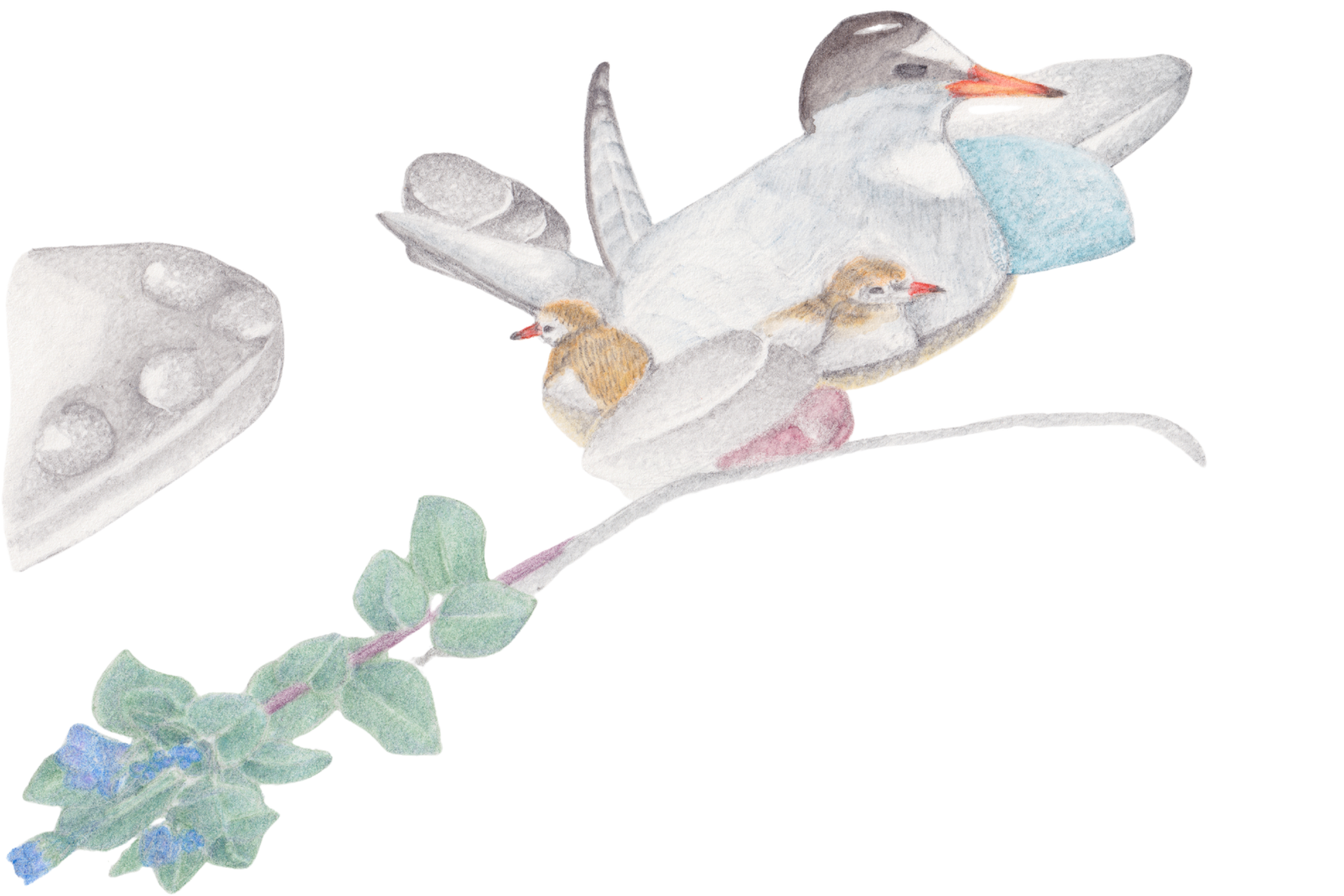
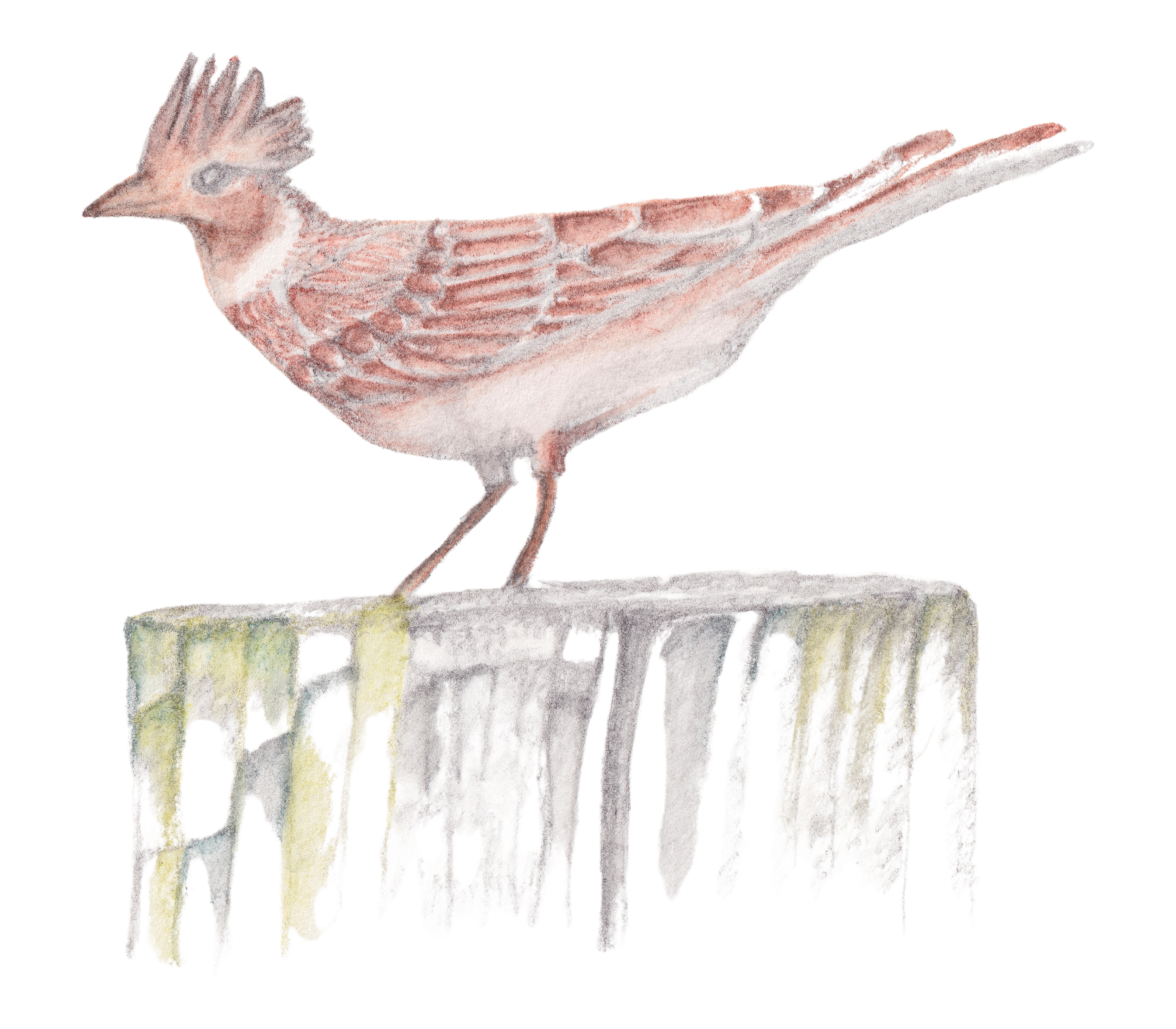
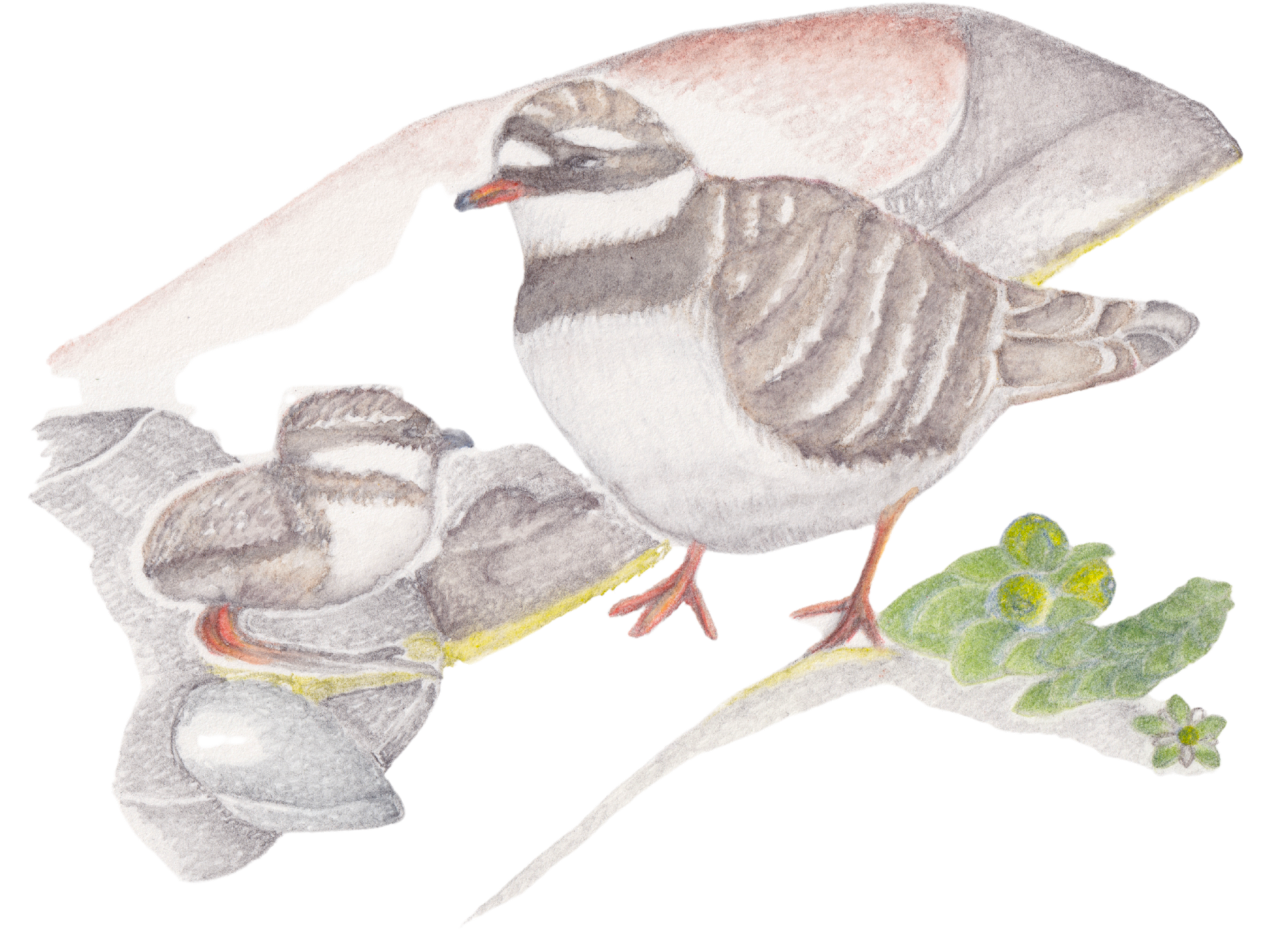
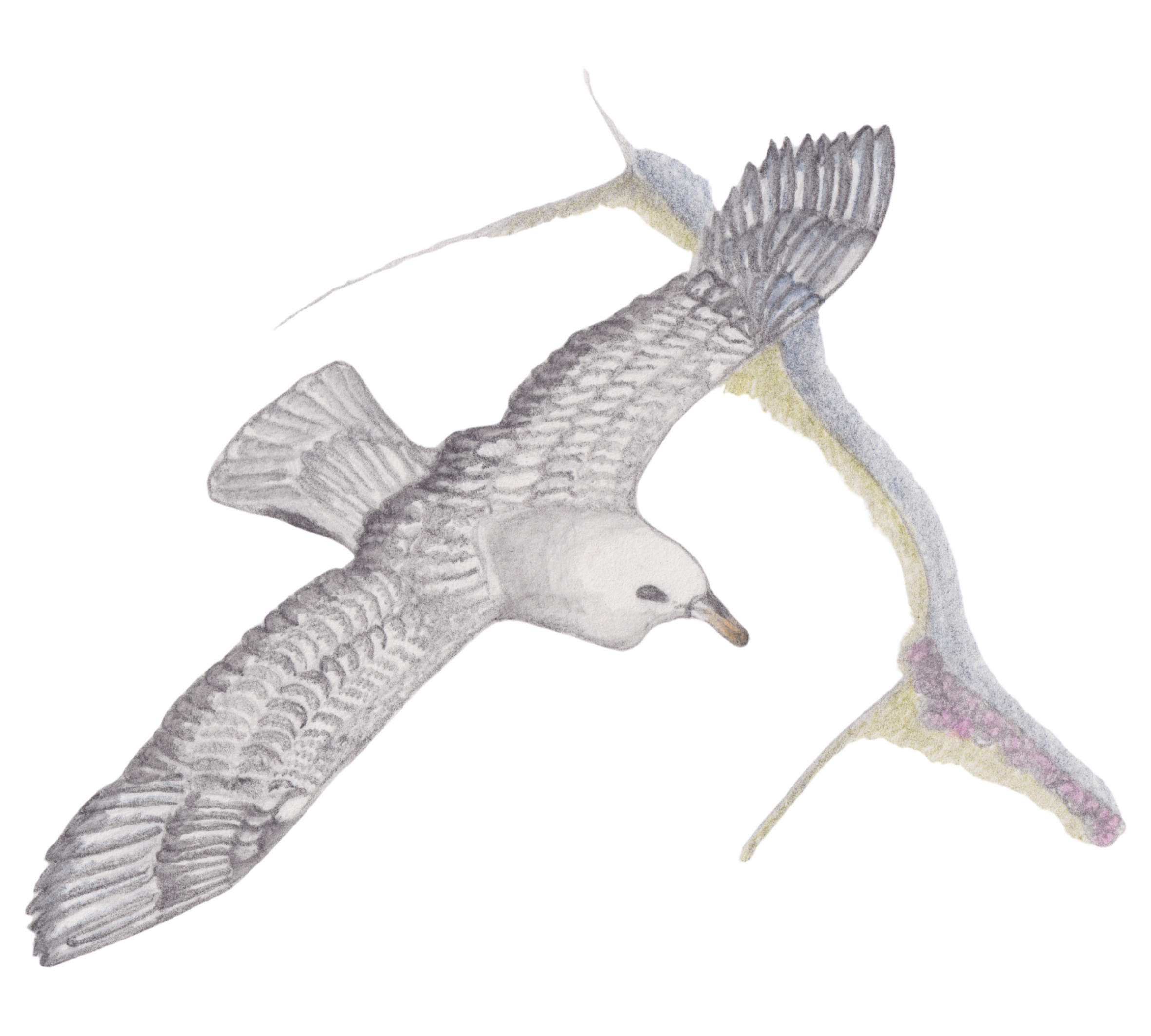
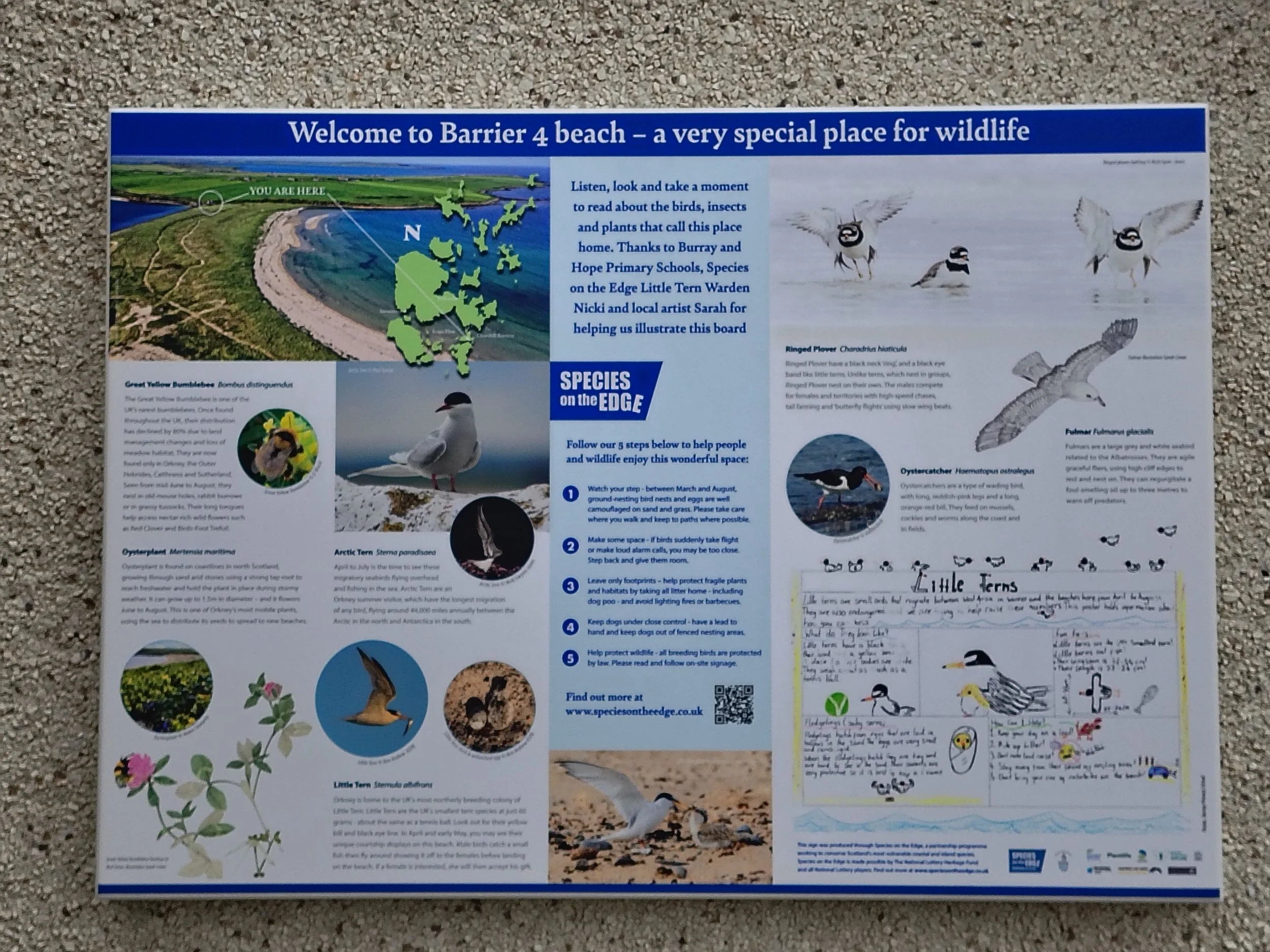
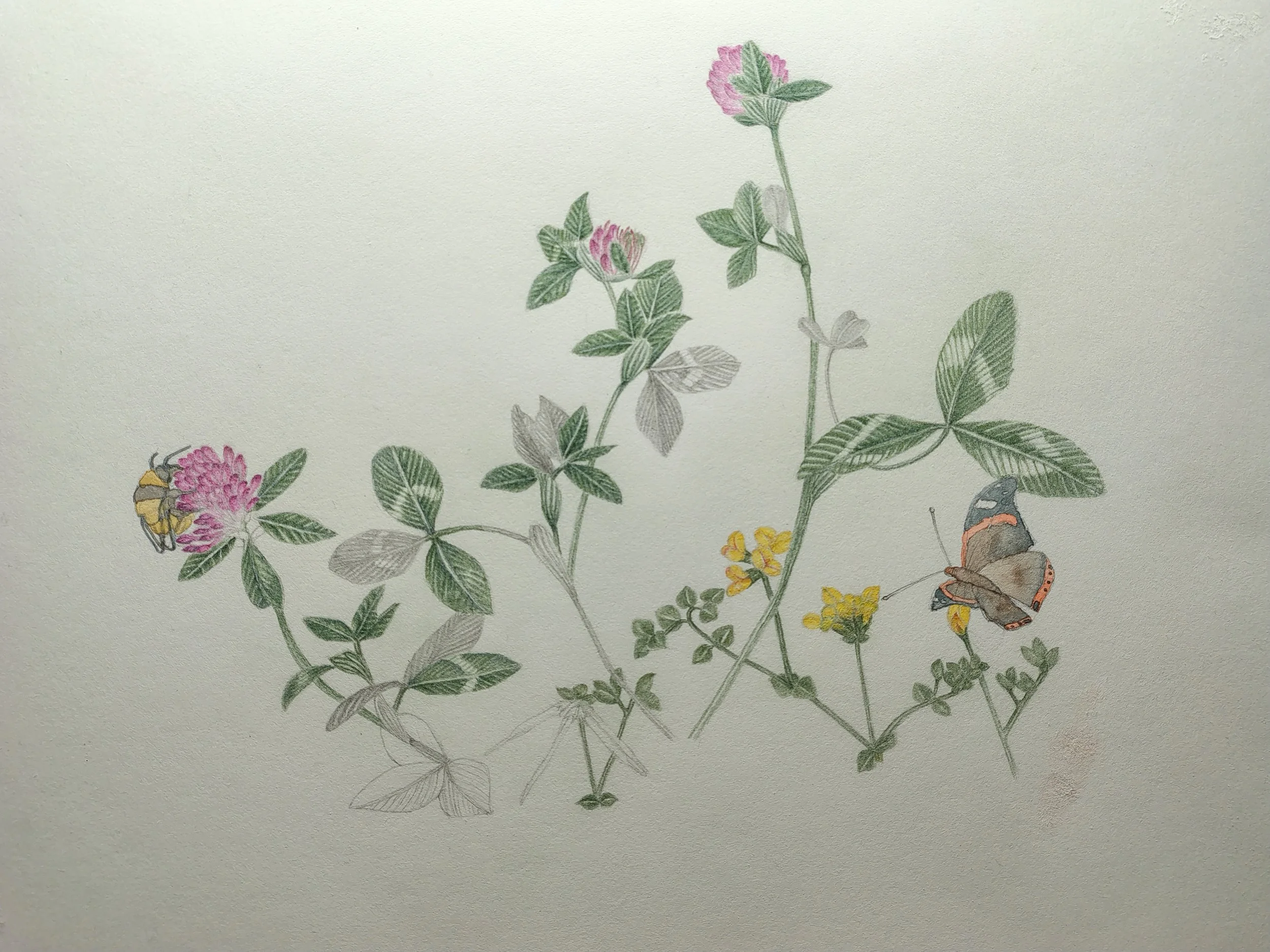
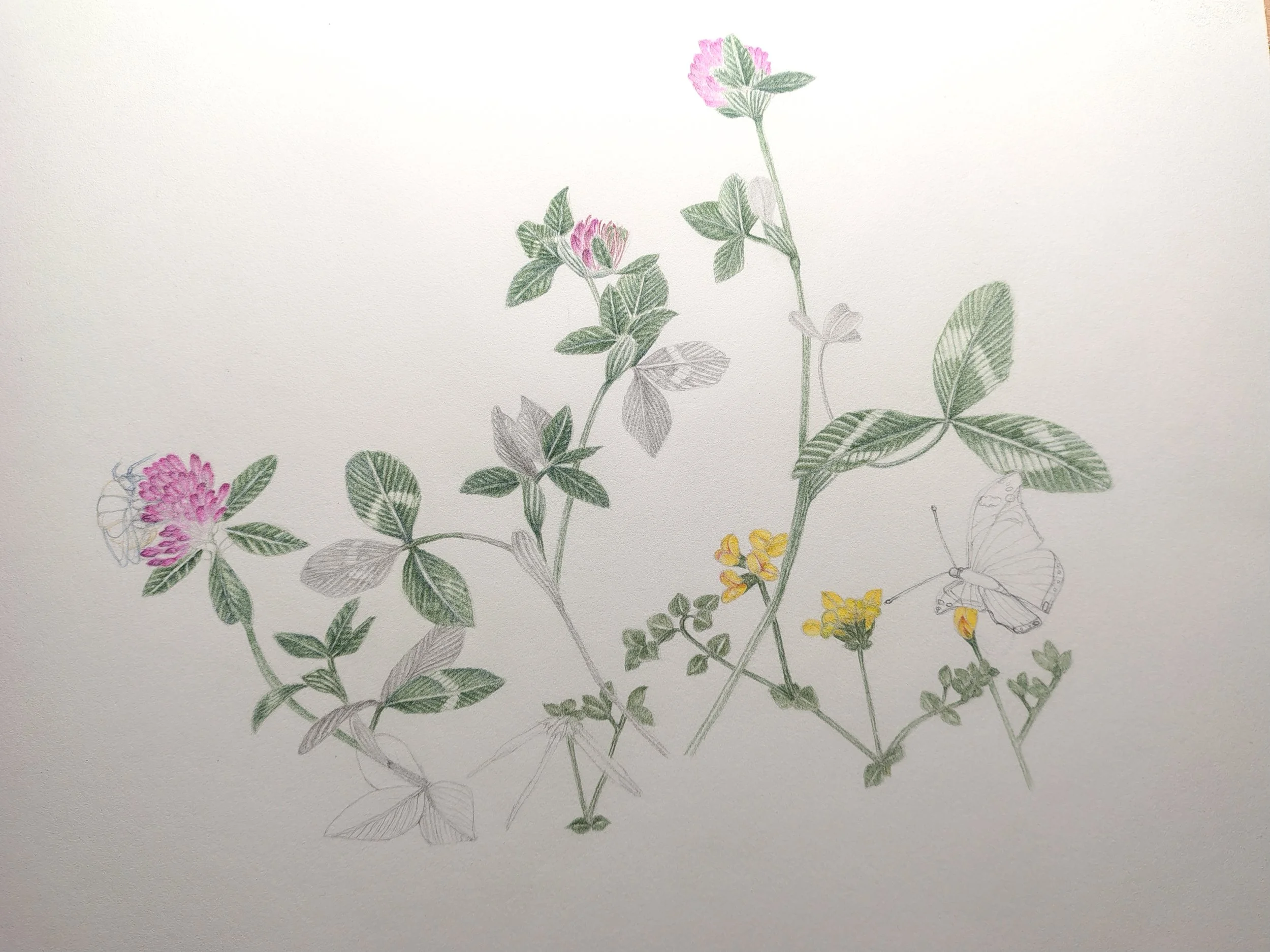
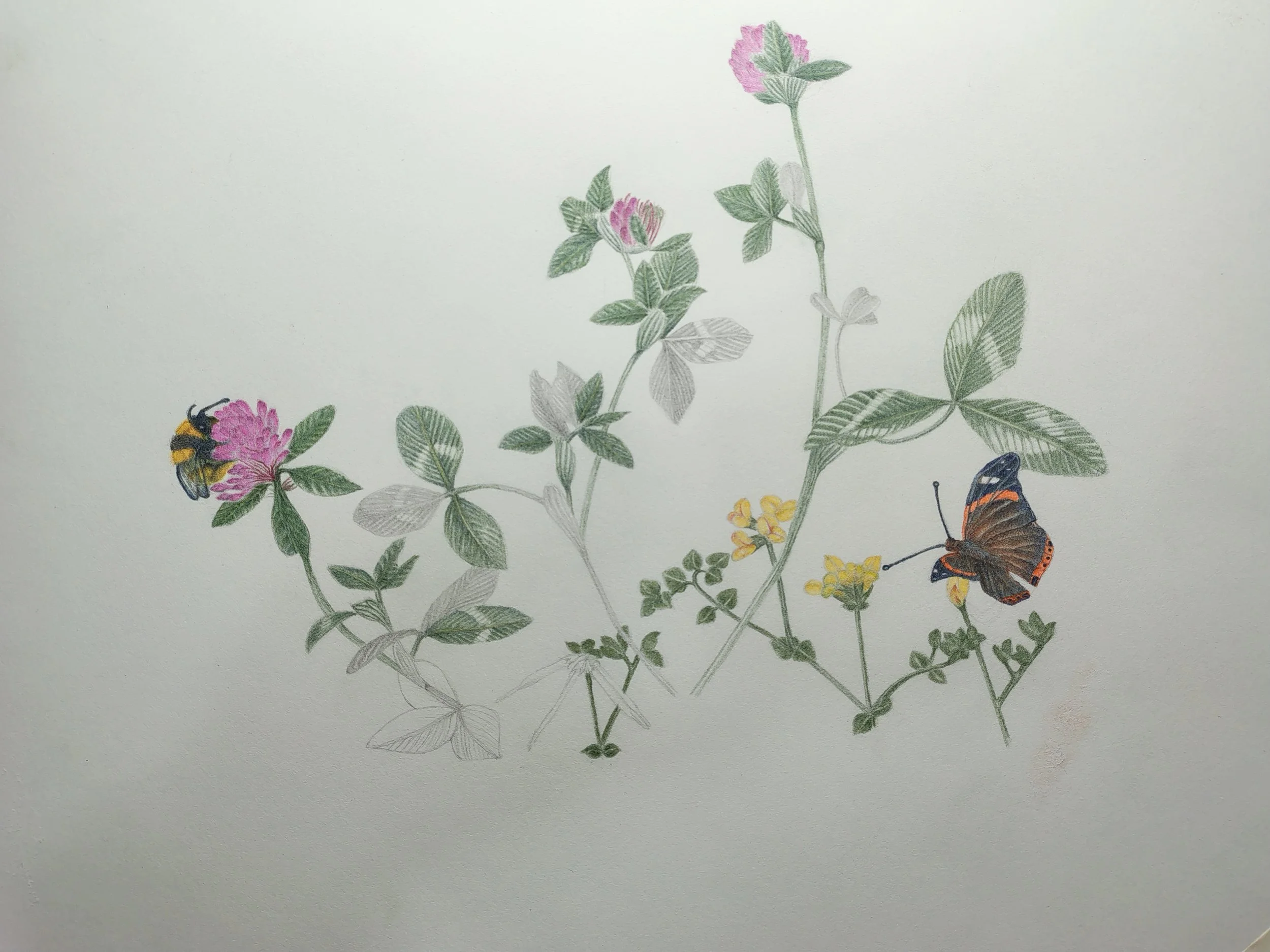
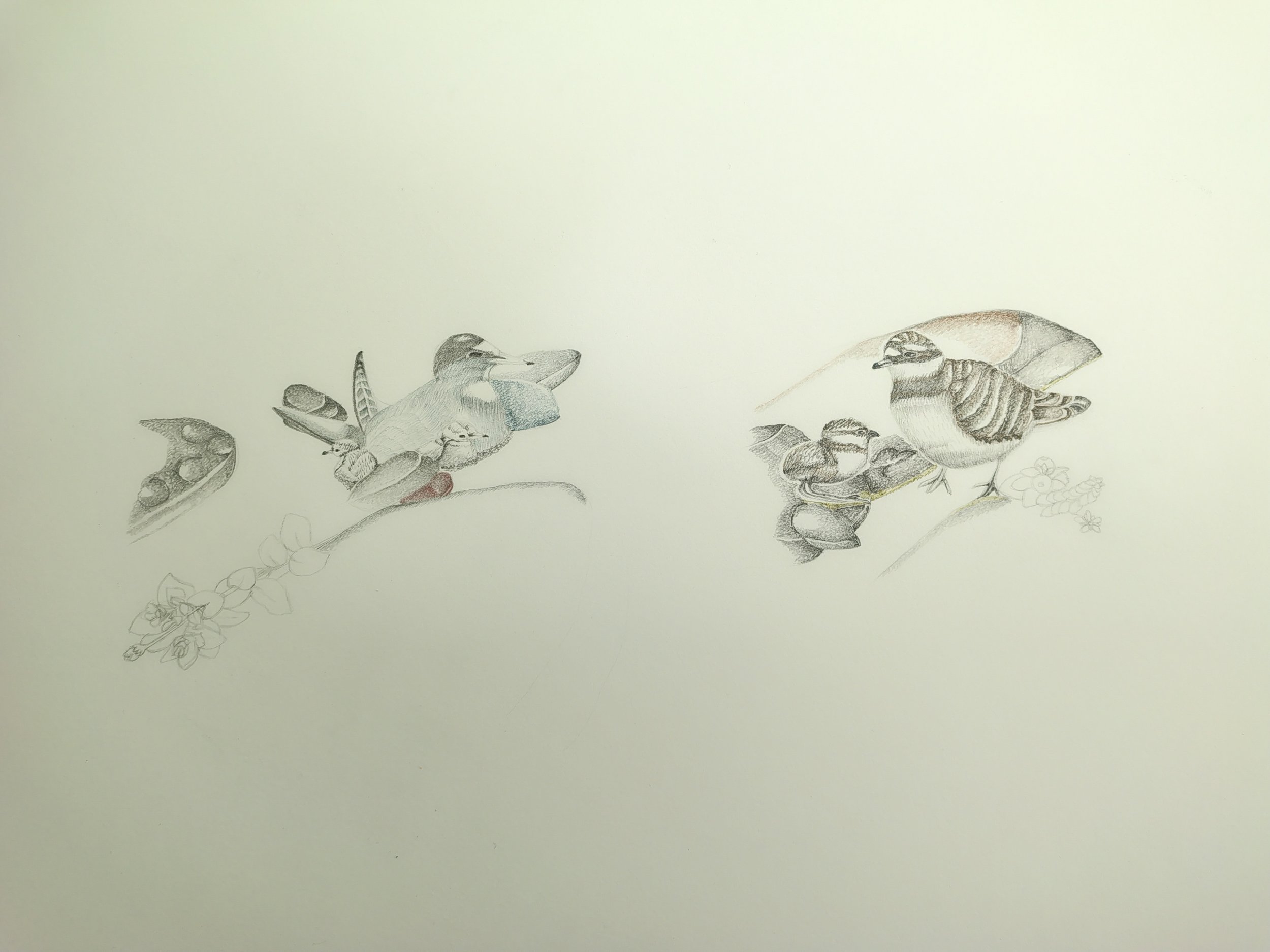
I was commissioned to produce a series of five illustrations; a wildflower composition including the Great Yellow Bumblebee plus Red Admiral Butterfly and four bird illustrations; Little Tern, Ringed Plover, Fulmar and Skylark. Of the five, part of the wildflower composition with the Bee, and the Fulmar were included on the Final Board layout (lower left image). It was a great opportunity to show the medium of Coloured Pencil and Graphite as a material to work in producing artwork and as an early career professional artist a body of work for my portfolio.
Early Sketchbook work
Everything starts in a sketchbook. The start of a creative process
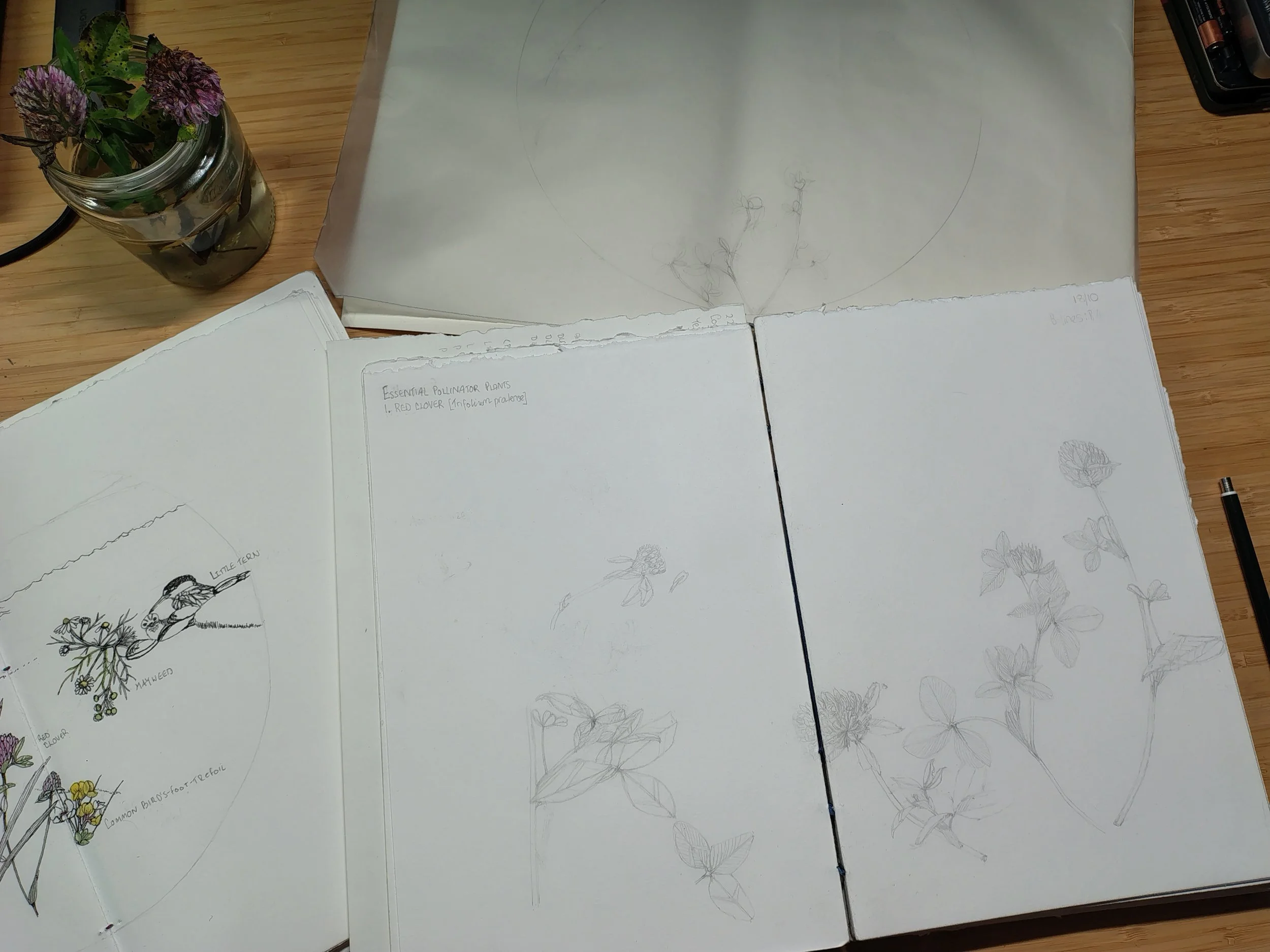
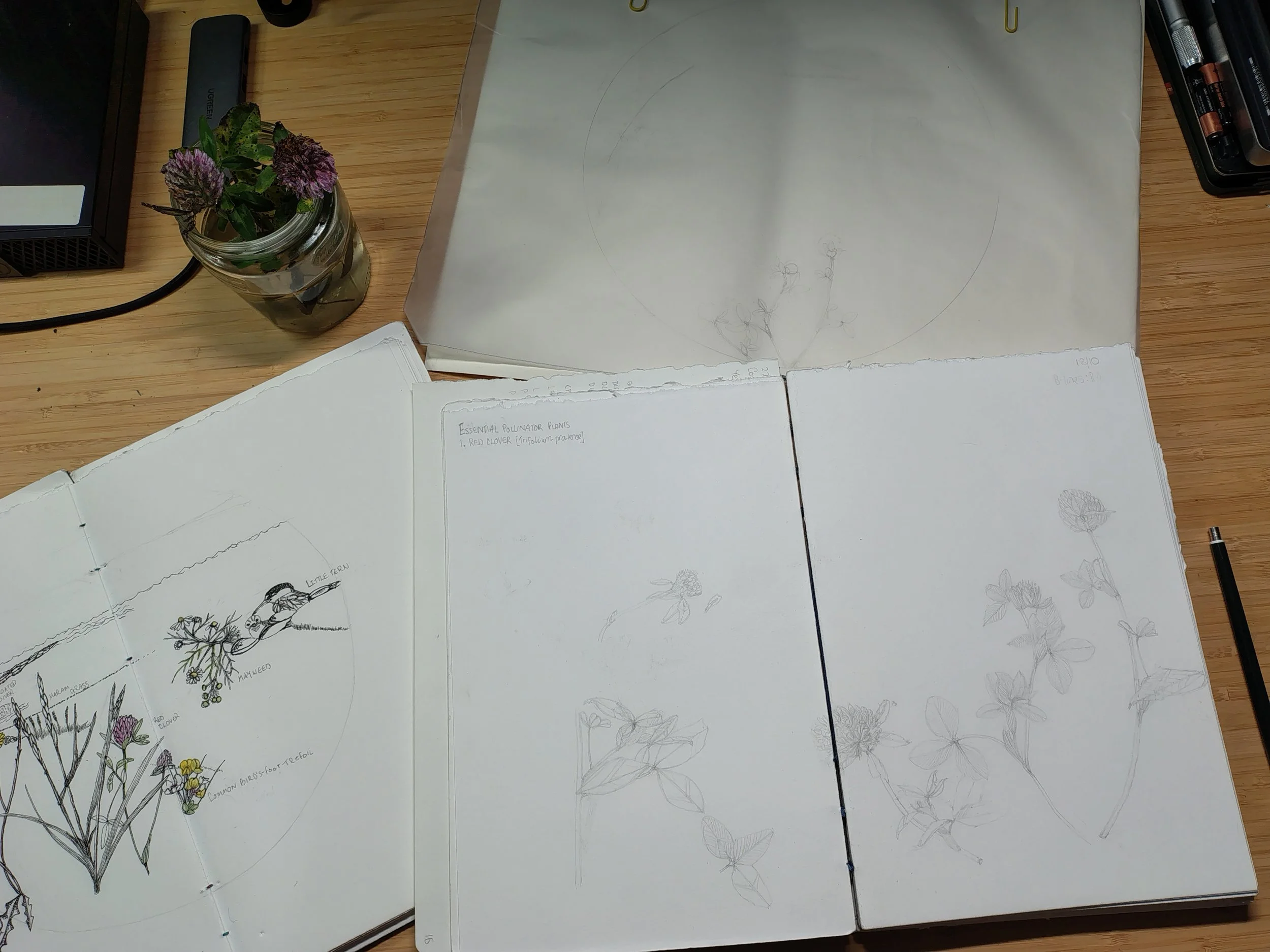
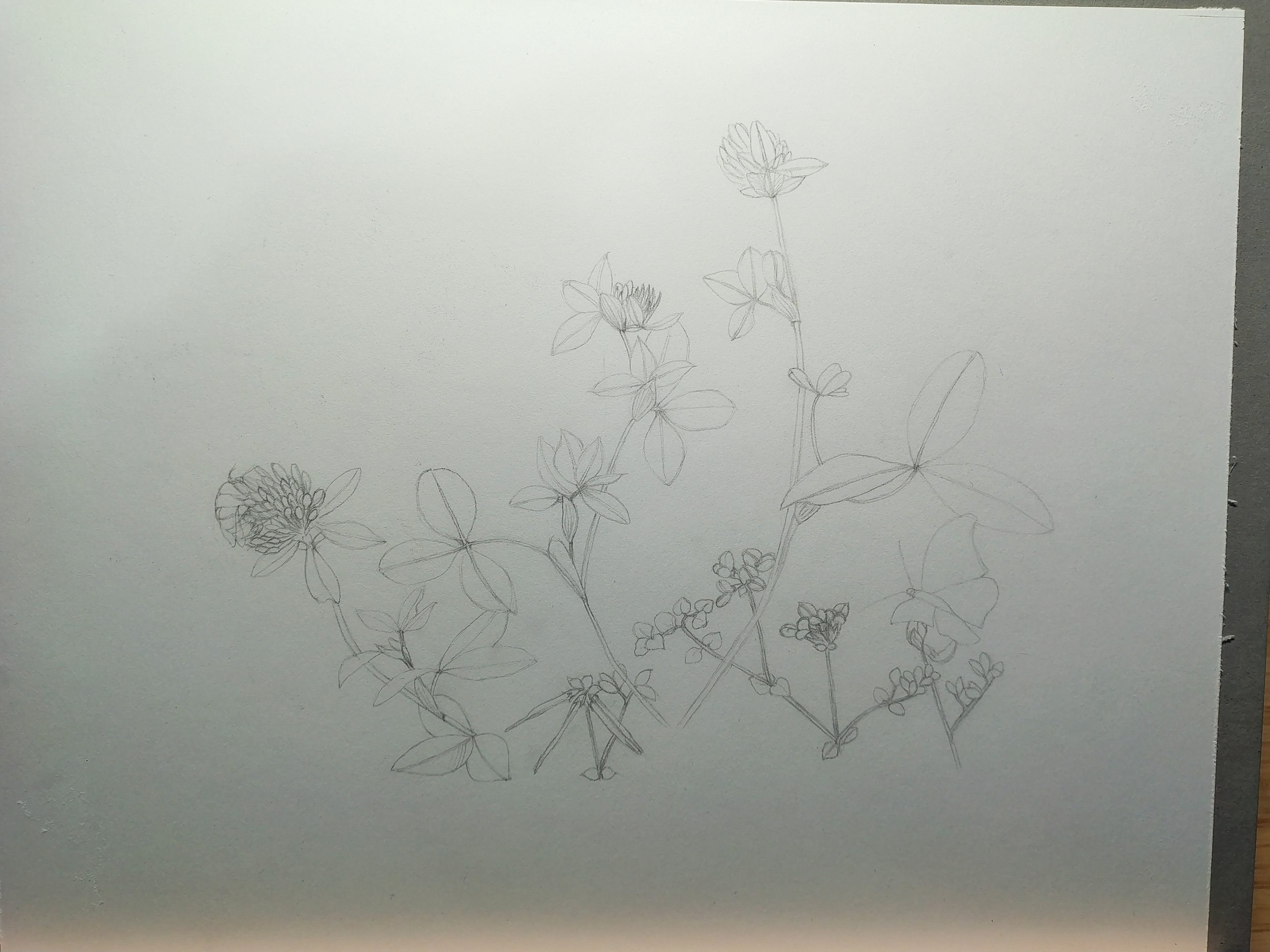
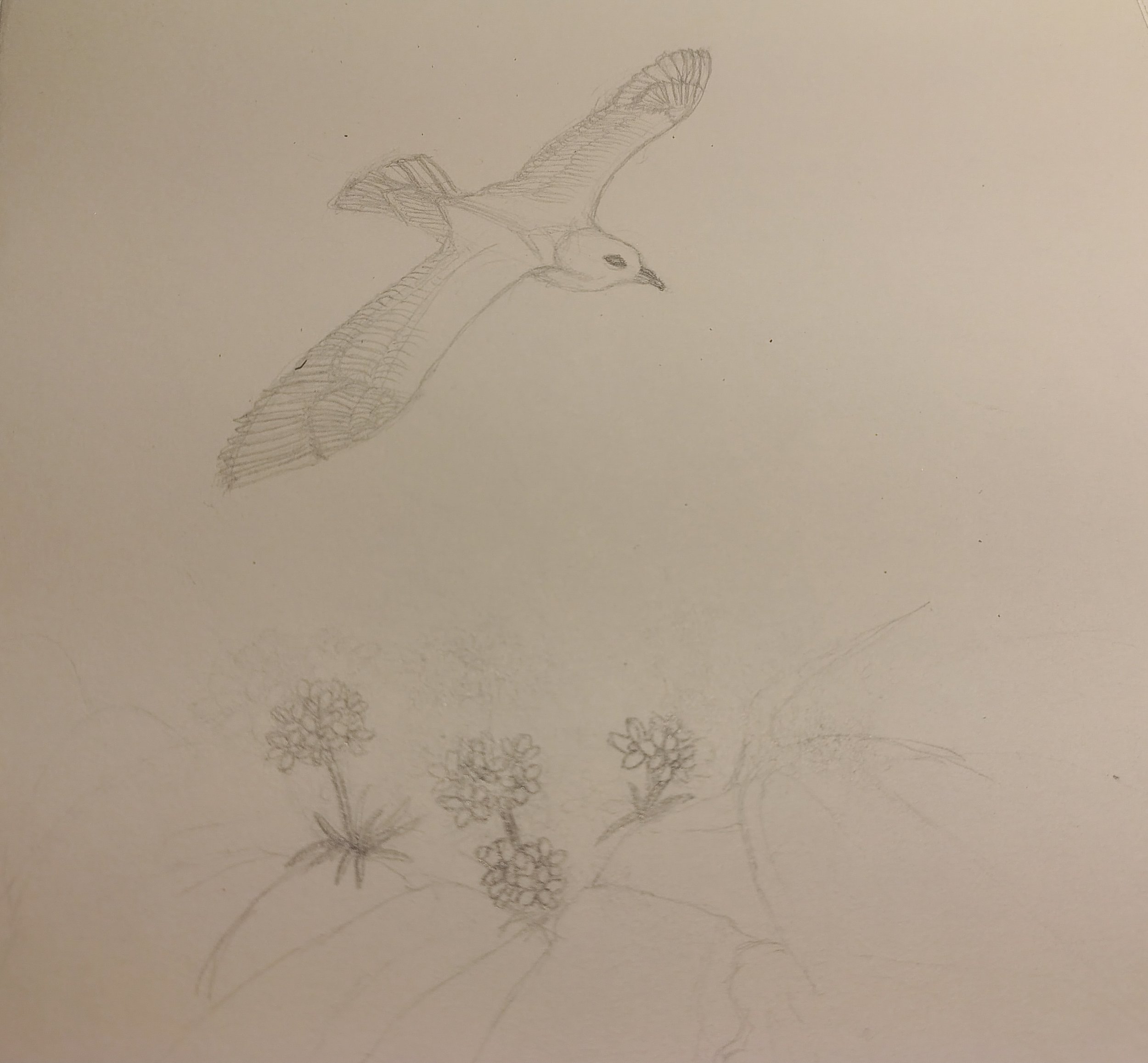
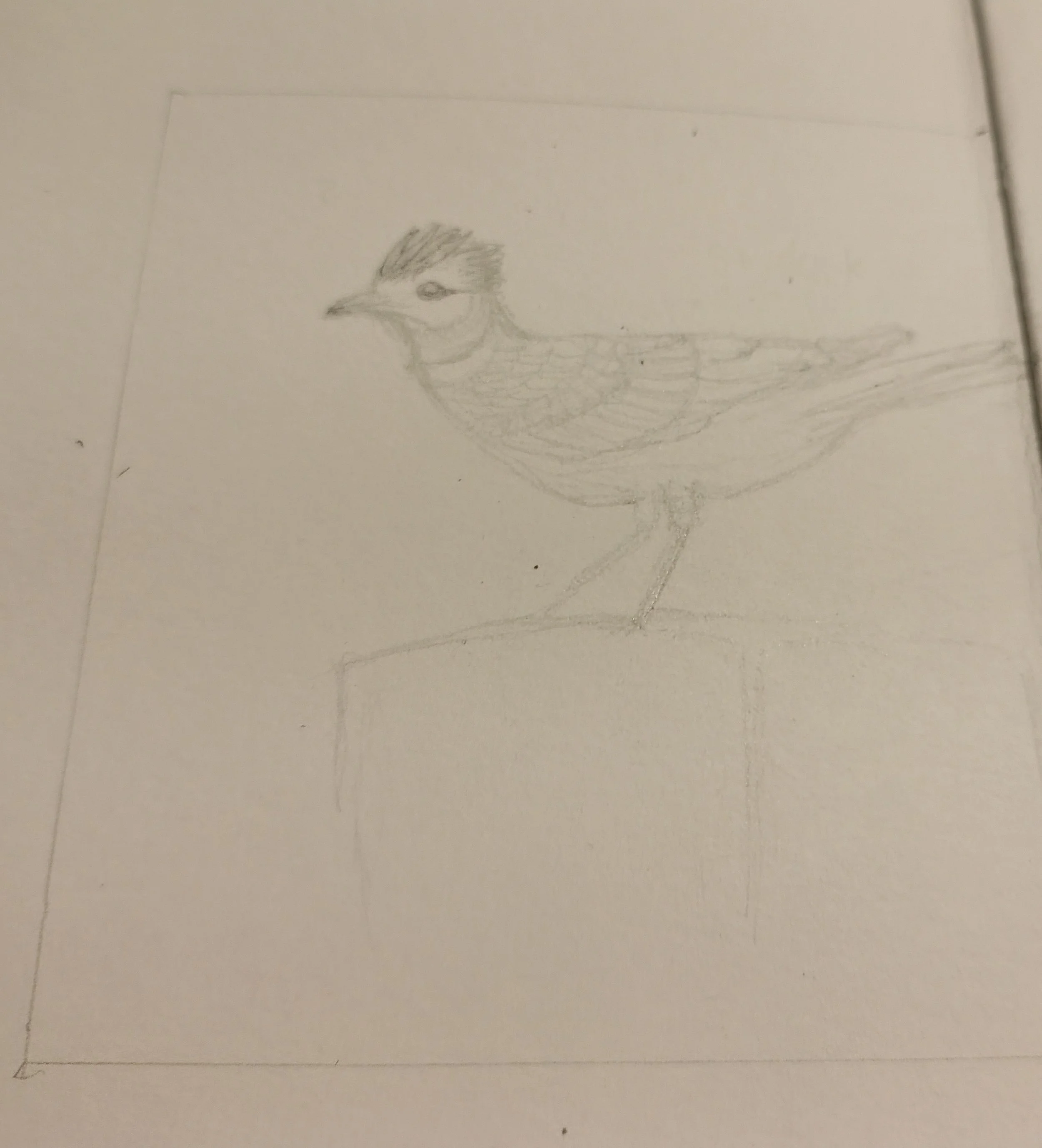
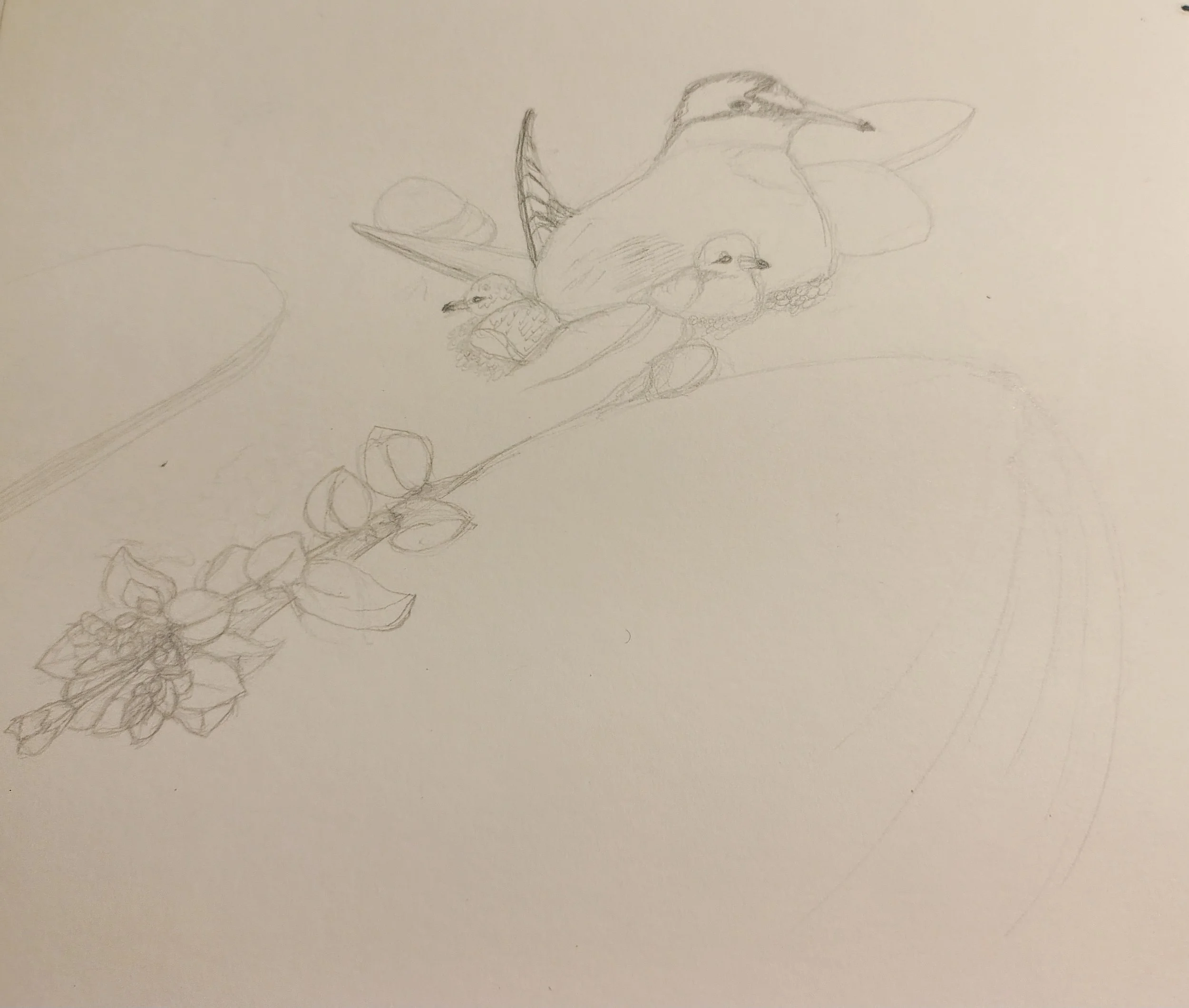
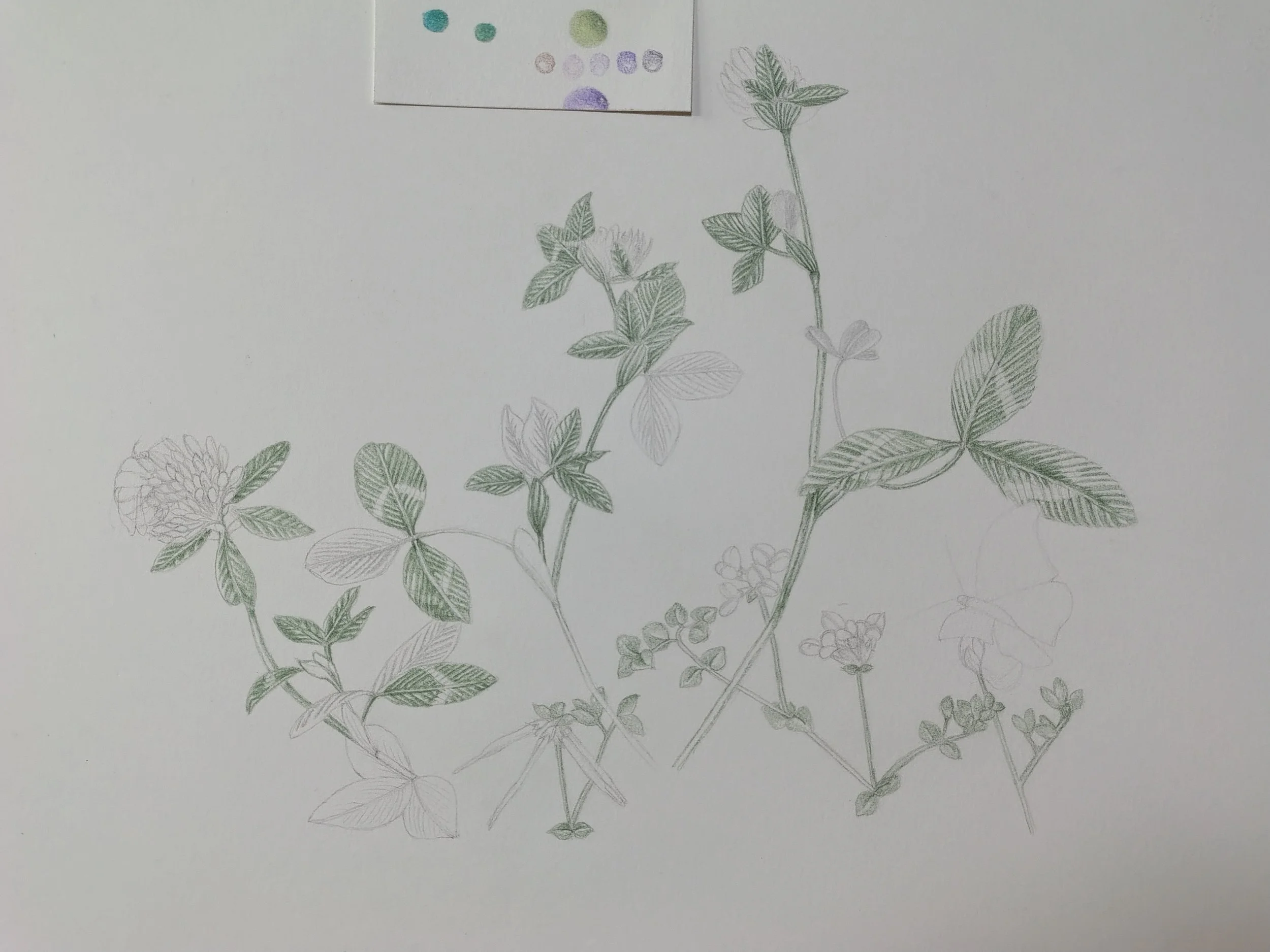
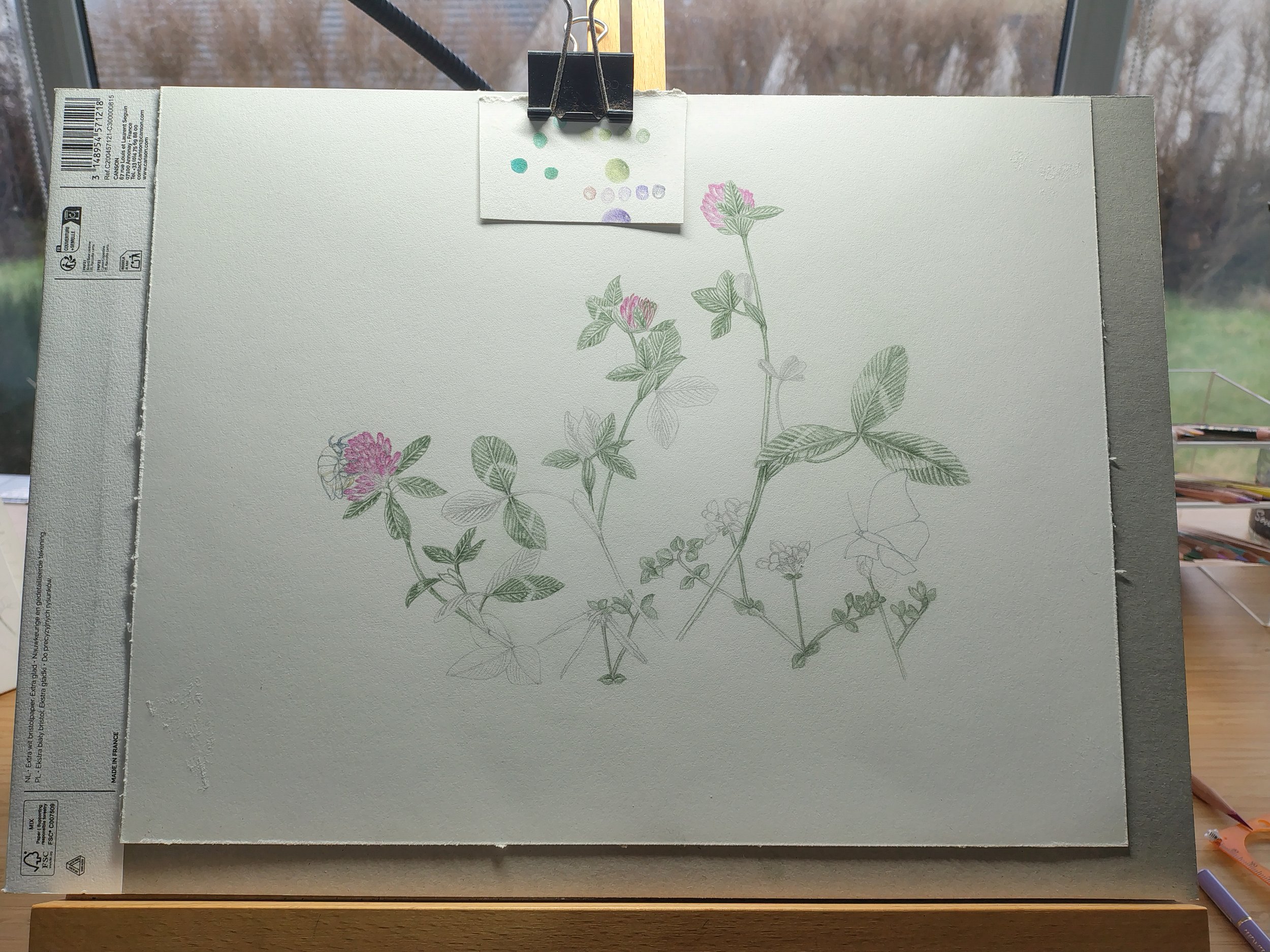
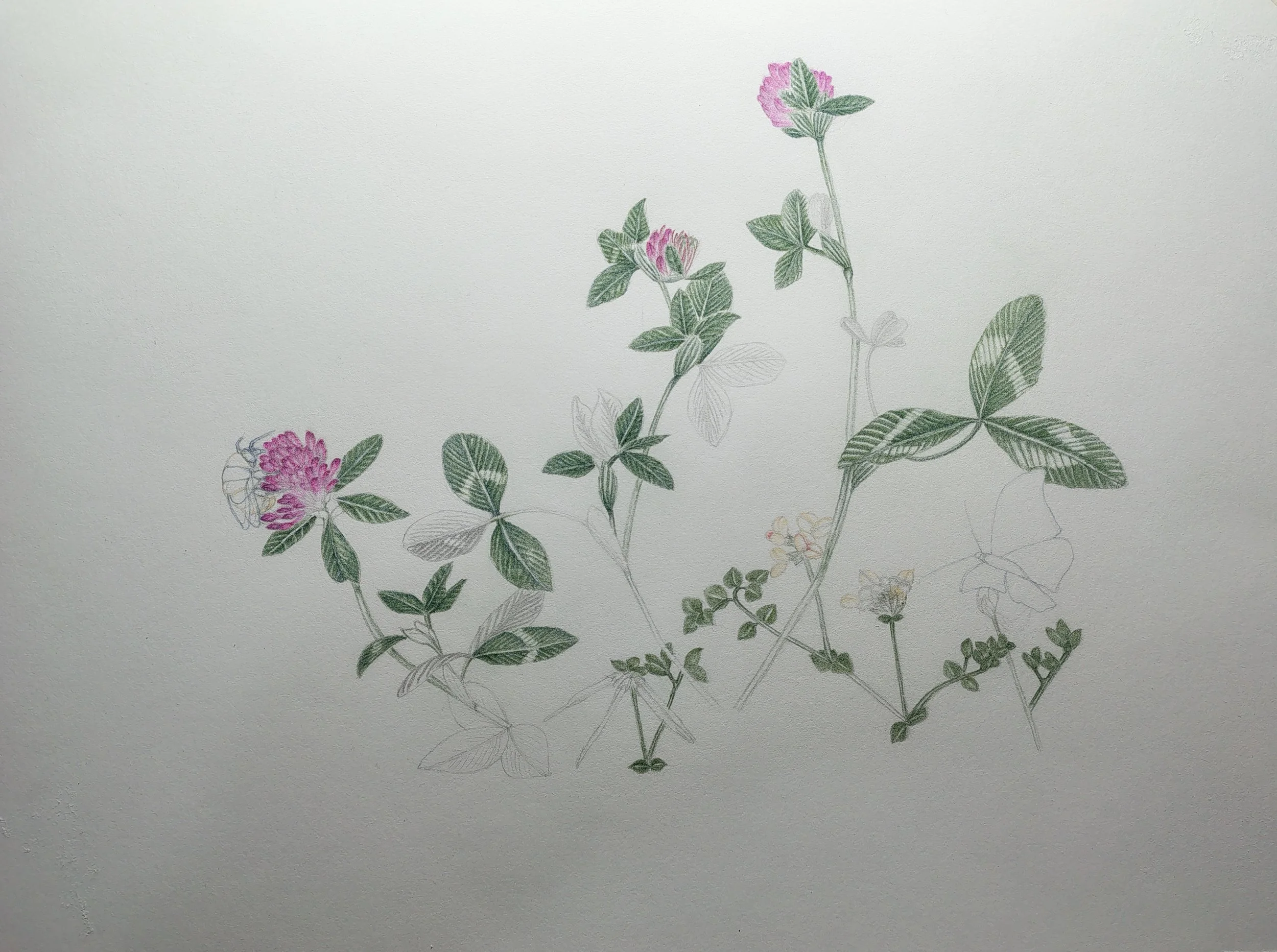
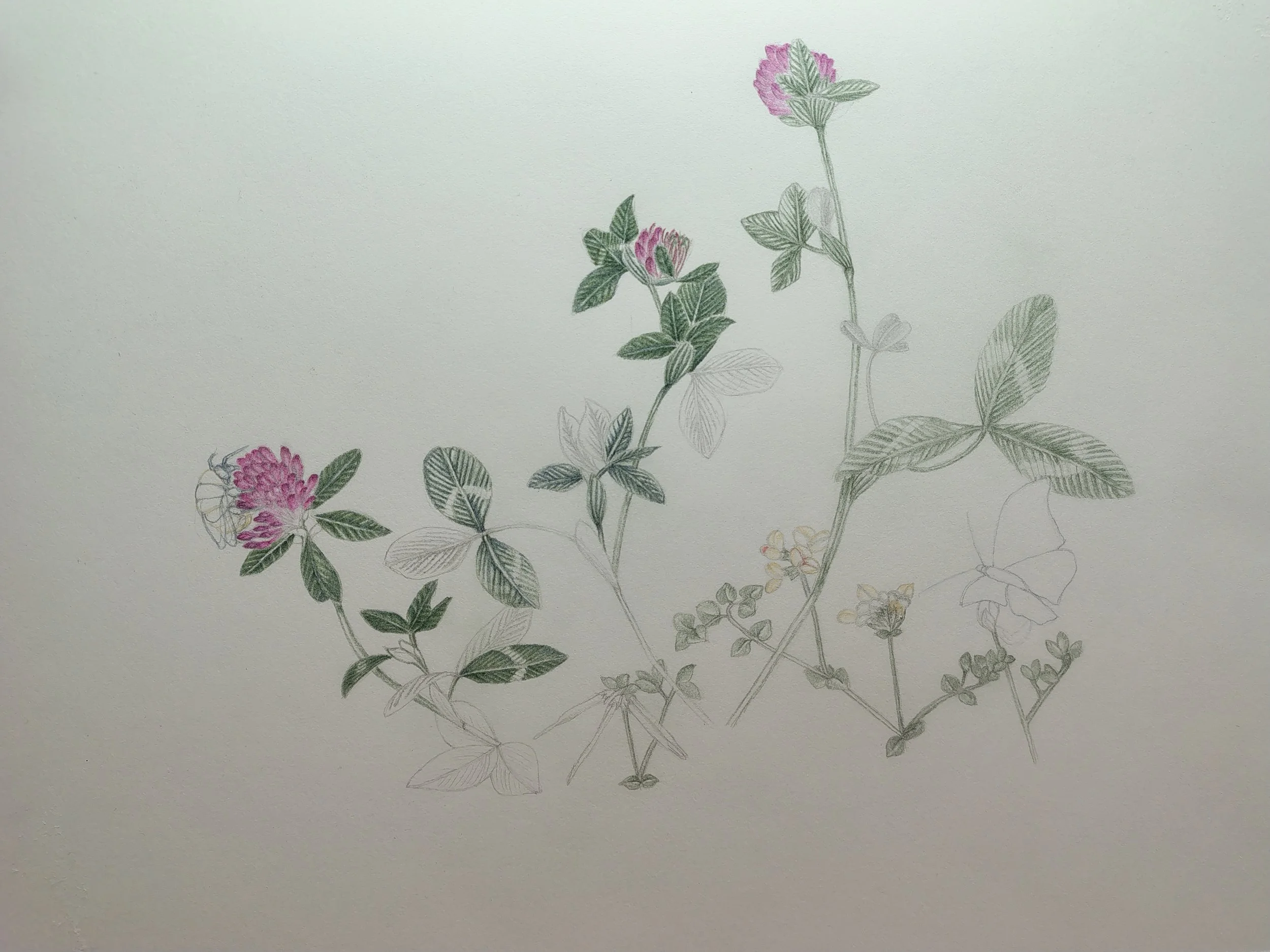
Progression of the Pollinator Artwork
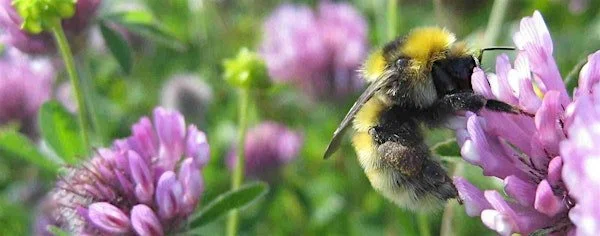
Red Clover, Common Birds-foot Trefoil, Great Yellow Bumblebee and Red Admiral Butterfly
In Coloured Pencil and Watercolour Pencil
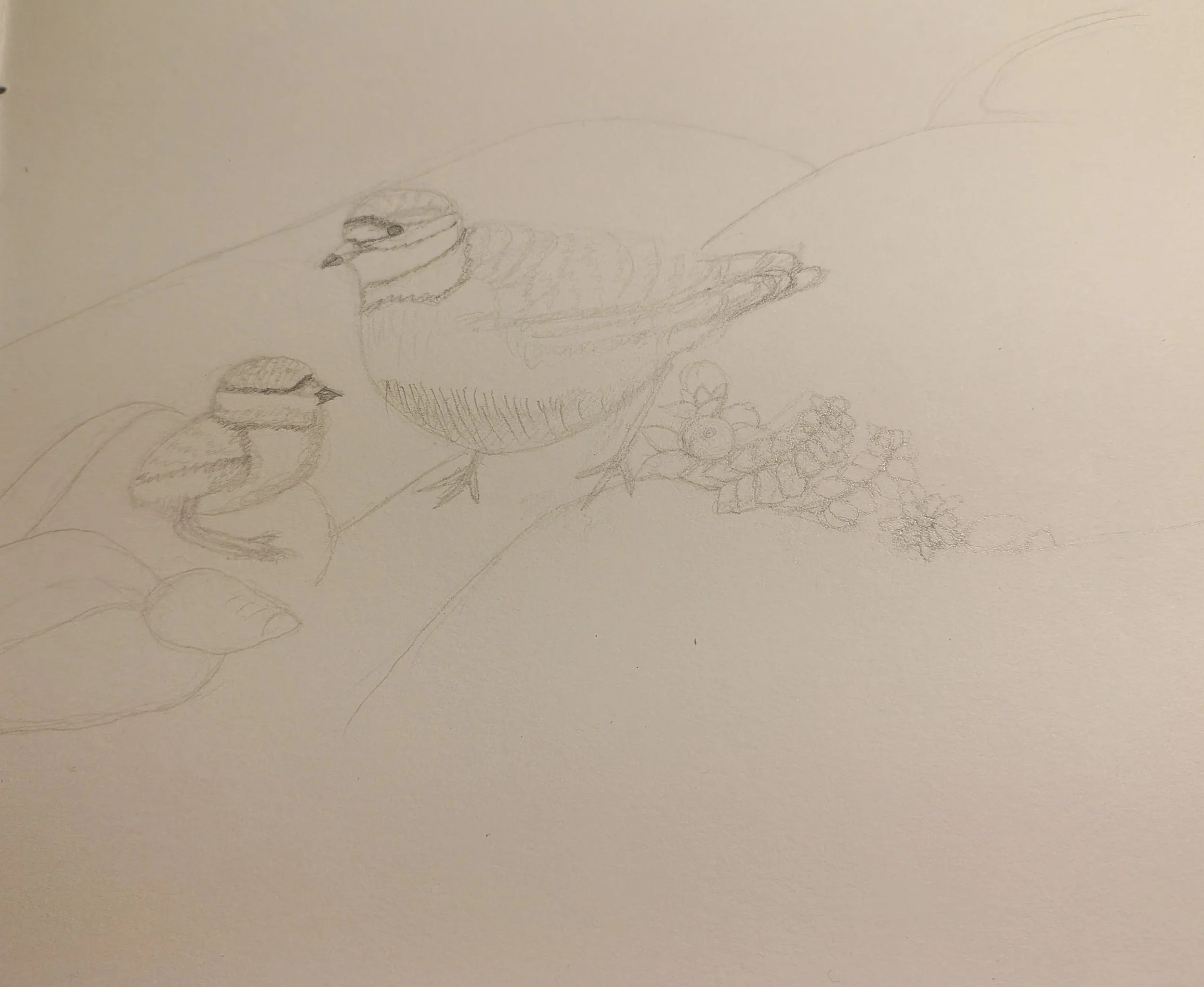
Supporting bird artwork
Little Tern/ Ringed Plover/ Fulmar and Skylark
In Watersoluble Graphite and Coloured Pencil
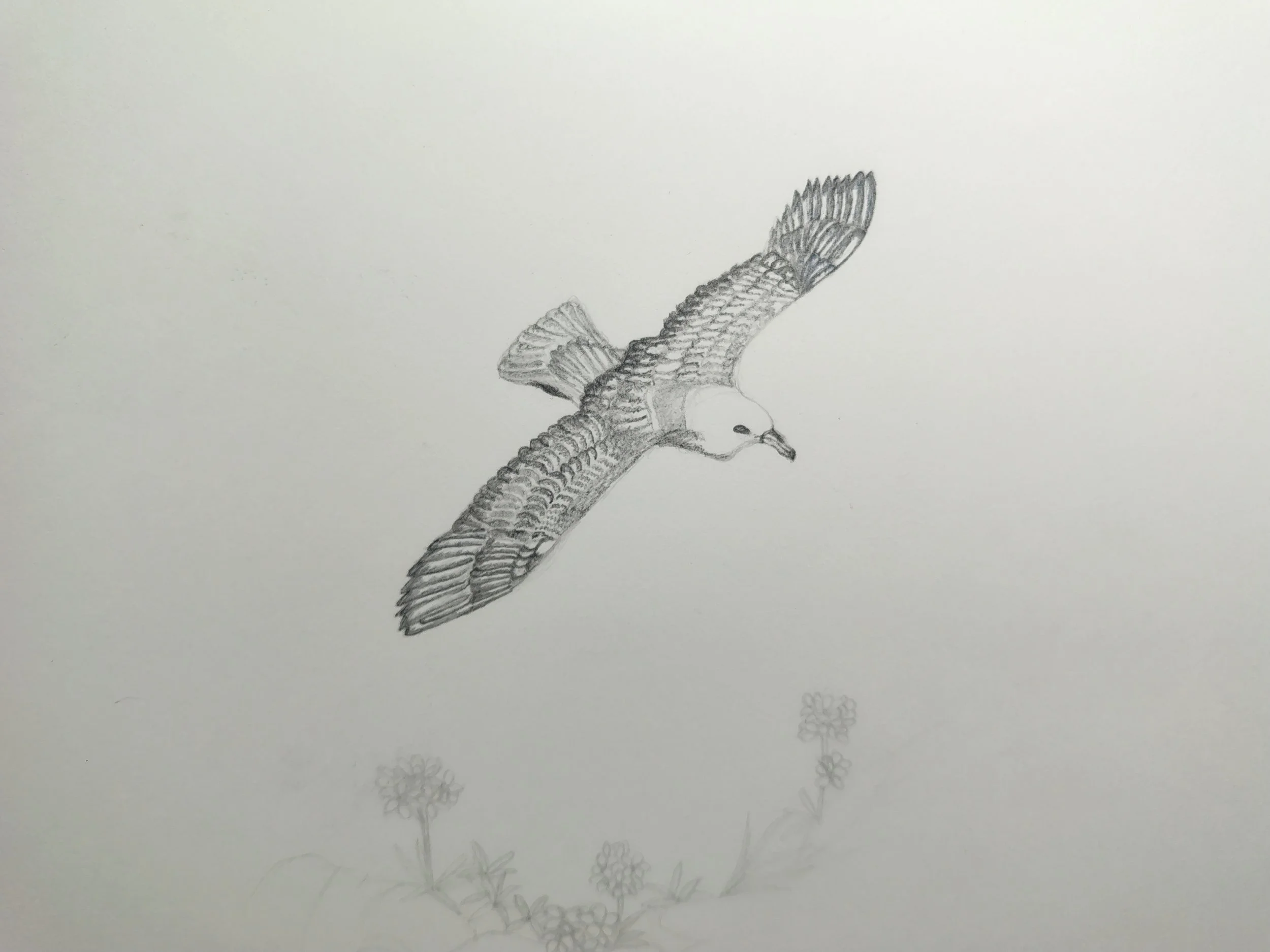
Fulmar and Skylark
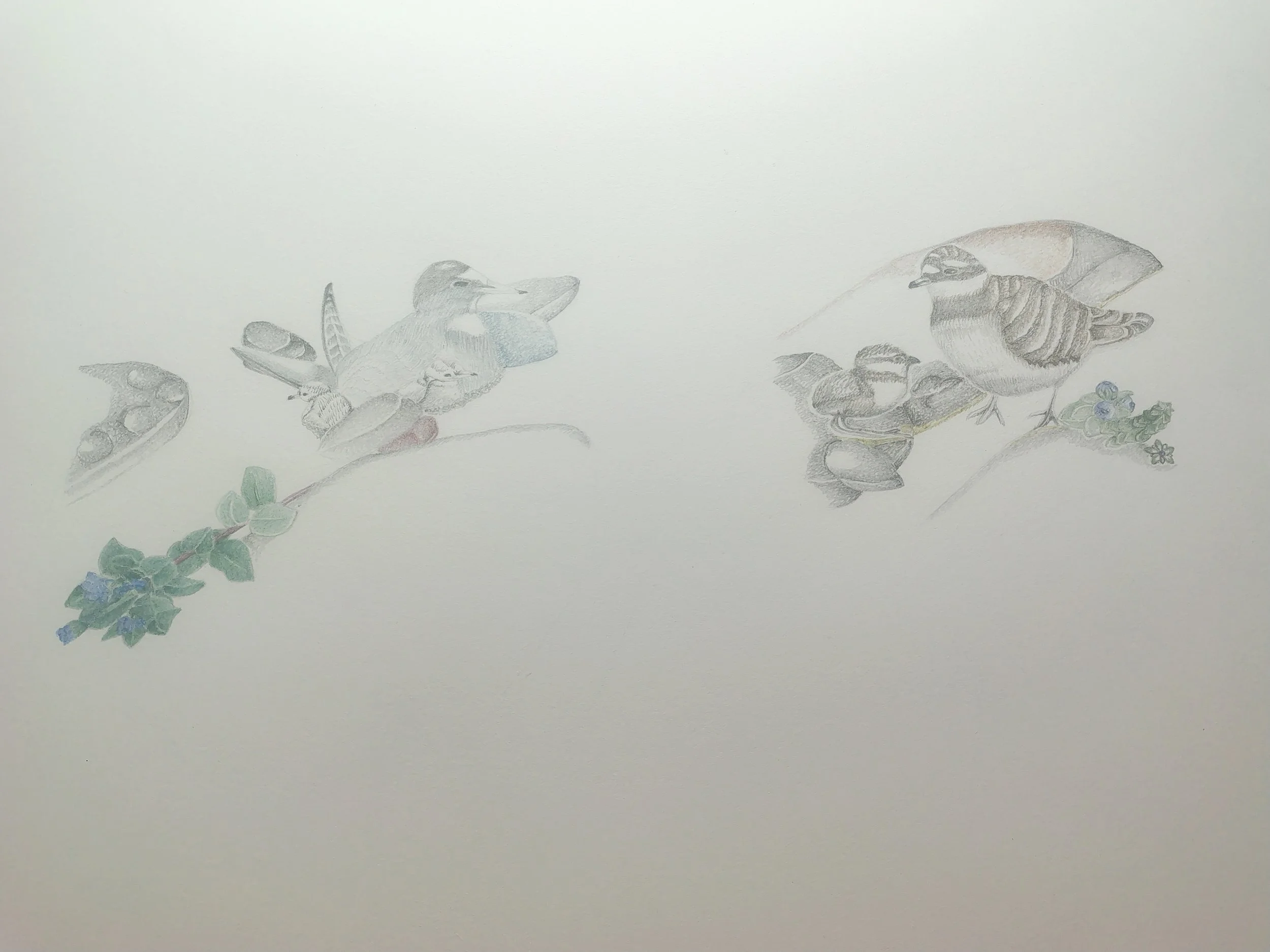
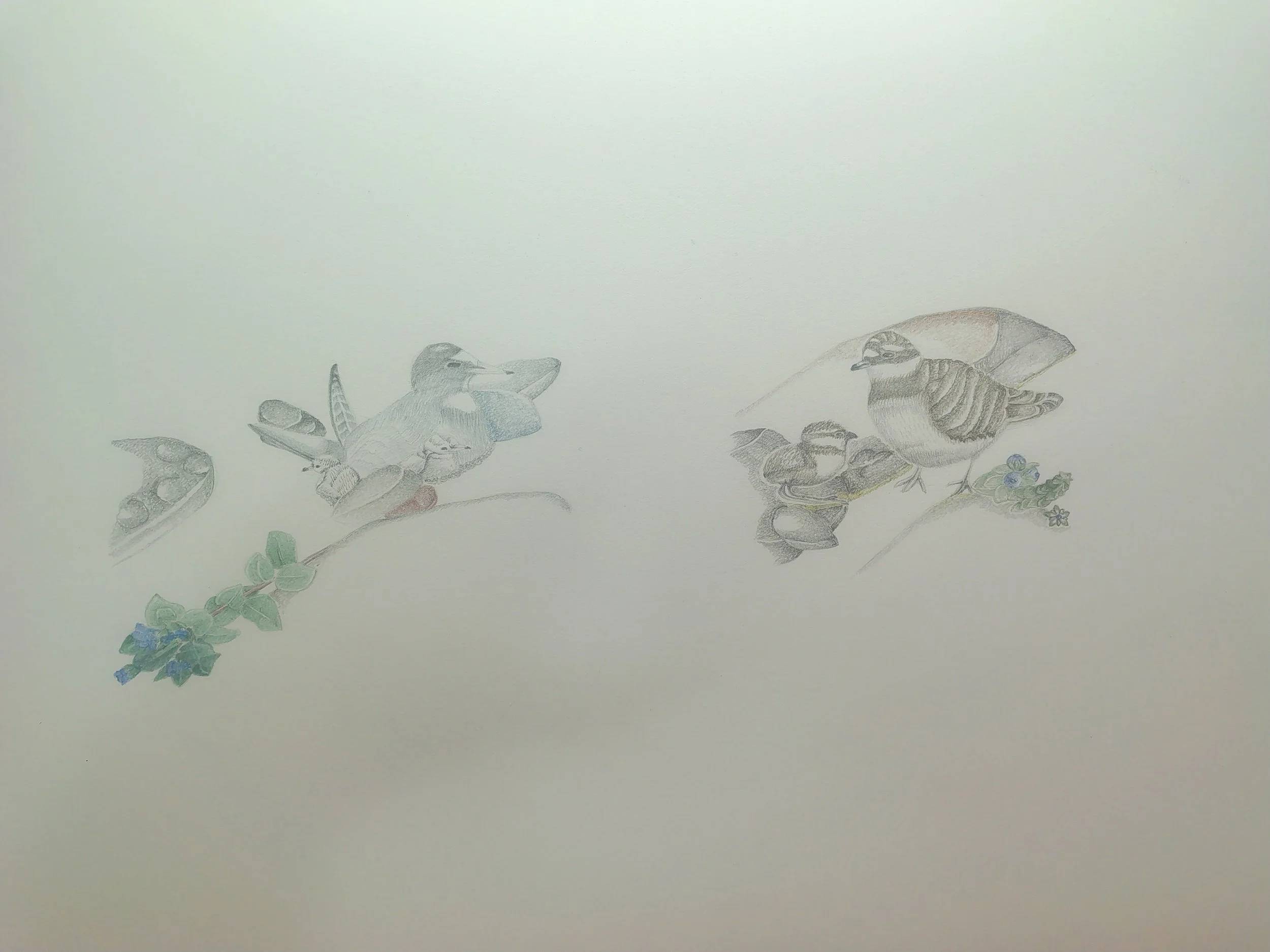
Little Tern and Oysterplant and Ringed Plover and Sea Sandwort composition
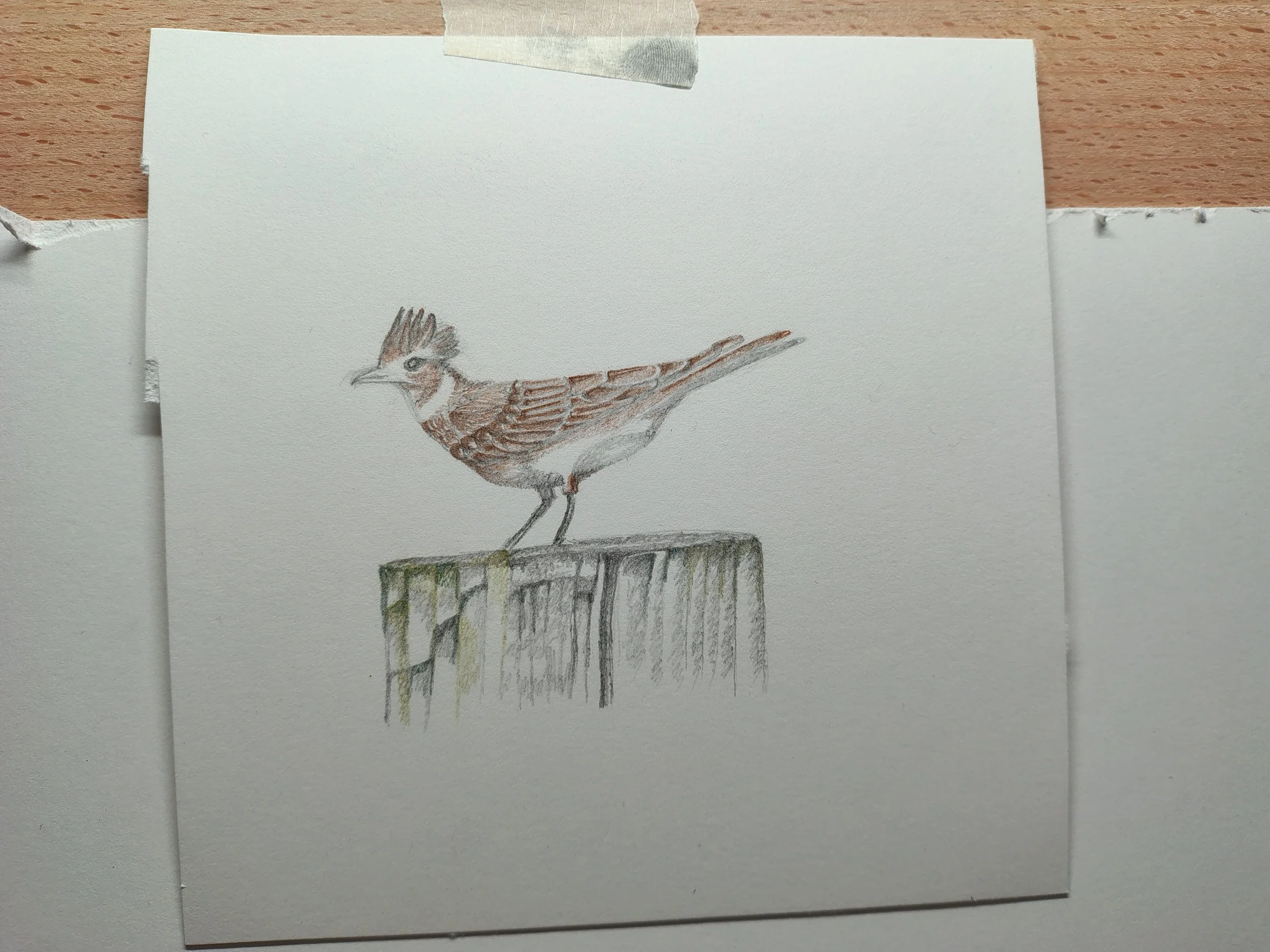
Final Illustration Work copied to Graphic Designer
Scanned 600dpi