Primula scotica project 2021
2018
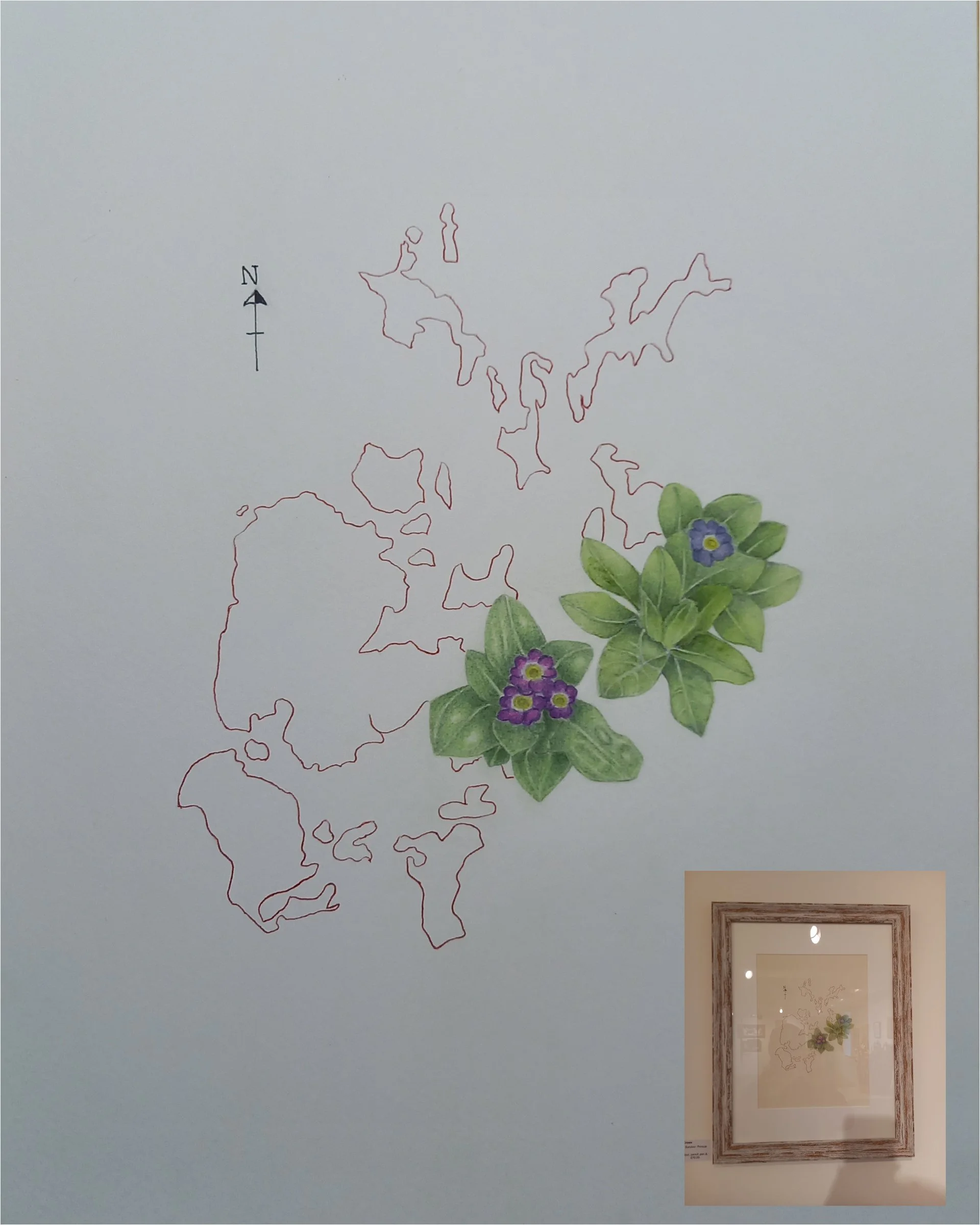
Primula Scotica: Christmas Exhibition 2021
Background to Artwork
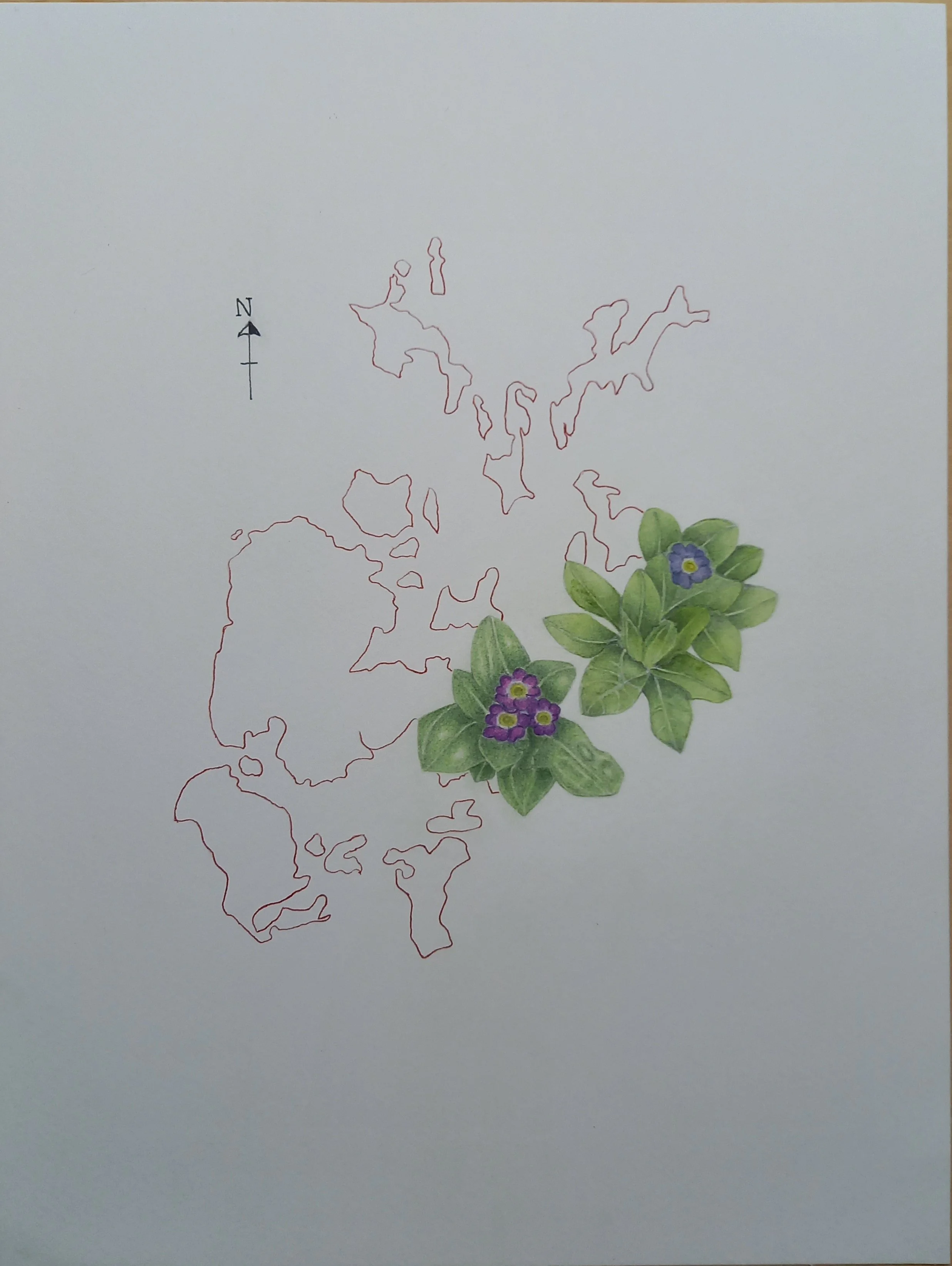
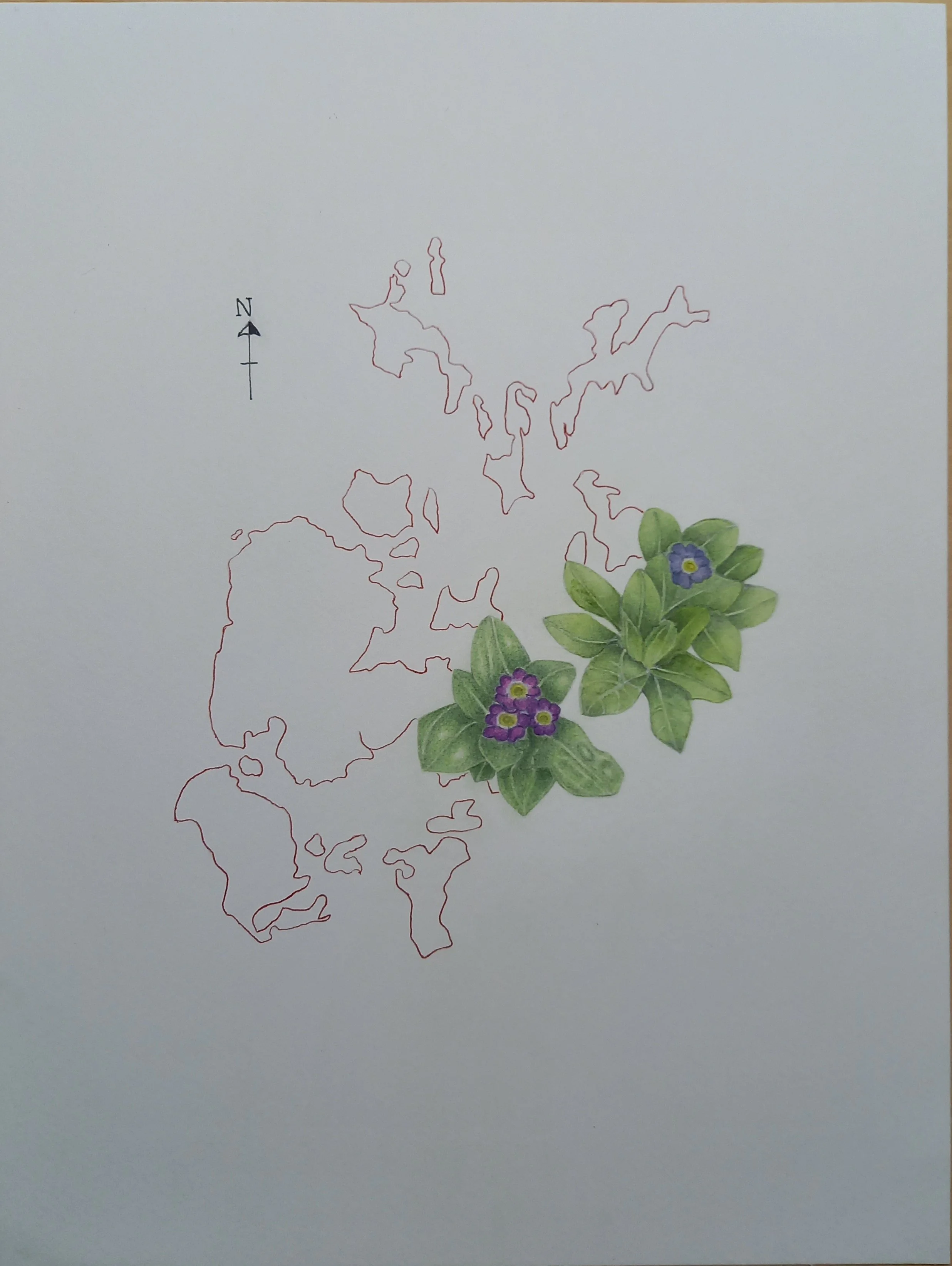
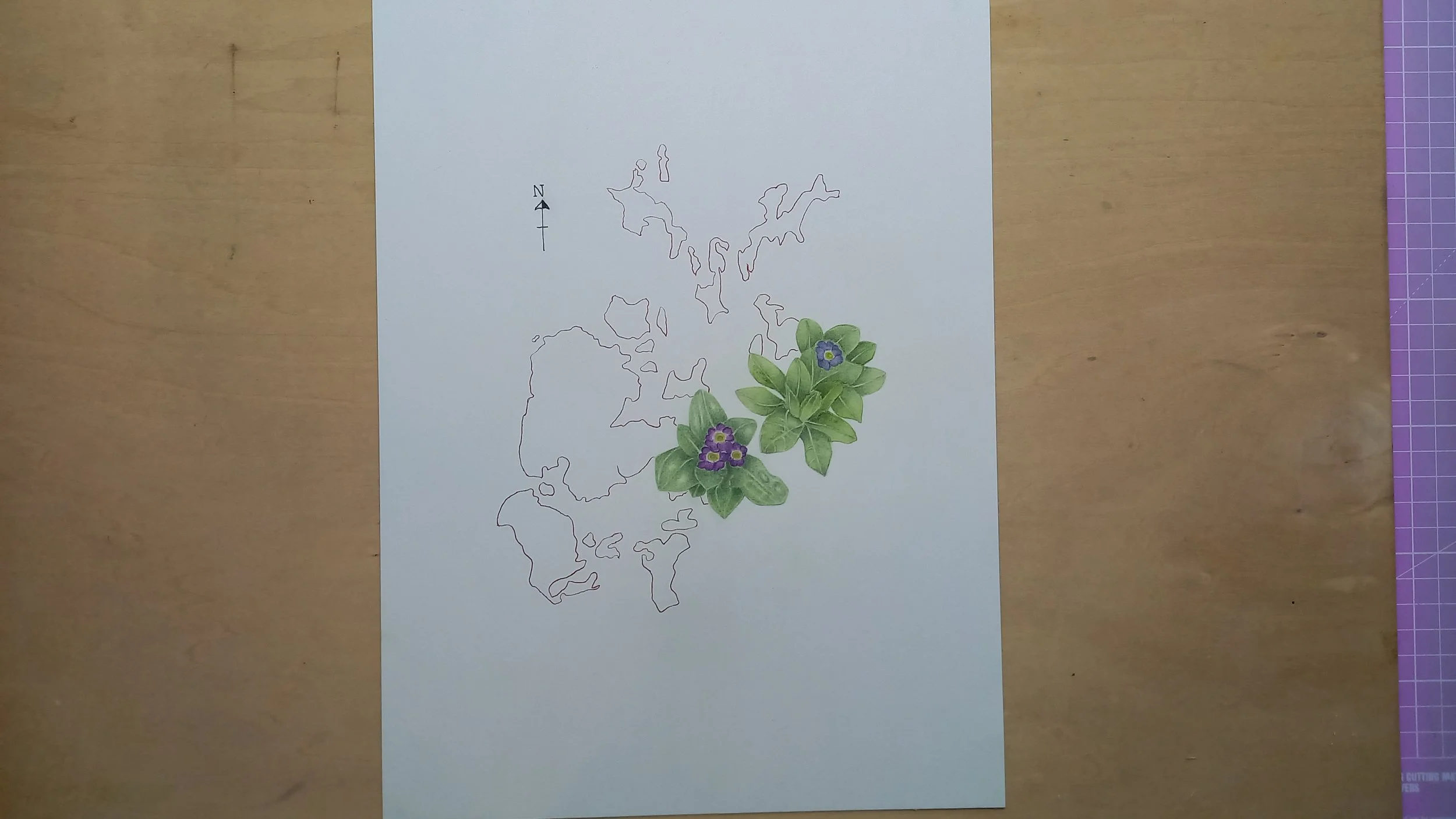
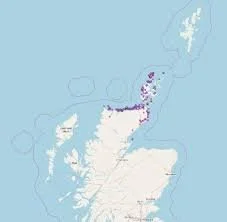
As the first species to appear on the coastal heath at Yesnaby where it flowers in May as part of it’s biannual cycle, I have picked the wildflower star that is Primula scotica as my focus for my artwork for the Local exhibition at the Gallery. From a biogeographical and plant ecology perspective, the species is fascinating if not an enigma, in its range being restricted solely to Orkney and the north Caithness Coast. Although we may never know if its range extended beyond its current distribution (see map), there is some interesting thoughts shared in an article in Frontiers magazine, that allude to it being a Late Glacial Relict or a species that somehow survived the re-advance of the ice sheets in the last Glacial maximum.
But why Orkney and the North Caithness Coast?
The model that a large ice cap sat over the entirety of the UK mainland and its islands, has in the preceding decades been revised based on local geological observations. Those areas that sat compressed down into the mantle by an ice cap, slowly rebounded after the retreat of the ice sheets. This Glacial Isostatic Rebound, is observed along the UK coastline as raised shoreline, Orkney however is going in the opposite way; it is slowly sinking suggesting it never felt the great weight of ice but instead endured tundra style winters with perhaps soil frozen as permafrost. However, the most recent evidence suggests a dynamic picture of constantly moving ice flows from Scotland and Scandinavia across Orkney and the North Coast, potentially picking up seeds as the basal part of the ice sheet thaws, before refreezing and re-depositing them, in contrast to the mainland where the ice cap would have scored the land. We know from research that seeds frozen in permafrost can remain viable for 10,000s of years so it is possible to envisage a scenario where P. scotica seeds sat frozen in the soil until ice flow retreat and spring temperatures rose, then flourished protected in small hollows that sheltered it.
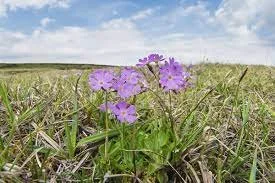
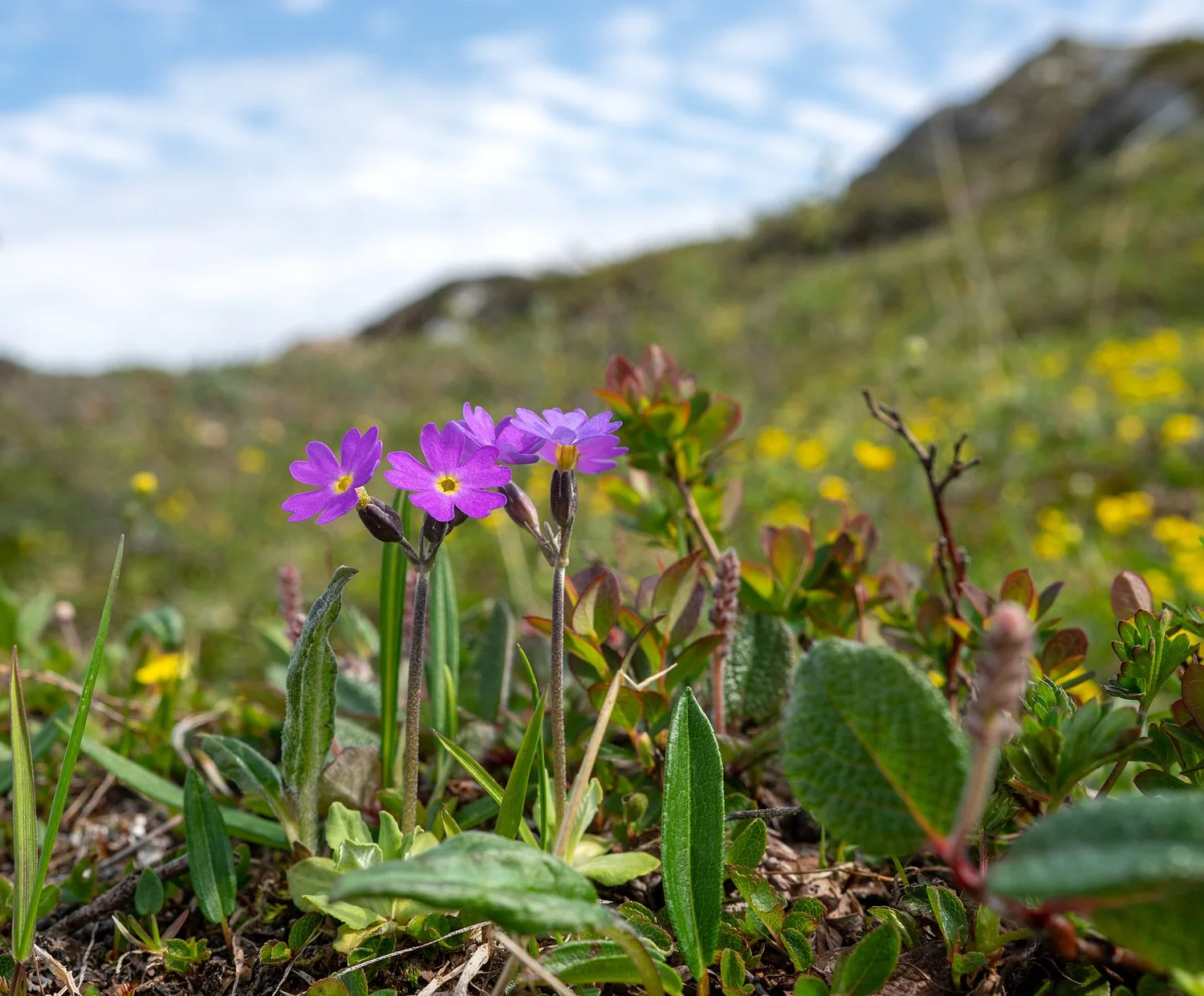
Above left: Primula farinosa, Above Right: Primula scandinavica
The species itself was only identified as a new species of Primula in the mid 1800’s by botanist James Smith; until then flora records from Orkney including the 1812 version of Flora Scotica and the book that inspired this years piece of artwork Patrick Neill’s 1806 ‘Tour through some of the Islands of Orkney and Shetland’ where it is marked as a sperate species Primula farinosa. It was only after James Smith, a nursery owner from Ayr was brought a sample of supposed P. farinosa found in a new habitat, that with study he was able to confirm it as a new species. It is likely that all records of P. farinosa on Orkney, were actually records of P. scotica. The actual distribution of P. farinosa is currently restricted to the north of England, there is also a third related species P. scandinavica found in mountainous regions of Southern Norway and adjacent Sweden.
Sketchbooking and Work up of Artwork
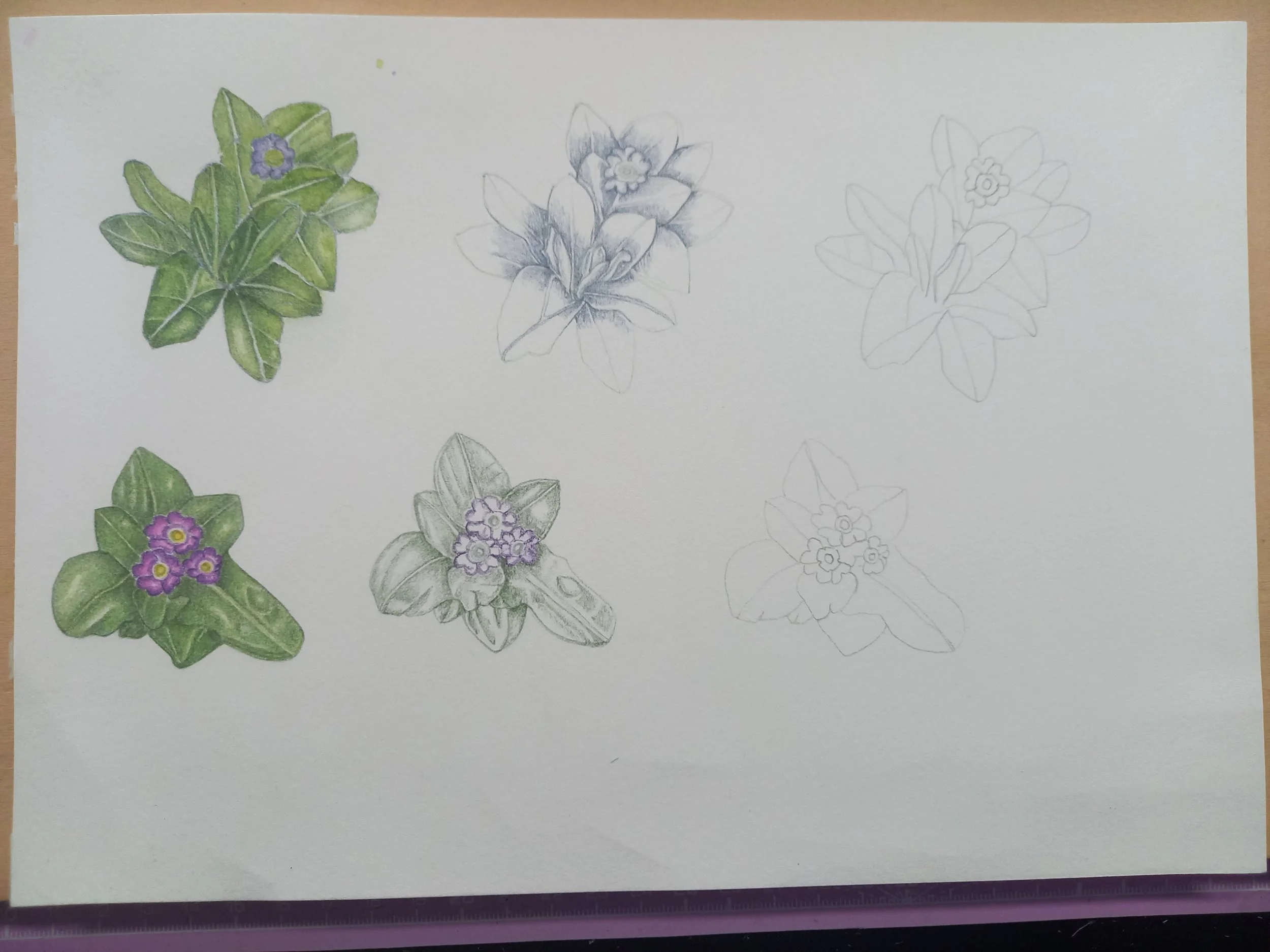
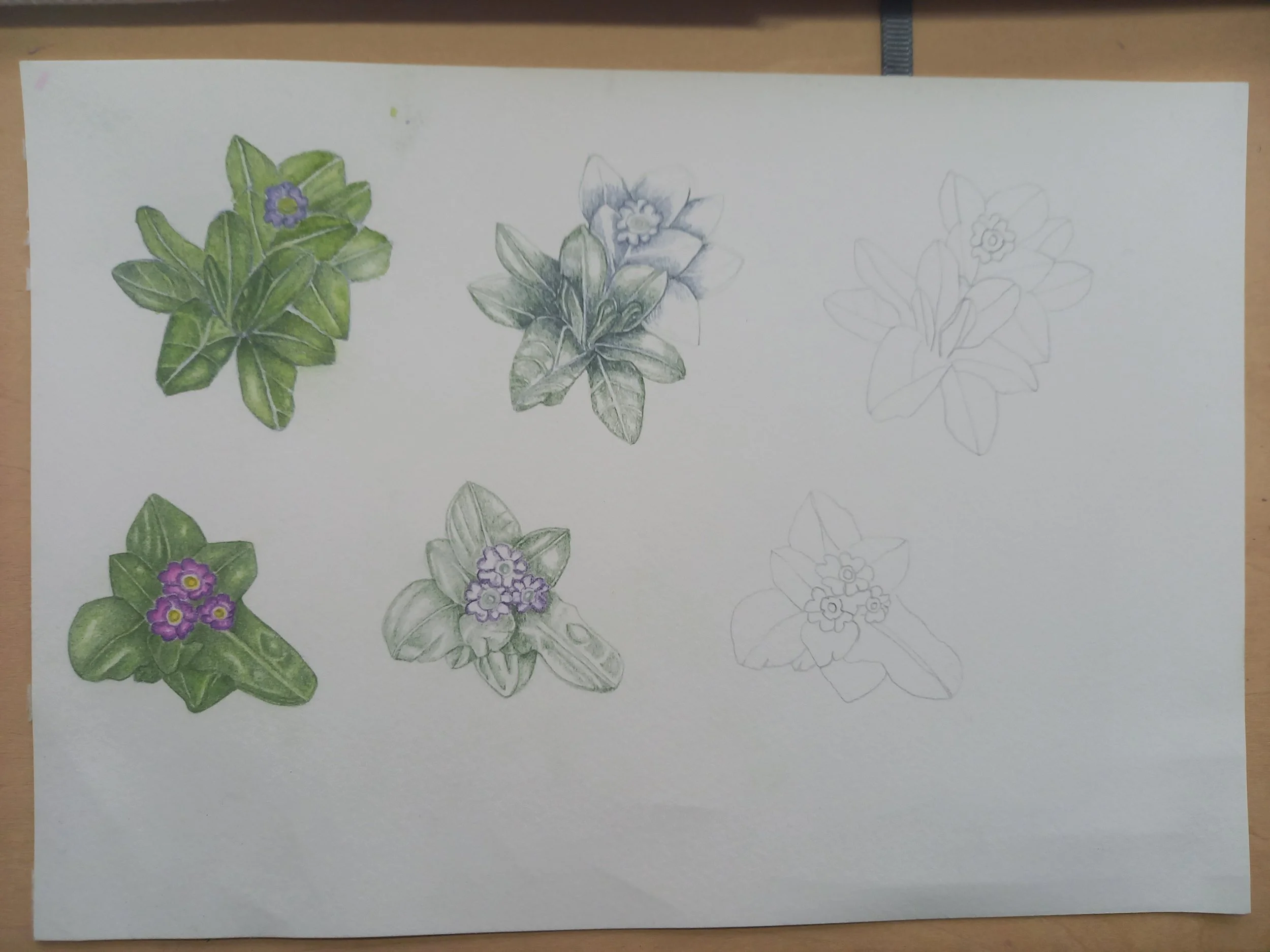
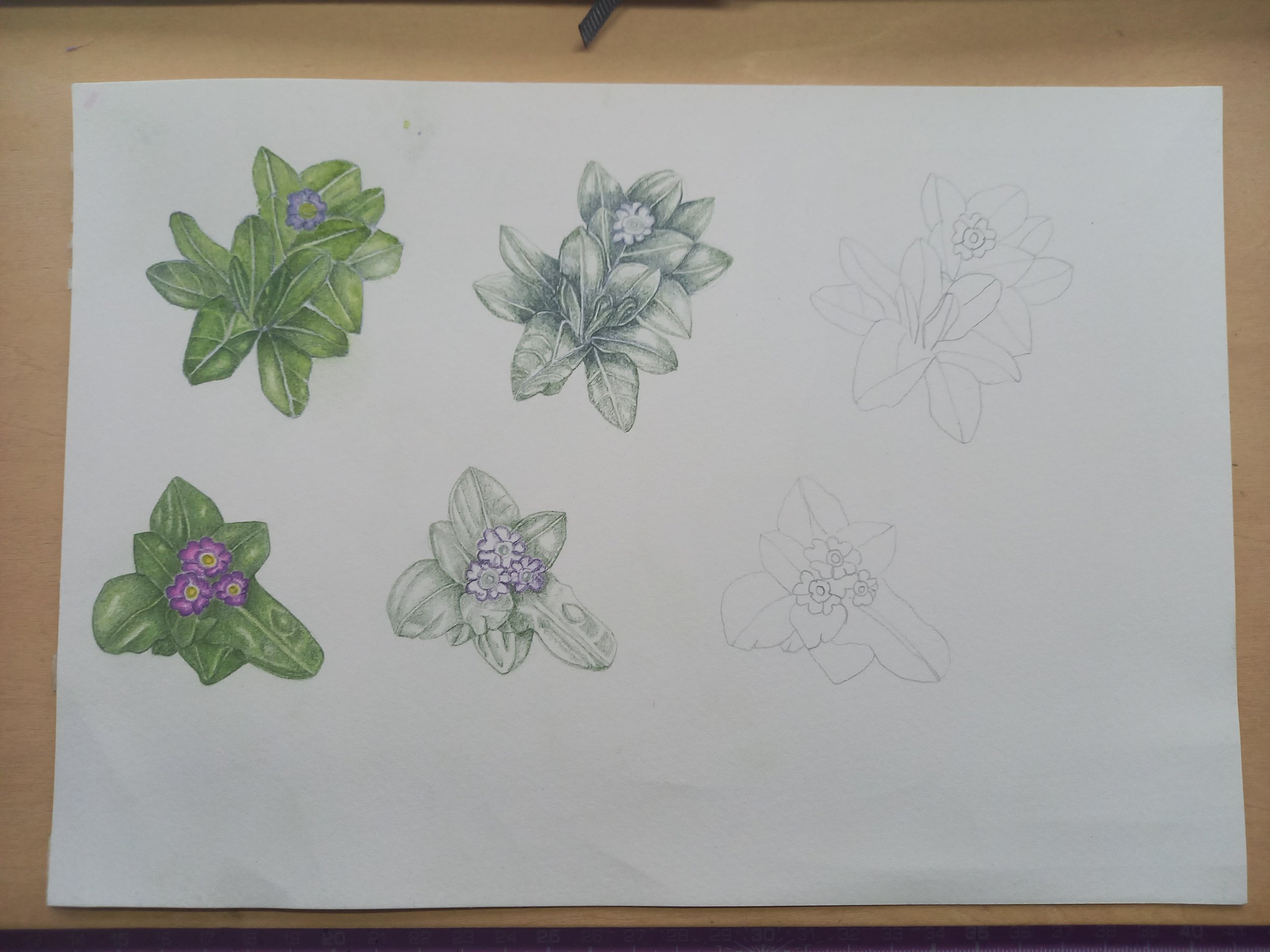
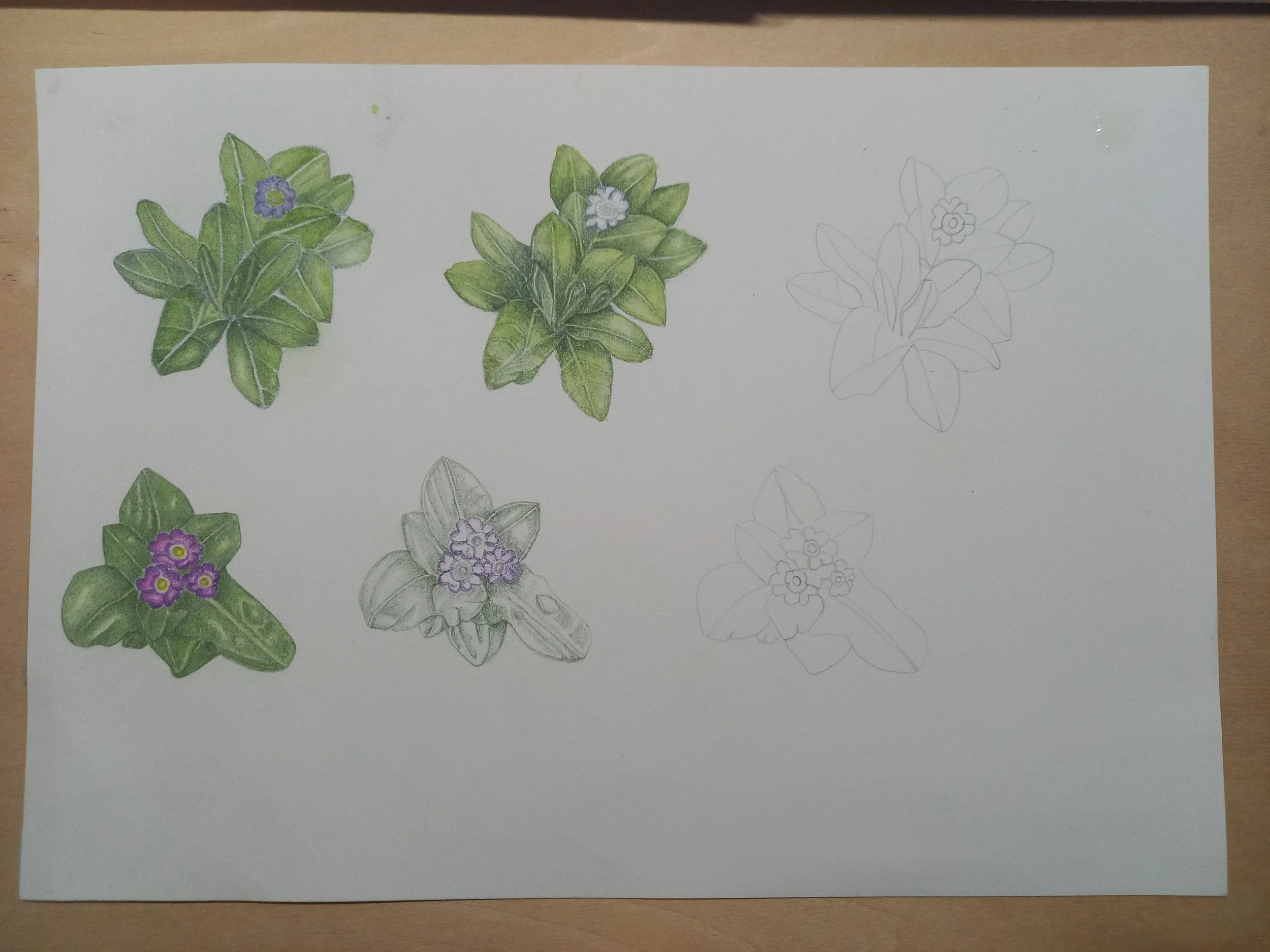
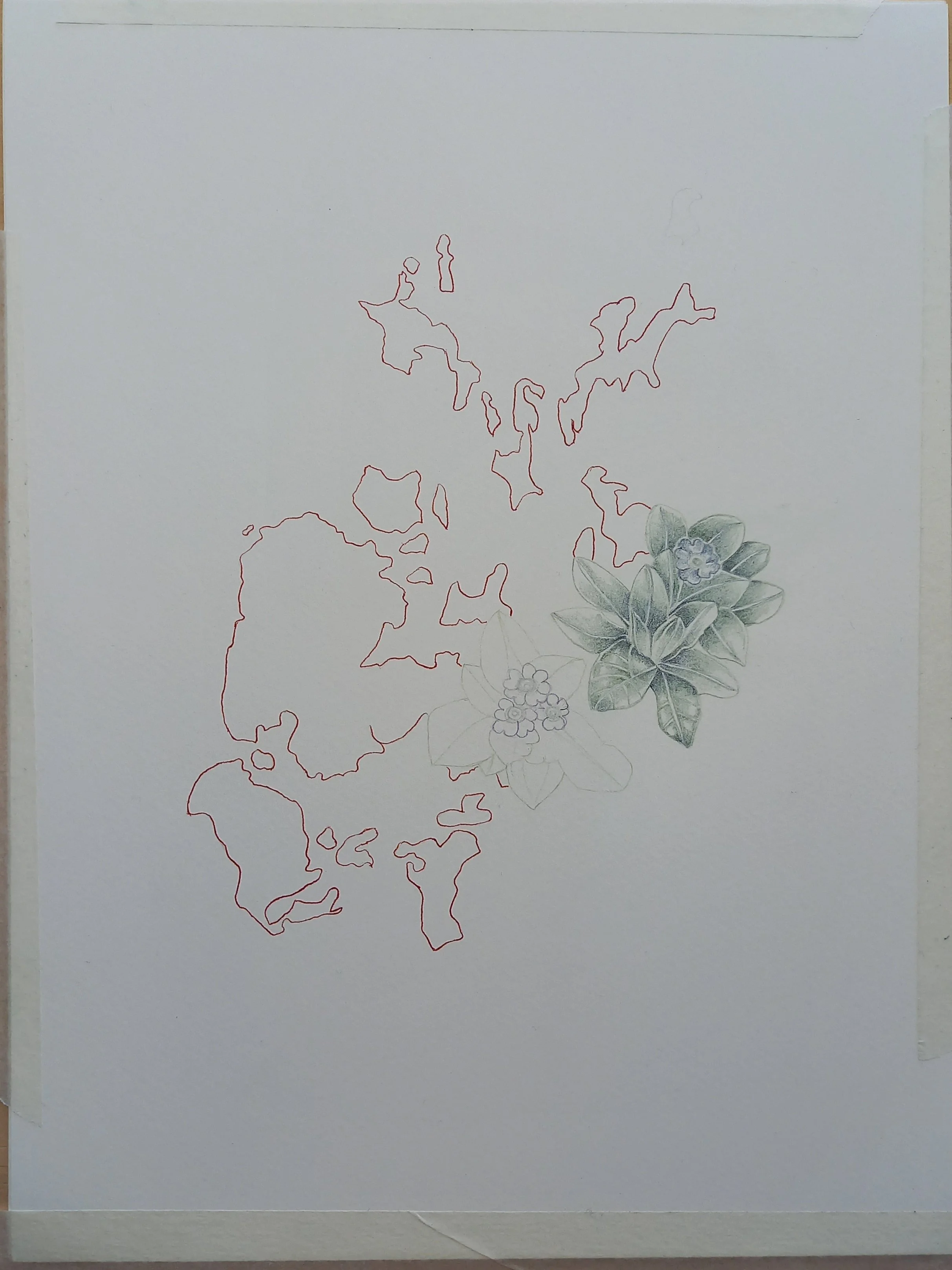
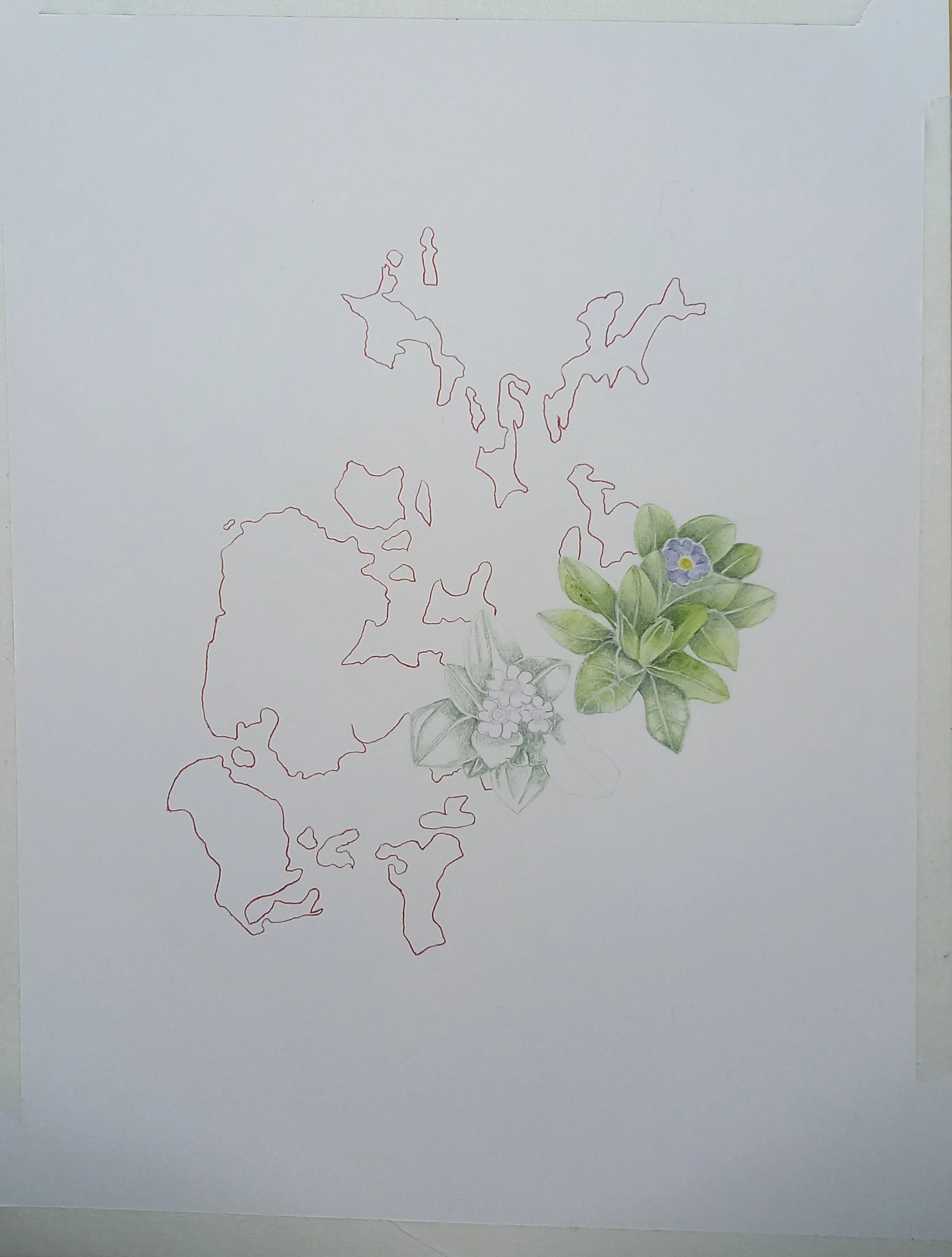
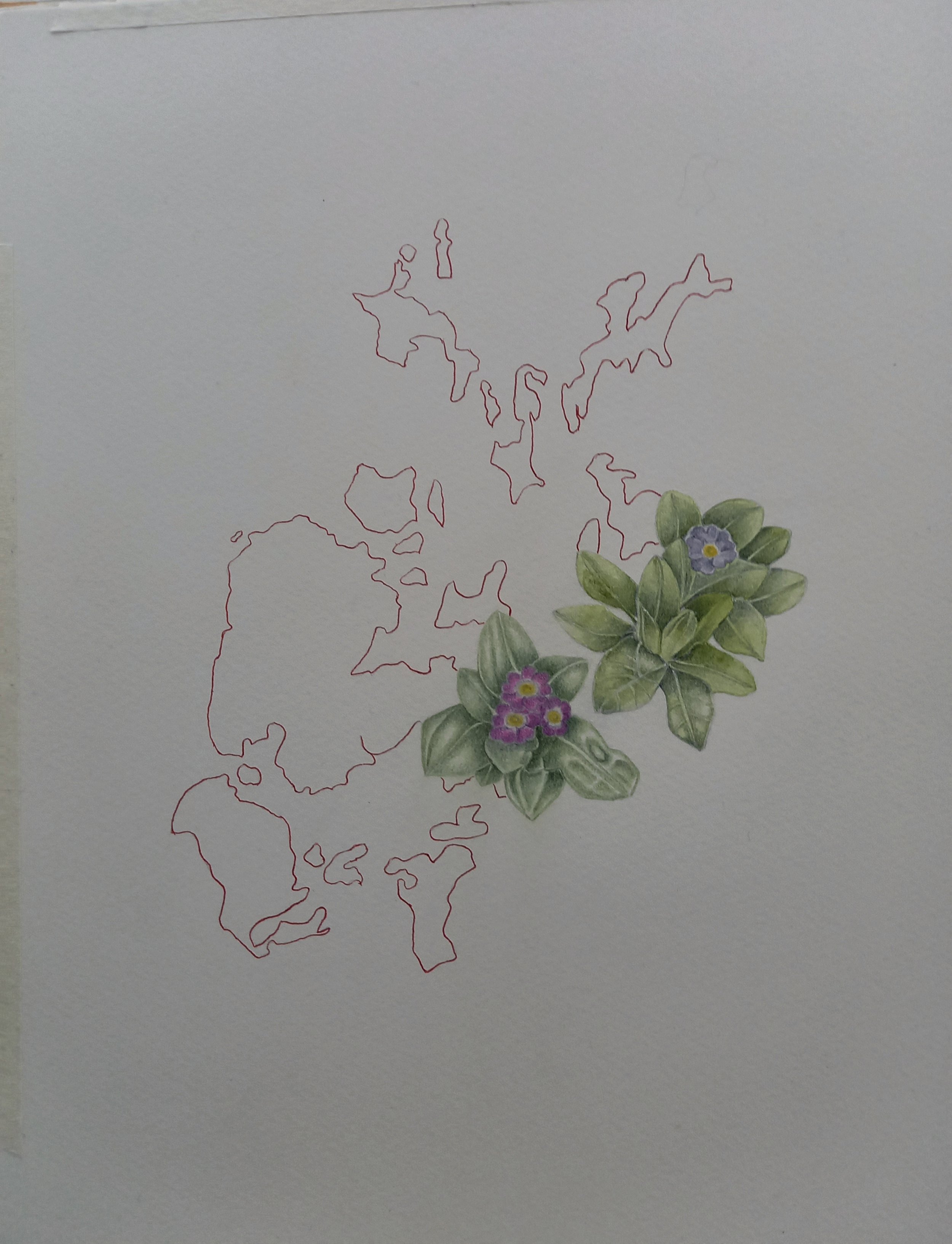
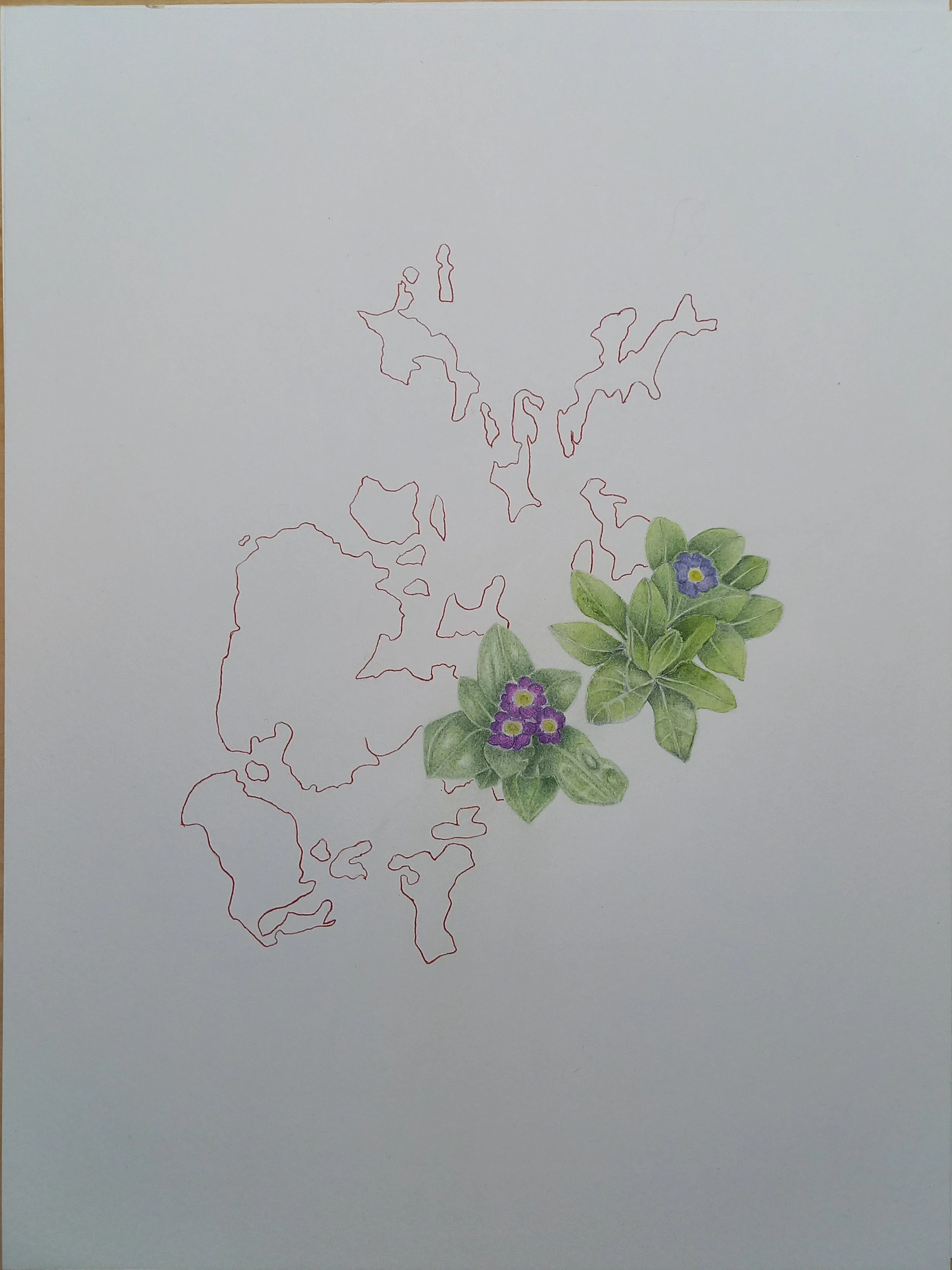
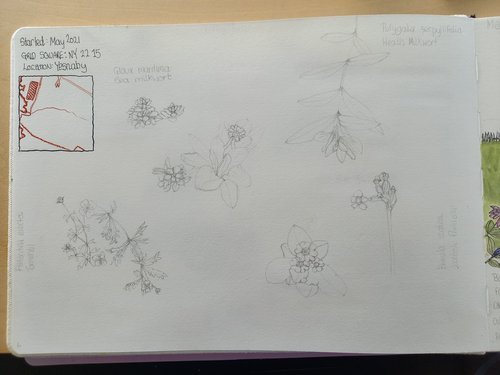
For this project, I have illustrated Primula Scotica larger than its true size, to emphasis the features. I started by producing a full colour sketch in my sketchbook, to work out the the right watercolour pencil and dry colour pencil combination, as this is a piece of work I am doing using the 'Wendy Hollander' method.
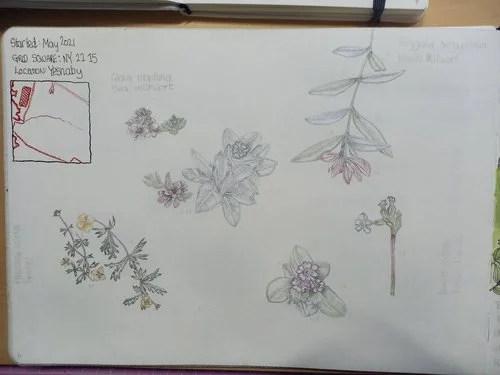
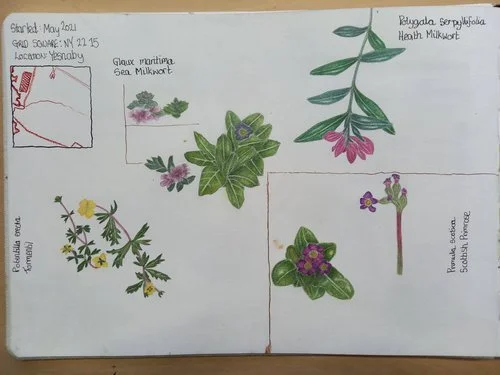
Next stage was a full practice on my preferred surface of Legion Stonehenge Aqua HP. This is necessary as the colour saturation can vary between surfaces, and also allows a full practice with the watercolour pencil overlay. You can see the various stages of the combined technique below.