
Oh, The Places You'll go! (Part 1): The Creative Journey

A man on foot, on horseback or on bicycle will see more, feel more, enjoy more in one mile than the motorised tourists can in a hundred miles.
Edward Abbey (1988) Dessert Solitaire
Prelude: A bike and a Sketchbook
I grew up in the 80/90's as a self-styled androgynous tomboyish girl; a decade of toy stores with 'boys' and 'girls' toys, power-dressing women (essentially women dressing to look physically bigger in an attempt to be noticed in the workplace) and lost radical feminism, where the idea of genuine emancipation seemed to have been packed away, replaced by easier to sell cultural and liberal versions; coupled with the realisation that very little feminism had got beyond the bohemian lights of London and so elsewhere careers advice for girls was stuck in the 60's, and the homemaker badge in Brownies still existed. My early bikes, up until I was a teenager were typical girls bike, so my first bike of my own choice, a red girls mountain bike became a beloved item; a tool to escape and dream on, where I could imagine a life of adventure and science. I would find myself buying MTB magazines and taking books out of the library, trying to teach myself how to slide around dirt corners and bunny hop logs in the local park (not easy on a relatively heavy 90's mountain bike). It was pure escapism from a society-conforming world of Cindy dolls and boy bands especially post puberty; when I found a complete social disconnect from my group of friends. Thirty years later, riding my blue gravel bike to places where I draw the surrounding plant life and landscape, my mind is taken back to those happy days of messing around in the park and an escape from the confused postmodernist world of today.
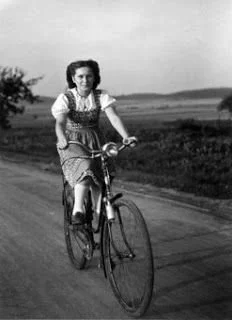
Simone de Beauvoir, feminist, existentialist
My love of the bike, is one that has been shared by women across the centuries as they sought to escape the confines society placed on them and experience liberation, if just for a few hours; from the Suffragettes who used it as a tool to deliver information, to feminist and existential writer, Simone de Beauvoir to escape momentarily a Nazi occupied Paris. The bike for 'the second sex' has always been about liberation and by using mine to take me to my artwork locations it feels as if I'm keeping that tradition alive, and much like Simone found it also offers thinking time, and a place to plan out your approach to a piece of work, allowing me once at my location to be fully focused on my sketchbook.
As with cycling and exploring, although never prohibited from dabbling in it, the world of art and ecspecially its exhibition and published form was off-limits until the last half a century for the female sex, even growing up in the 80's and 90's as an enthusiastic artist the majority of art I knew of was by men, and unless you were exceptionally talented it wasn't something a working class girl was encouraged to pursue. I now feel incredibly lucky to be an emerging artist in the very female dominated genre of botanical art and illustration, there is no shortage of inspiring female artists and I believe we should be proud of this, as back in 1910 Beatrix Potter famously known for Peter Rabbit and Friends but also an incredibly keen mycologist, produced an exceptional series of illustrations and a detailed scientific report of a quality as good as any man, but was refused publication due to her sex, as was in the Victorian era. Growing up I would be inspired by the pictures of early Edwardian and Victorian women who in their voluminous dresses would sit, draw and document plants, allowed to do so because their class status allowed slightly more freedom and often chaperoned by men, none the less it showed to me that being female didn't stop you being able to explore and draw; it was a very early example of 'if you can see it, you can be it'.
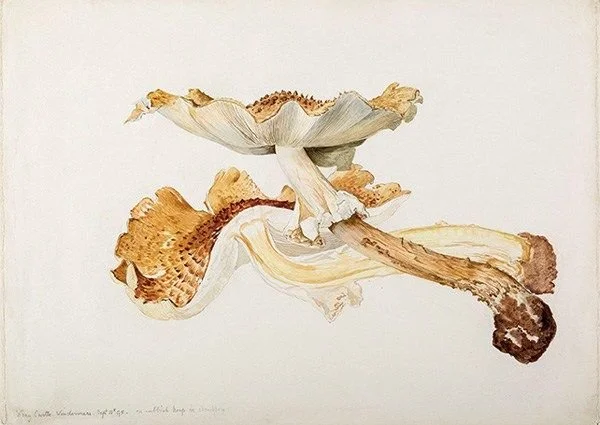
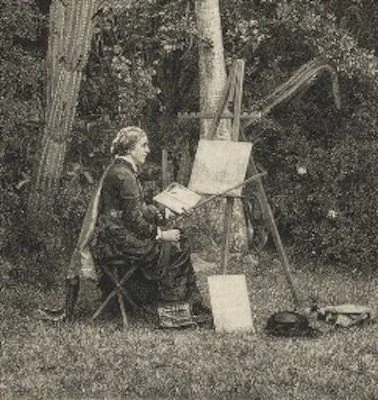
Above Left: Mycological illustration (Unpublished) by Beatrix Potter and Right Marianne North, Botanist and Botanical Artist
Journey not Destination
Forward to 2005 and I'm in the process of completing my PhD at Manchester University in Peatland Restoration Ecology. One of the palaeoecology professors comes into the staff room and starts chatting to me, asking how my research is going he tells me to remember that a PhD is about the journey, not just the destination. Back then I was in my mid-twenties scrapping by on a bursary and looking forward to a paid research post, I didn't fully appreciate the advice; some twenty years later and good old female melancholy I fully get it. So this post is about exactly that, valuing the journey to a place as much as the place you're going to. It is the essence of what slow travel is, what Edward Abbey in his quote was talking about; a quote which has become my mantra. The remainder of this post is a reflection on my creative journeying by cycle and foot so far, what I'll term creative feminism a self-styled alt-humanistic strategy of shifting out of the fast lane of what techno-society expects and appreciating the moment and connecting with it on a deeper level.
Patience is waiting, not passively waiting that is laziness. But to keep going when the going is hard and slow - that is patience.
Leo Tolstoy
It has been 3 years, since I received my Ruben and De Grants funding from the John Muir Trust along with some additional funding from the Alpkit Foundation: the pandemic (and some degree Brexit) fallout had meant issues getting equipment, problems finding places to stay and finally in 2022 when I was organised to go, widespread rail service cancellations in Scotland brought it to a halt. What it has allowed is thinking time to realise that the funding which helped me purchase my gravel bike [named Tabatha} is about creating a long-term legacy of producing my artwork as carbon neutral as possible and not about a one-off jolly around the Scottish Highlands, and with retrospect it would personally have felt a waste of funding to utilise it for one single trip. Instead, I've used my bike to visit and identify multiple locations, all of which are being annually visited to add more detail to the plants and landscapes I am documenting.
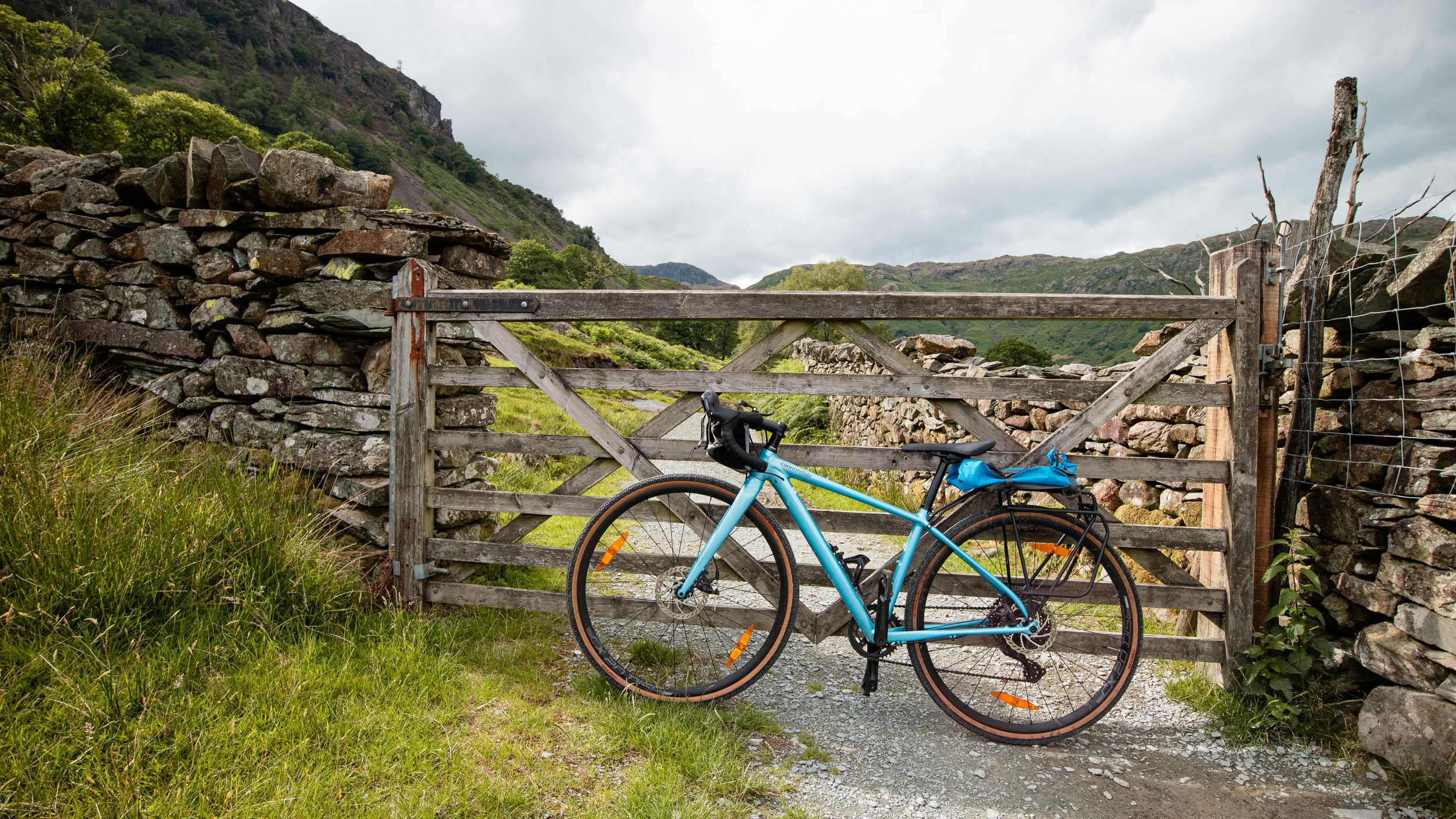
Gravel bridleway along Great Landgale Valley
One of my first boggy opportunities to explore via bike and foot came in the Lake District. I am fortunate to spend the same two-week period in the valley of Great Langdale, courtesy of my at the time partners’ parents. This has allowed me to document in my sketchbook, the same areas of acidic bog for the last two years since completing my SBA diploma, and will be an ongoing project. Documenting plant community change with changes in local climate feeds into my background of plant biogeography and also with illustrating the same species, refines my artistic technique. It is also a fantastic rideable section of gravel on my bike Tabatha.
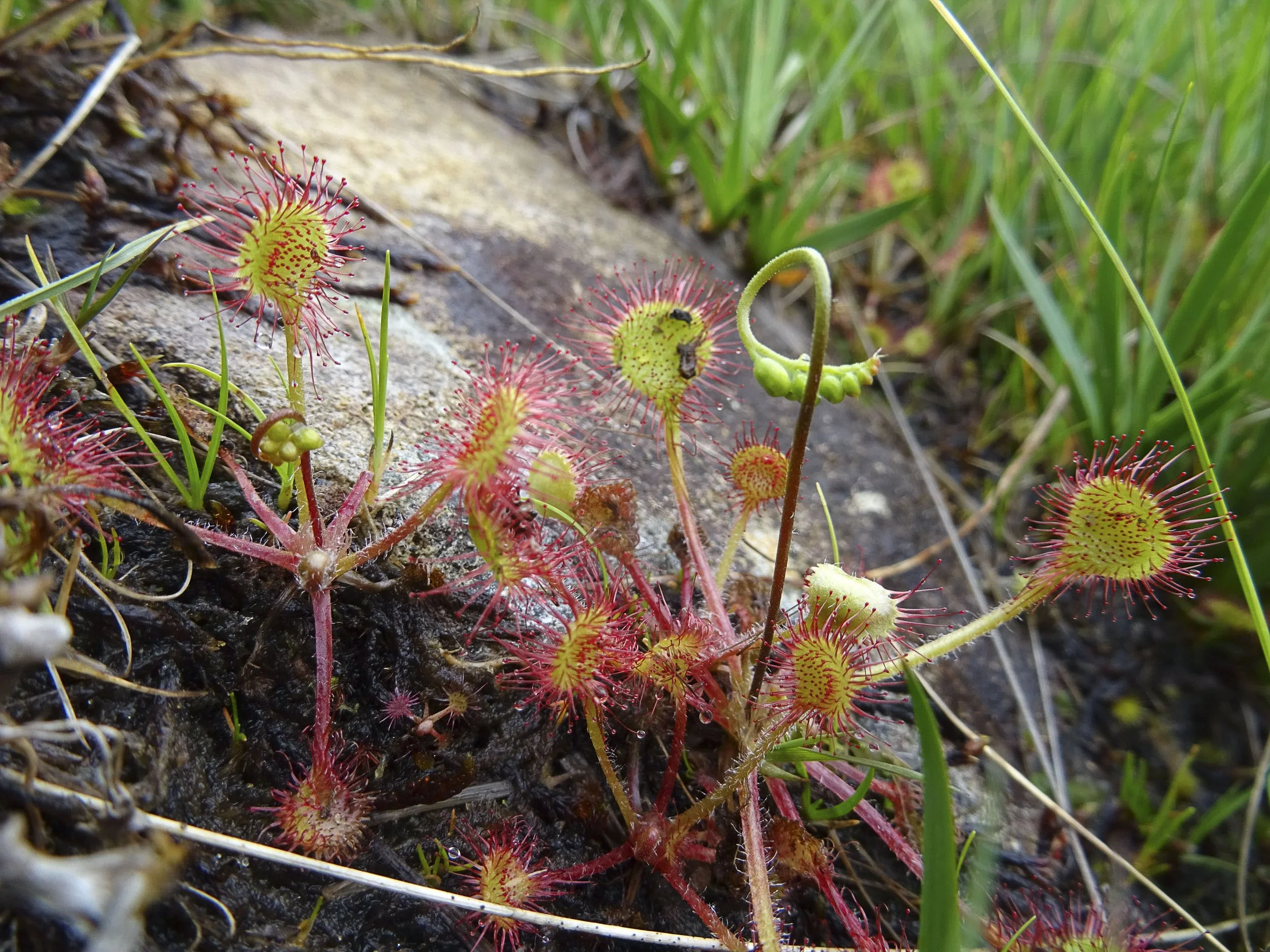
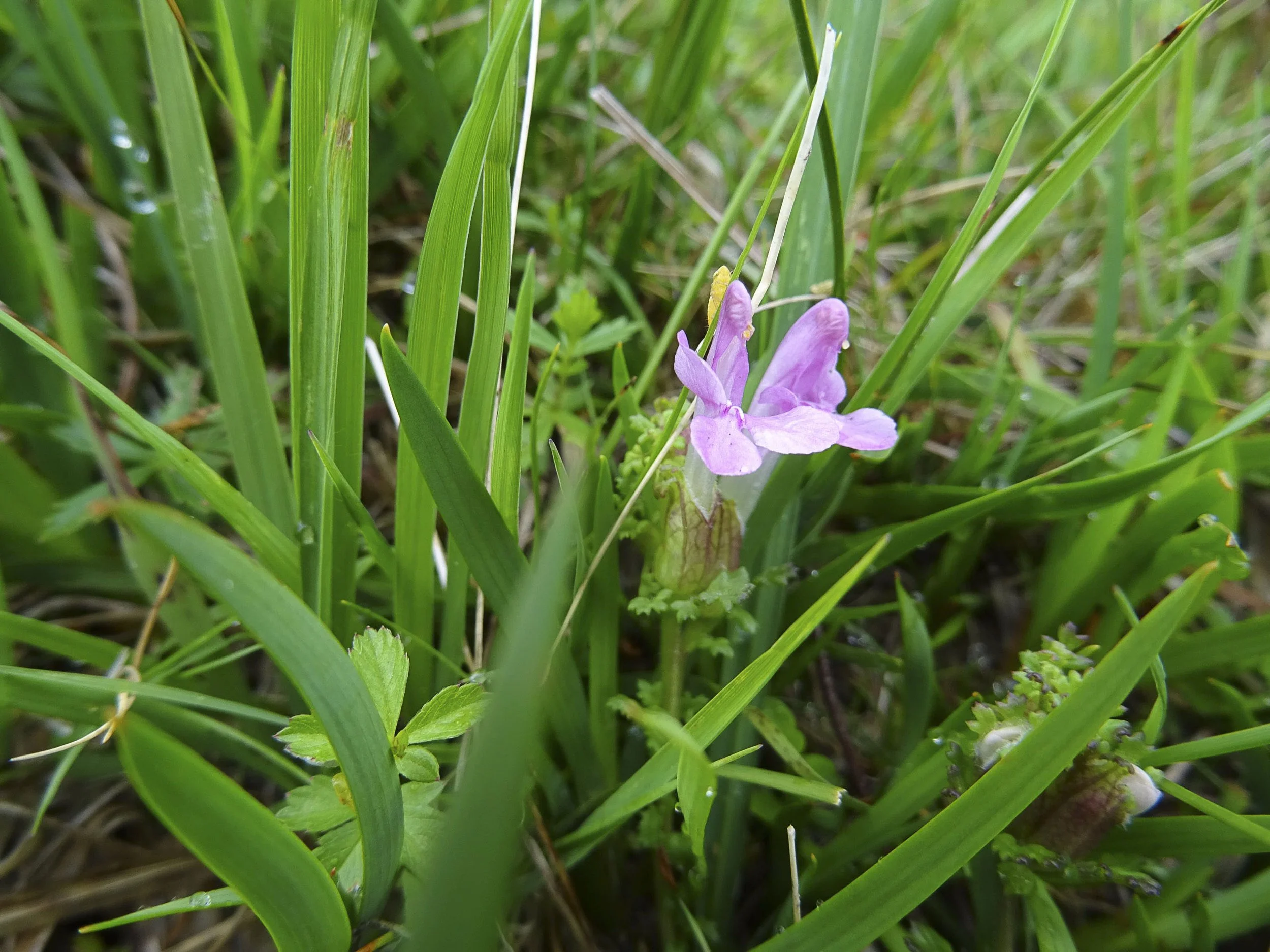
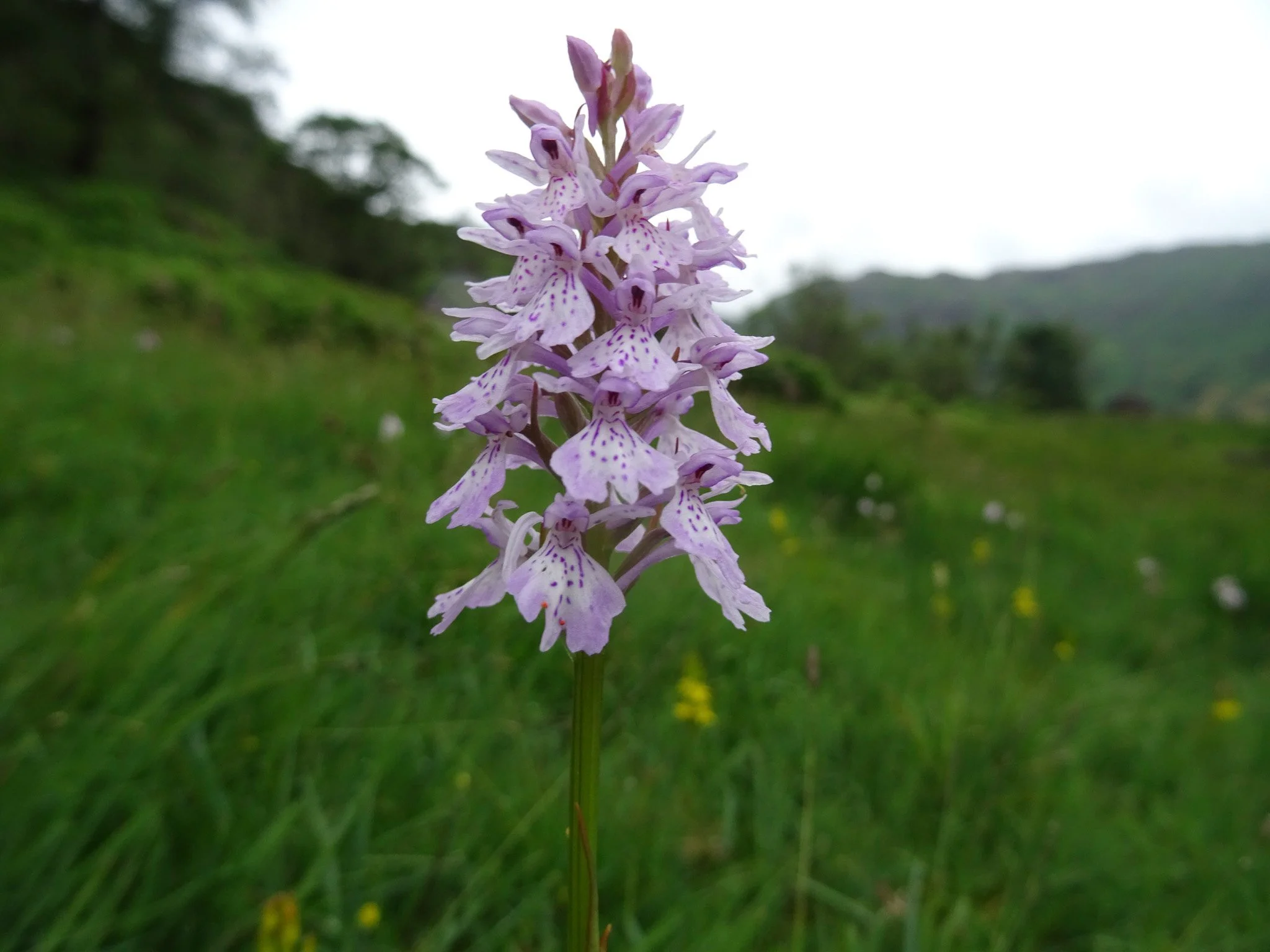
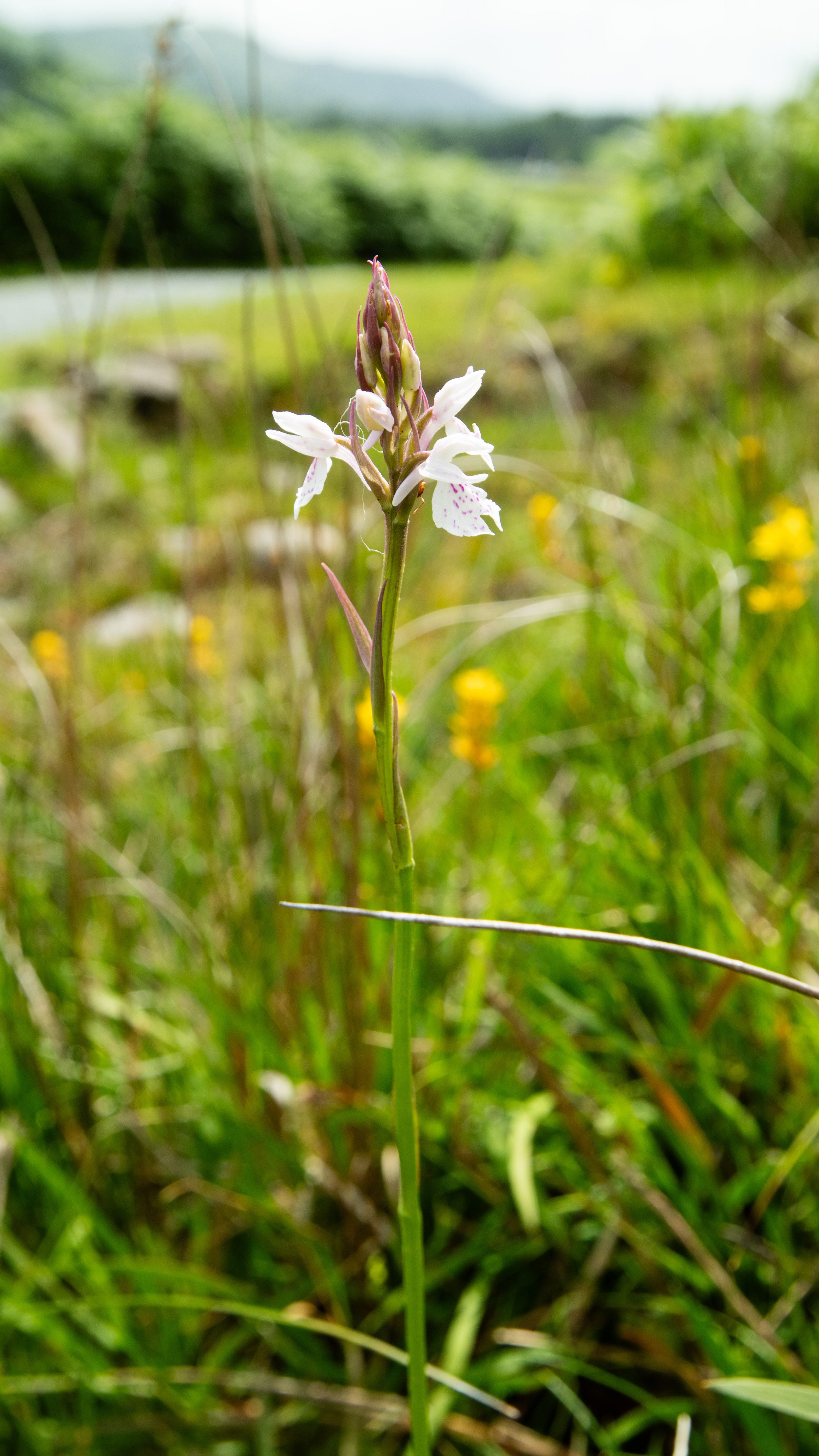
The Oak Howe site at Great Langdale, which is dominated by Narthecium ossifragum [Bog Asphodel] has a number of key species which are shown above including; Drosera rotundifolia [Round-leaved Sundew], Pedicularis sylvatica [Lousewort] and Dactylorhiza maculata spp. [Heath Spotted Orchid varieties] The density of Sundew at this site is quite remarkable and one of the best I have seen to date.
In addition, I am documenting a second area of rocky plant communities with the tiny species Anagallis tenella [Bog Pimpernel] indicative of acidic mire or flush, within an area of upland dry acidic grassland containing the mat-forming succulent Sedum anglicum [English Stonecrop] with its pale pink, 5 petalled star-like flowers and the creeping violet flowers of Veronica officinalis [Heath Speedwell], again this site feeds into my background of plant biogeography, documenting the variations in species assemblages caused by hydrological and geochemical hydrological variation.
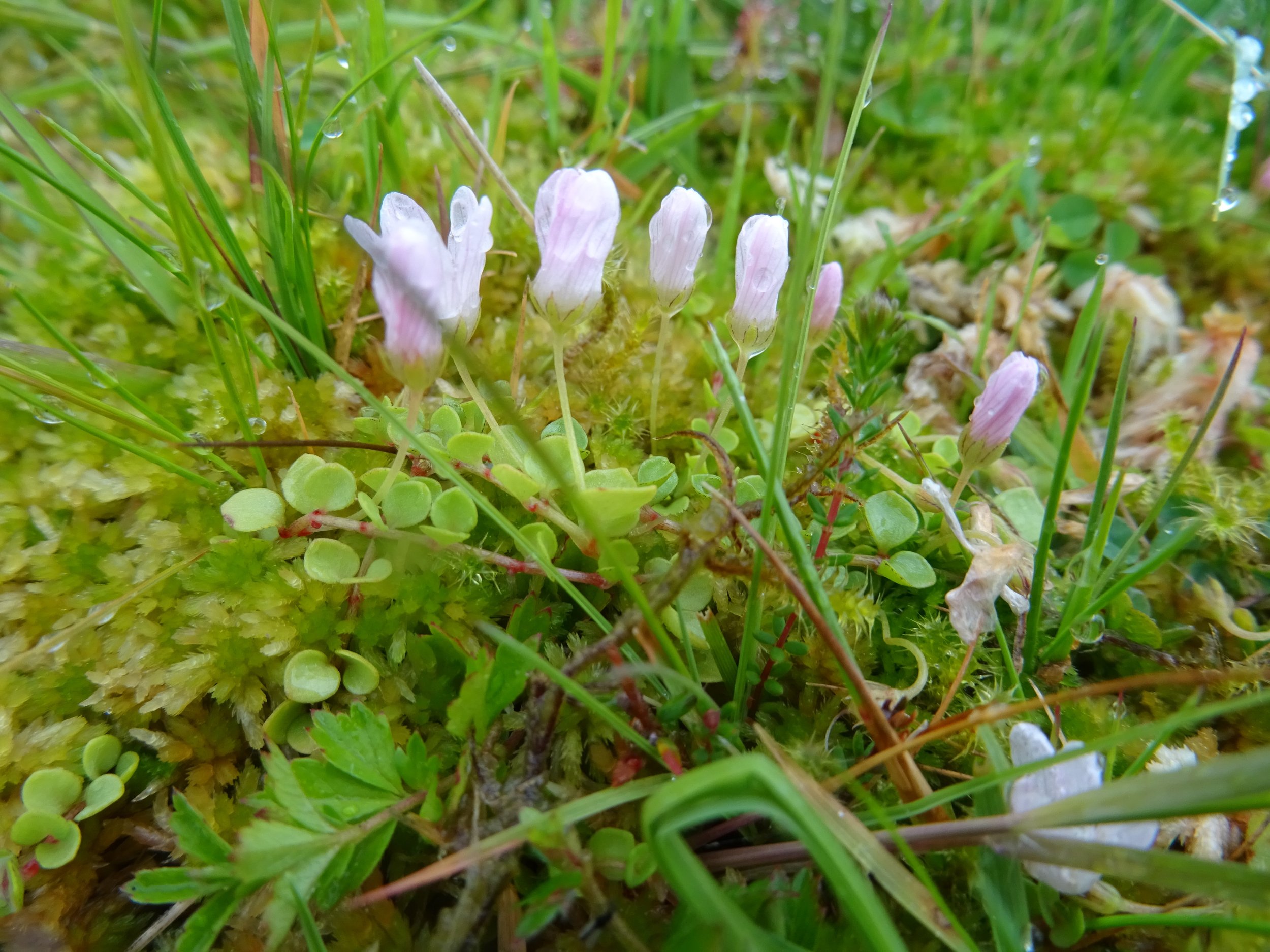

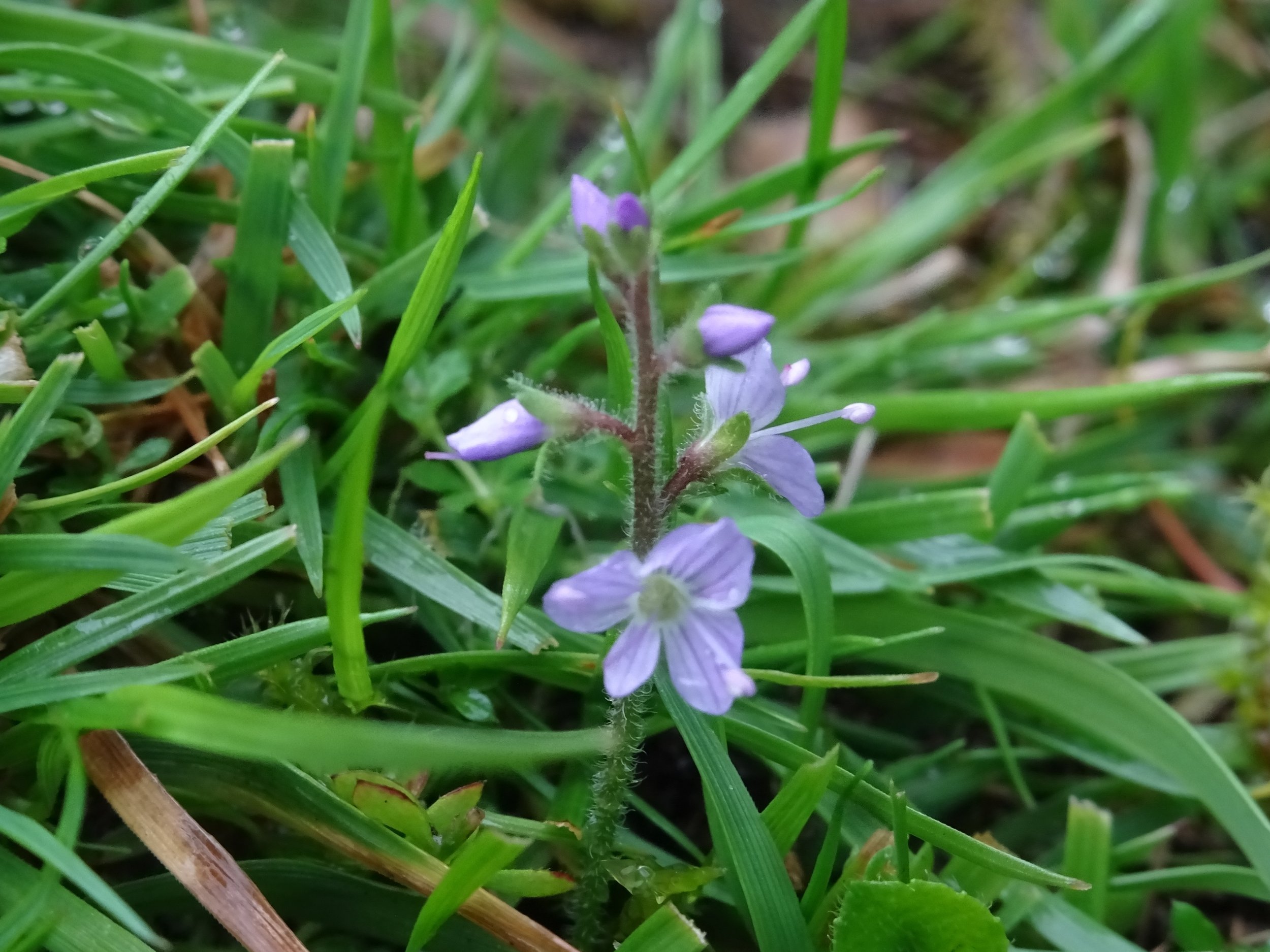
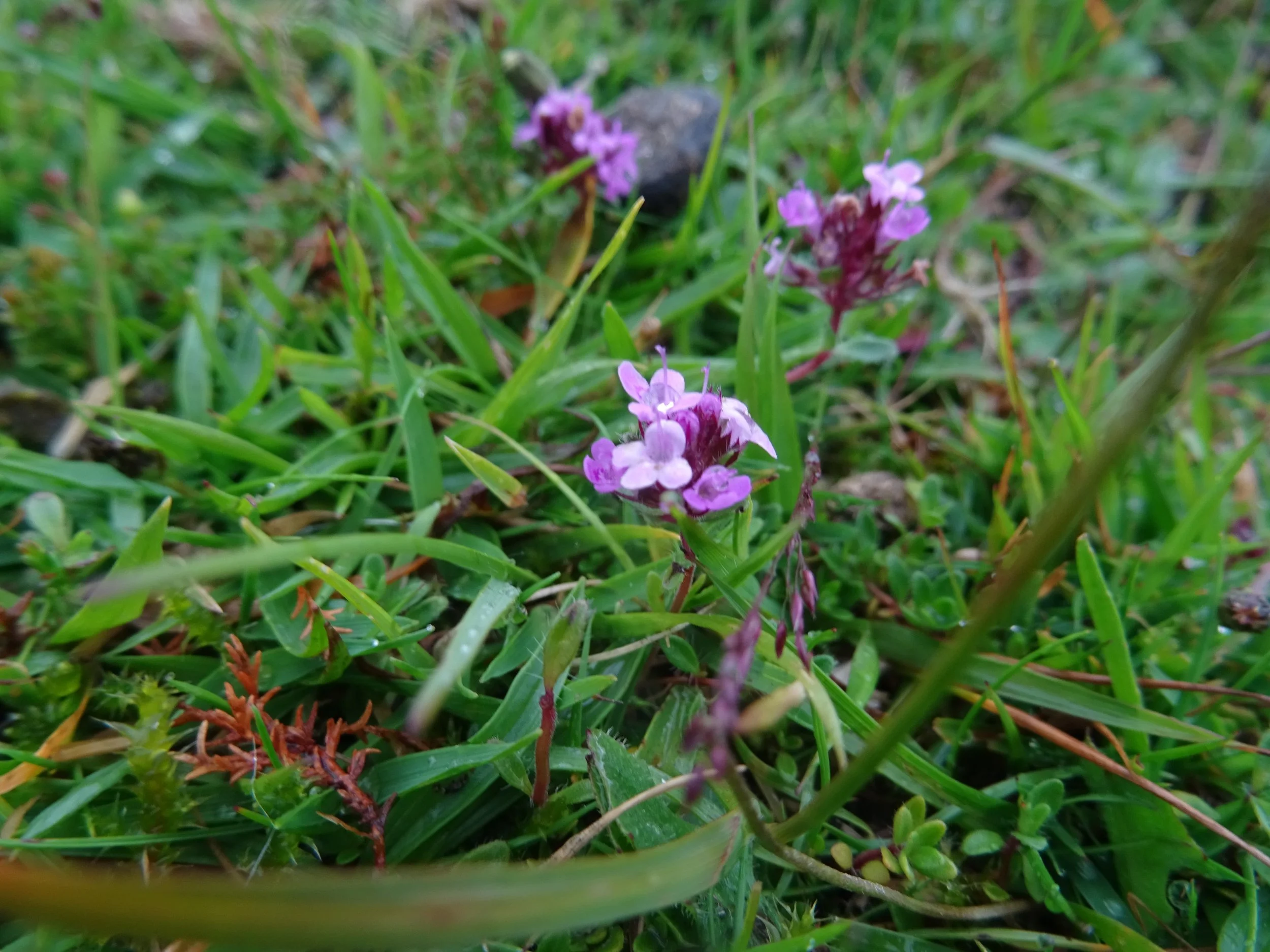
In 2023, I finally got to do my bikepacking across the North Highland route I had originally proposed in my John Muir Trust Project proposal. I decided to use this trip as a recce for places to go back to, and just enjoy the freedom of 3 days of bikepacking alone in the North Highlands. I had been 15 years since I last cycled along the Altnabreac Estate track and it had since deteriorated into a lot of badly filled potholes (sore arms on day 2), in contrast the stretch through RSPB Forsinard Flows was a sandy gravel delight, only made less fun by the un-oiled gates that proved a nightmare to open. As I rewrite this in 2025, the whole area is now a UNESCO World Heritage Site, so I await to see what is done to improve the cycling and walking opportunities (I expect not a lot).
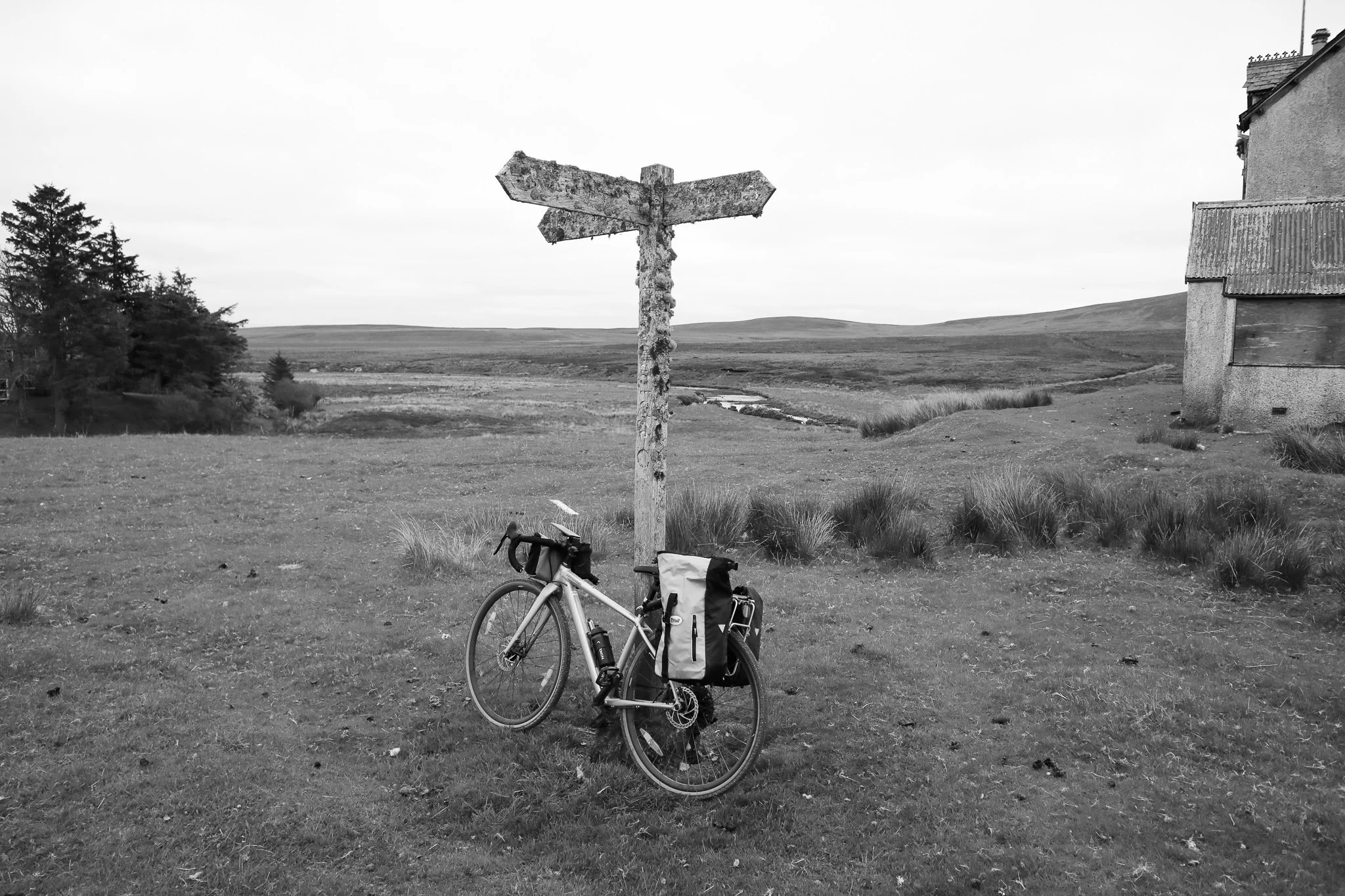
The end of a very pot-holed stretch of estate track, Altnabreac Estate
Day 2 was a stunning road ride through quiet valleys, including Strath Naver and a long climb up to The Crask to the funky NCN post, a packet of crisps and a pint of cola. I ended the day at my B&B in Lairg, Fish and Chips for tea and feeling very happy to have soloed two days of 50 miles with panniers and avoiding being bitten too much by midges.
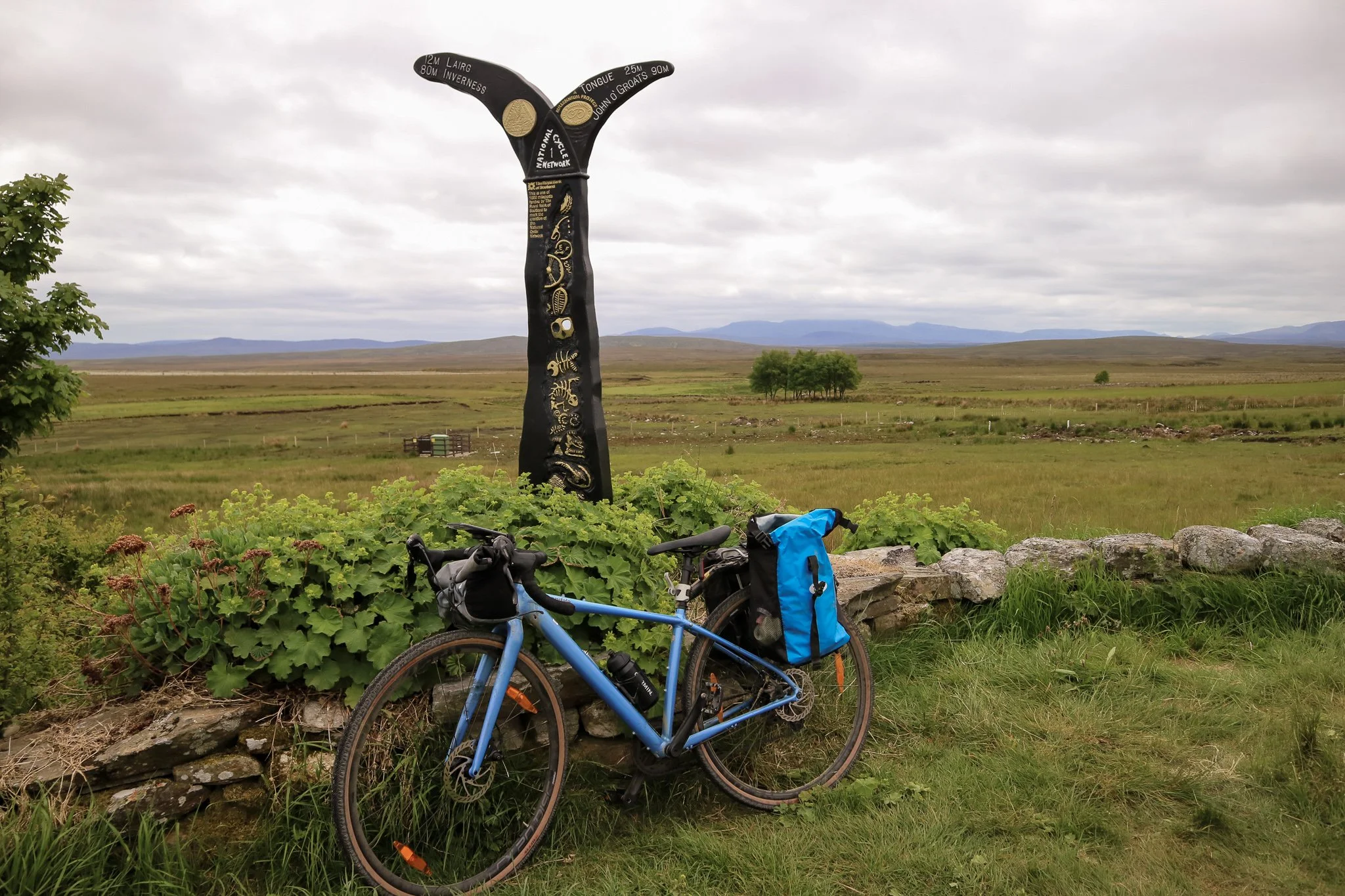
Funky NCN route 1 post at The Crask
Part 2..coming to my Journal in the near future.