Bikepacking #1: Back to the sketchbook and all the small things
Bikepacking Local Mini Project 2022:
Thw Stromness Coasts and Heaths SSI/SAC Sketchbook Project
The Pre-ramble
Having spent January/February finishing one essay and three pieces of illustration work for my SBA diploma, I quite happily temporarily packed away my pencils for a break. With the impending ‘light’ season upon us I switched to finishing the sun lounge art room where I work, which was in a half-painted and blind-less state that I could cope with over winter but would be an unbearable blinding greenhouse come May. So desks and pencils moved, sheets down and swapped for wall paint, with an order in for some day/night blinds for the windows. I now happily had a year-round art room ready for the new season. I’ve also for the first time since buying it, have my drawing desk tilted and why I never did this before, because the difference in comfort is amazing, I have found a workable balance that also allows my pencil tin lid which I put pencils I’m using in not to slide off and my A3 cutting mat is sticky enough on the mat that I can rest my wooden drawing board on without it escaping.
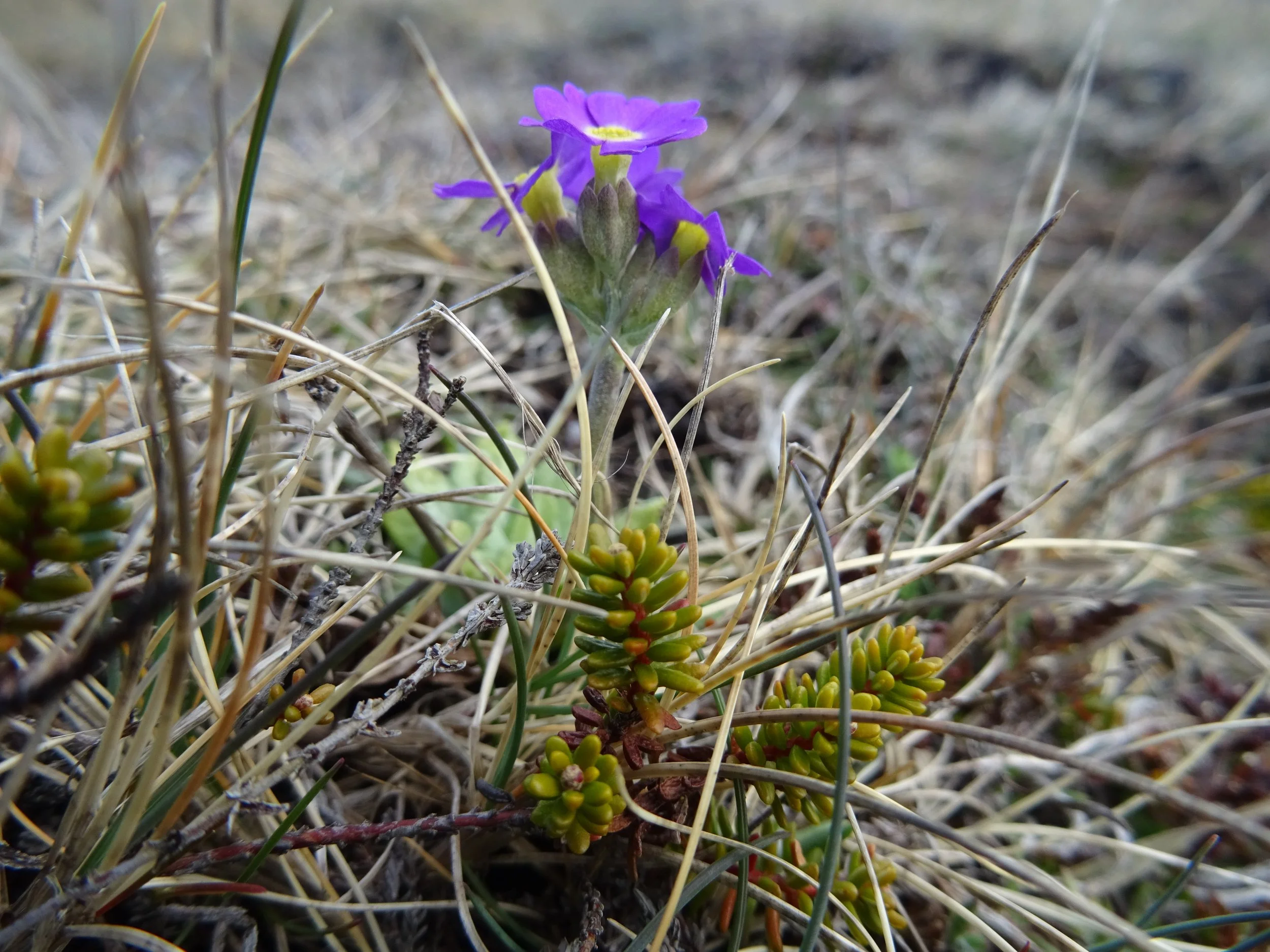
March and April are on Orkney, still quite brownish-green months and it’s a long wait (especially this year of the many winters) for colour and botanical illustration inspiration, that said I really needed to 1) get back into the drawing frame of mind and 2) practice working in the field with my sketchbook more efficiently. Quite by surprise (considering the endless, many winters this year) a botanical rarity was spotted 2 weeks early, that is the jewel in the Orkney coasts and health crown Primula scotica (Scottish Primrose/ Scots Primrose) and I say a rarity, but this year in its first flowering (it flowers biannually May and July), it is locally abundant clearly benefiting from the much lower footfall due to no cruises or coach tours. The arrival of P. Scotica clearly boosted my botanical mood and cemented the idea of using this local botanical hotspot and the area around it to do a small mini project in my sketchbook and take advantage of the quieter part of the season, to brush up on my sketchbook skills and also incorporate a couple of hours bike ride into the day as well. It’s at this point worth noting that my North Highland Peatways Botanical bike-packing project has been postponed until 2022, partly due to issues with potential self-isolation before returning to Orkney, and partly through the COVID bike shortage, which meant I couldn’t source a suitable touring gravel bike before summer. So 2021 has become a much-needed consolidation year using local habitats to produce work that can go to the open exhibition at our local gallery at the end of the year. I currently have a year of foundation membership to the Society of Botanical Artists, and in order to become a fellow member, I need to get work into exhibitions. I am incredibly lucky to live somewhere with amazing plant communities, the one outlined in this post being one of them.
A walk through the flowering seasons
It has been a very compressed botanical year on Orkney, from the early flowering of P. scotia, what has followed has flowered quickly and not been very sustained, partly attributed to the unusually dry conditions through spring and summer, which the flora here is not adapted to. The Stromness Coasts and heaths SAC is designated primarily due to one important plant community, the NVC (National Vegetation Classification) H7 Calluna vulgaris-Scillia verna community given its name by the subshrub presence of Calluna vulagris (Bell Heather) and the early flowering member of the lily family Scilia verna (Spring Squill), the sub-shrub canopy often also include Erica cincera (Cross-leaved Heather) and Empetrum nigrum (Crowberry). it is a community that is found across the coastal heaths of the Highlands and Islands but here on Orkney along with the Northern Caithness Coast, it is the remaining stronghold of P. scotica. Primula Scotica is a very particular species, during the flowering season the land must not be grazed, however during the winter months, it is important to graze the land to keep down any grass species that could become dominant and shadow out this tiny gem. It is a species that probably thrived across the highlands but the advance of ice sheets and glaciers during the Last Glacial Maximum, saw its range restricted to the Caithness coast and Orkney which although cold, was not under a large mass of ice and allowed the seeds to remain dormant and viable until the interglacial period. As I mentioned early this year on Orkney it has been locally abundant (it is only found at this one location, as the rest of the mainland here is too heavily grazed), and its worth indicating that the land at Yesnaby is not winter grazed, but the proximity to the Atlantic Ocean and the winter storms that role in, provides a natural form of canopy control on the heath.
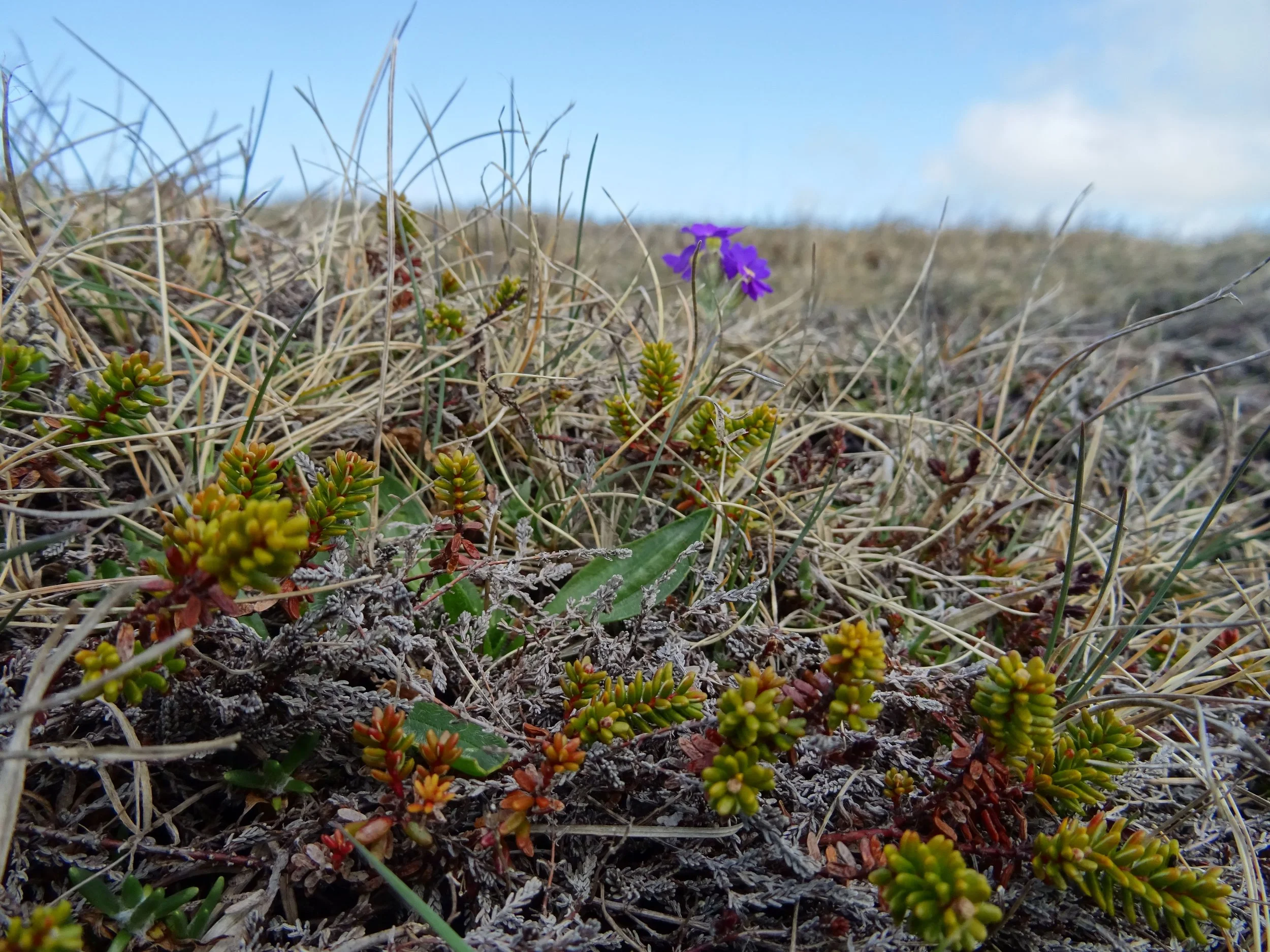
Primula Scotia in first flowering (May), just above the sub shrub canopy of E. nigrum (prominent green leaf-heads), last years E. cinceria and not yet visible C. vulgaris which will flower in August.
After the very early flowering of P. Scotica, the main succession of species starts to flower beginning with with flowering of Salix repens (Creeping willow) and Scilia verna (Spring Squill). Normally S. verna flowers in a stunning show of blue-violet and stays through May into early June, but this year with the season starting late then warming and becoming dry it has been significantly stunted. In the main flowering its is then joined by Lotus corniculatus (Bird’s-foot Trefoil) and Dactylorhiza purpurella (Northern Marsh Orchid) which last into June again however this year it has been somewhat muted and the number of orchids on the very dry heath has been lower than when I was taking photographs for my illustration coursework in 2020.
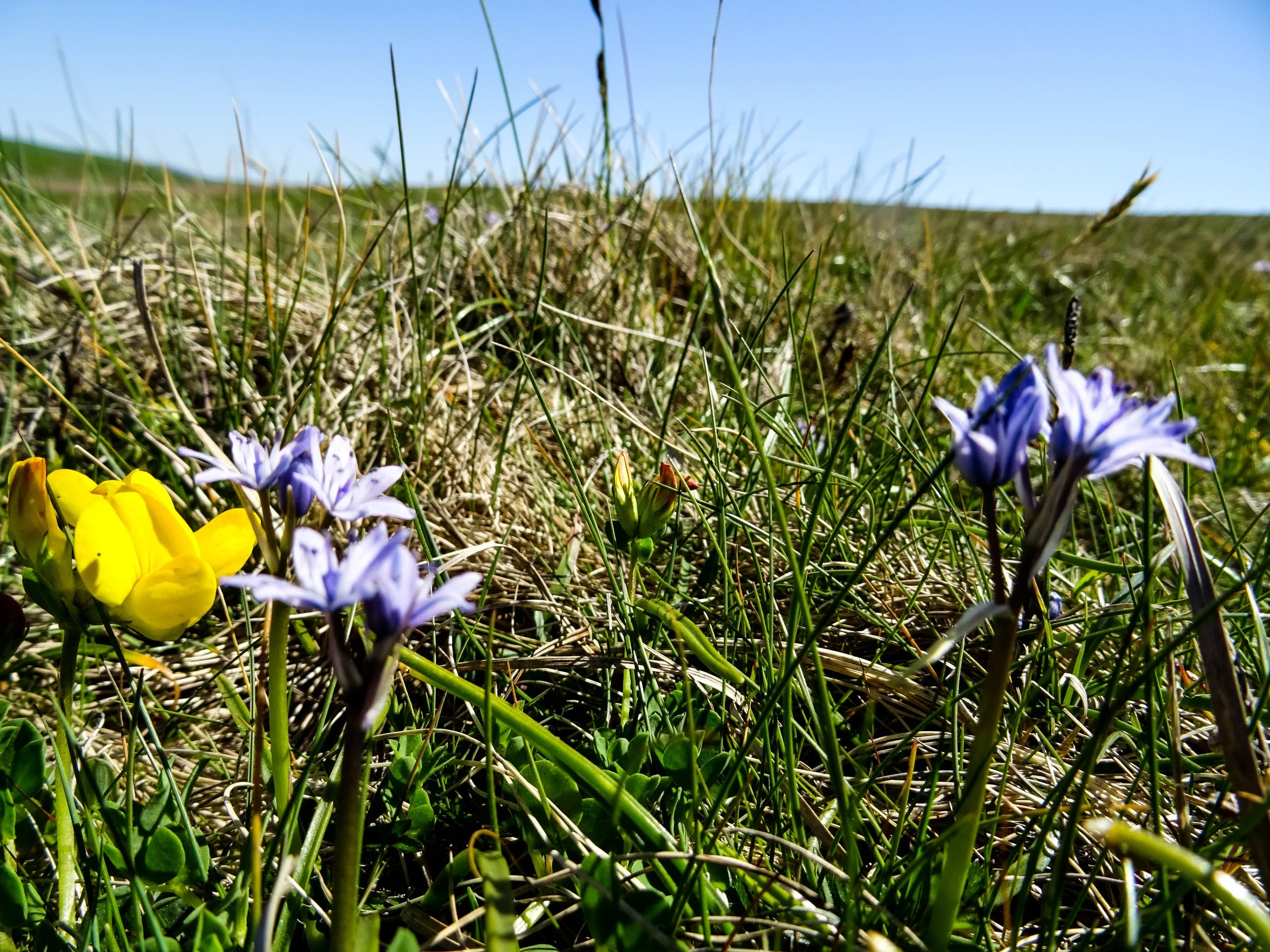
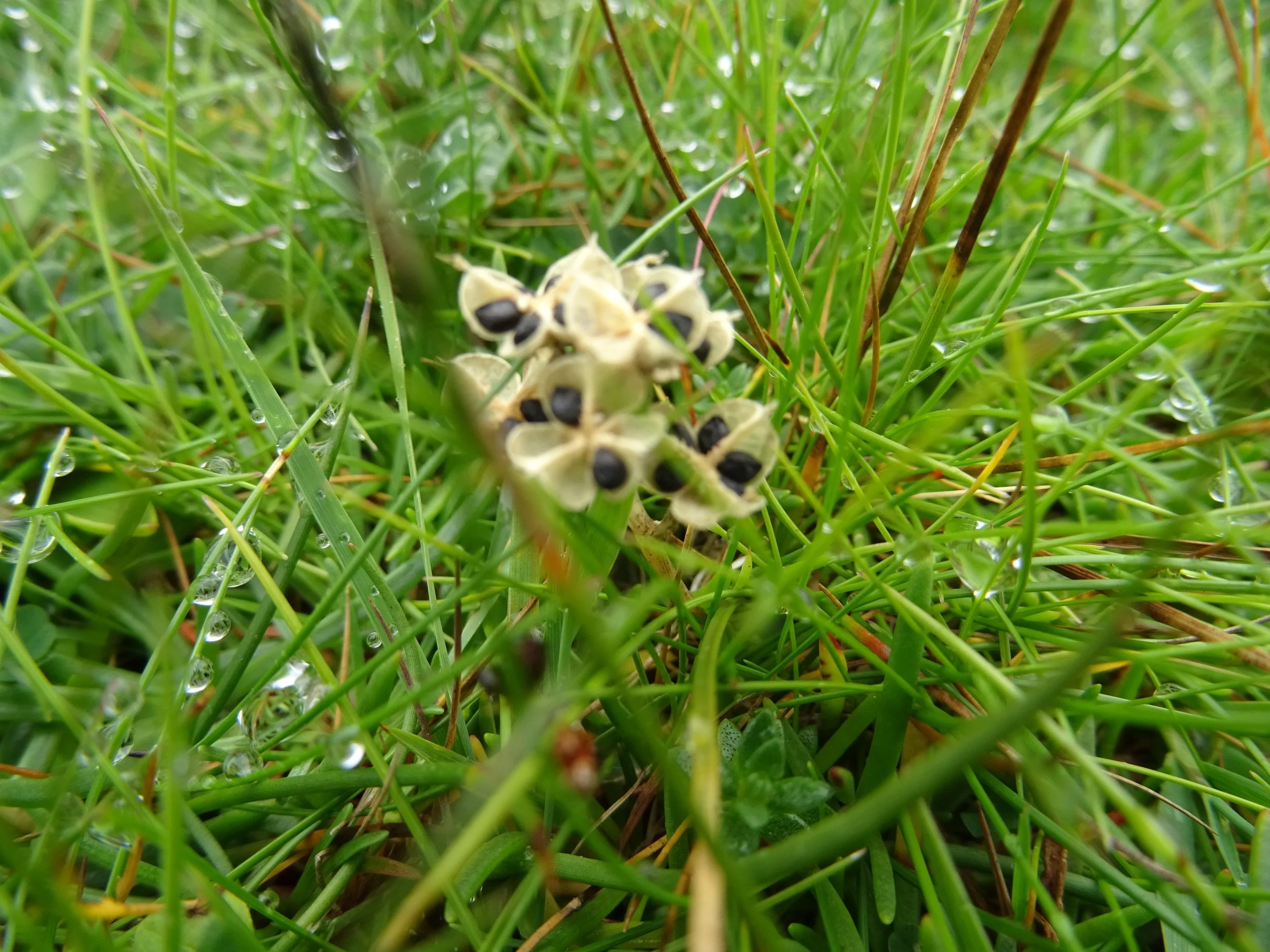
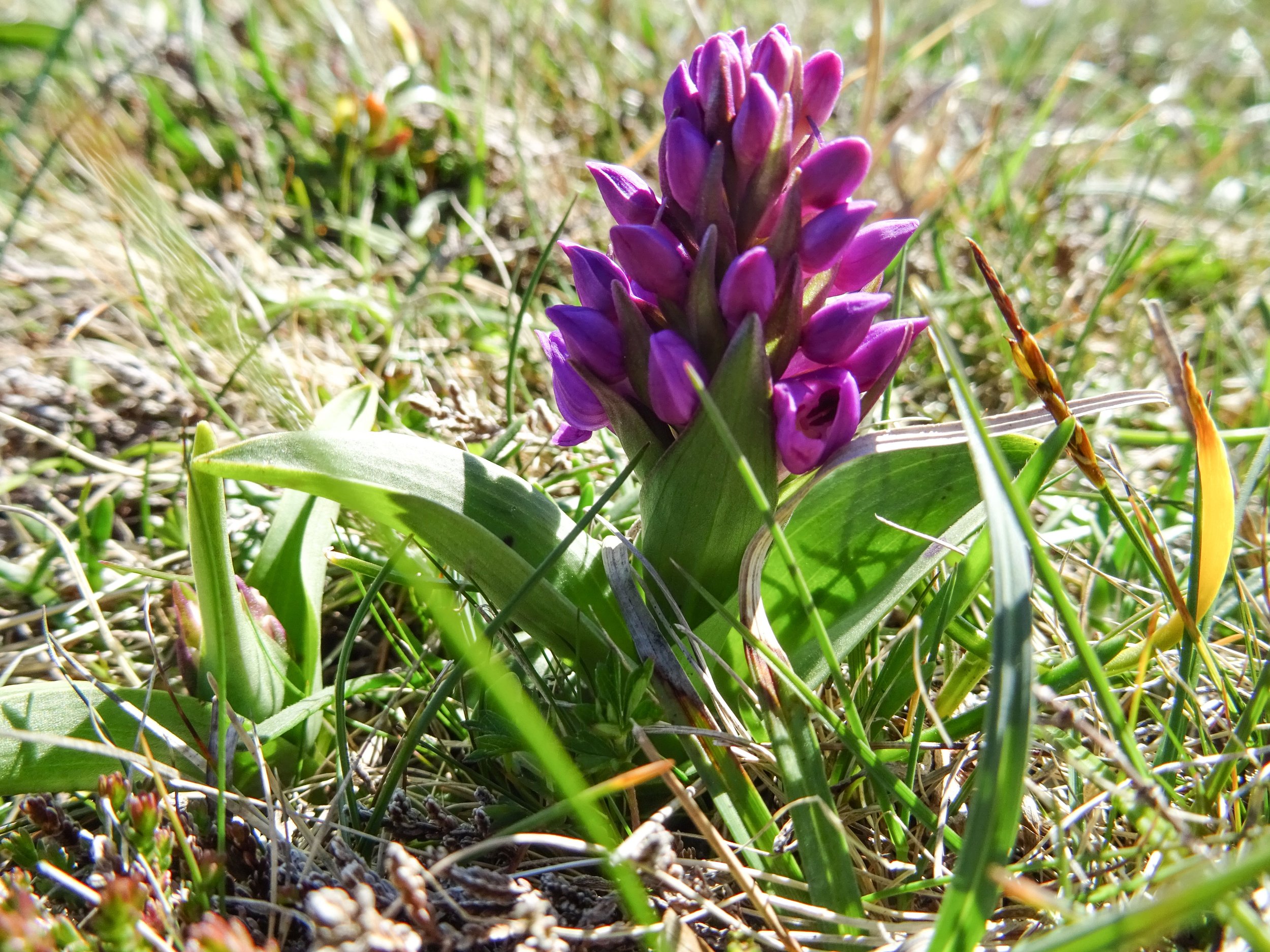
Above L to R: 1) Scillia verna with Lotus corniculatus, 3) seed heads -S. verna and 3) Dactylorhiza purpurella
As S. verna fruits and seeds, a very quick succession of species starts to come into flower, none of the species on these heaths are tall species. Here nature dictates height, that being the ferocity of the western Atlantic winds and the salt driven in on it. NVC H7 typically sits c. 600m from the cliff edge, this is the point when salt spray has diminished, the wind is still a major extrinsic factor and with no intensive land practices such as grouse moors everything is in a subshrub canopy rarely exceeding 30cm in height.
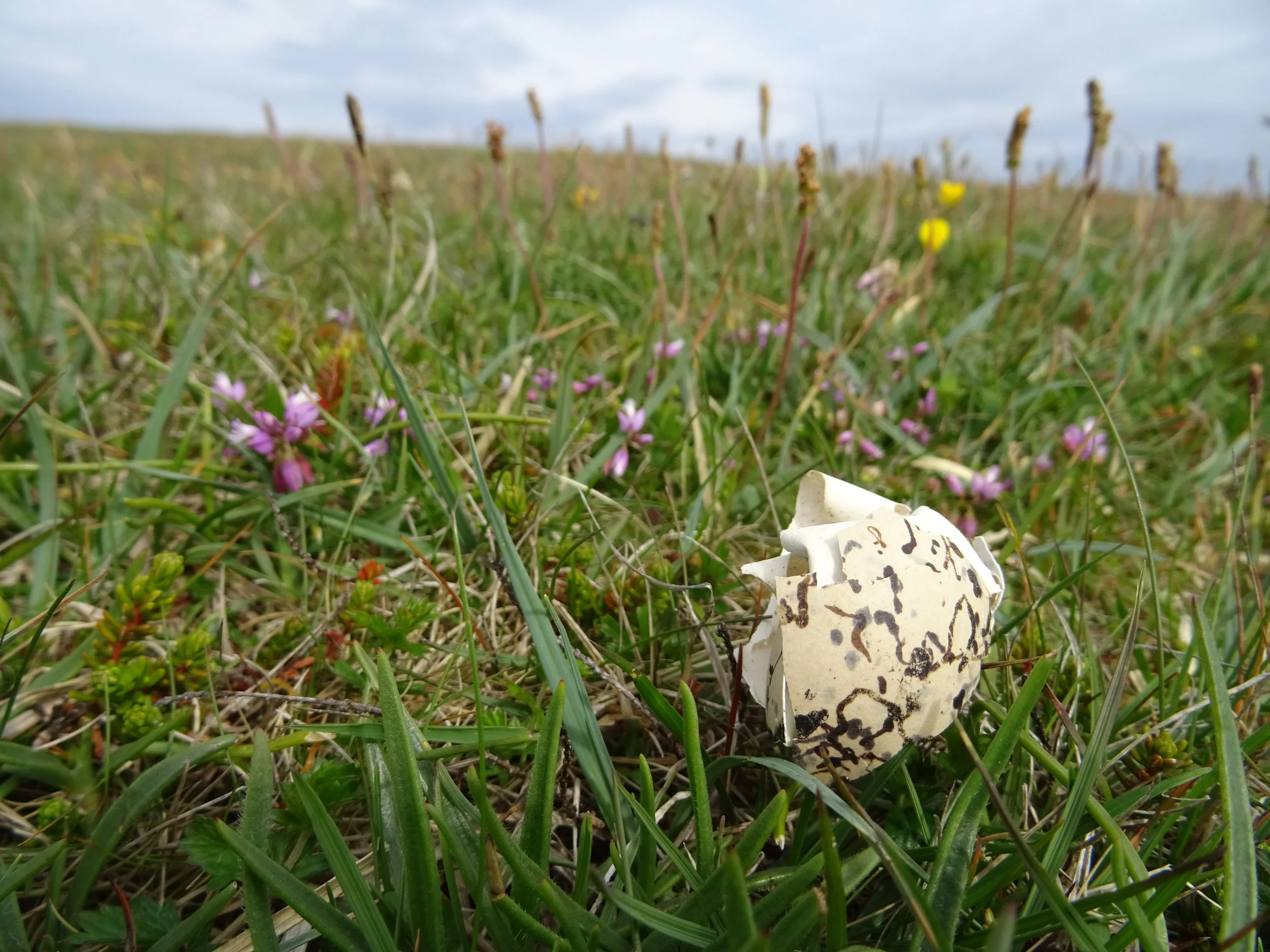
Half an oystercatcher shell sits amongst the heath, with the pink flowers of Polygola serpyllifolia (Heath Milkwort) illustrating the small, ground level world of the coastal heath
As the last of the S. verna goes to seed, the pink flower heads of Armeria maritima (Thrift or Sea Pink) begin to open and flower, creating a boundary to where the coastal grassland communities merge into the heathland. It is a species tolerant of salt, forming close packed hummocks with small and fleshy leaves to resist drying. Within these hummocks, in late May appears tiny flower stems of unopened rose pink buds with eventually form the madder pink clusters of flower heads of thrift. The species flowers, throughout summer before seeding in late August.
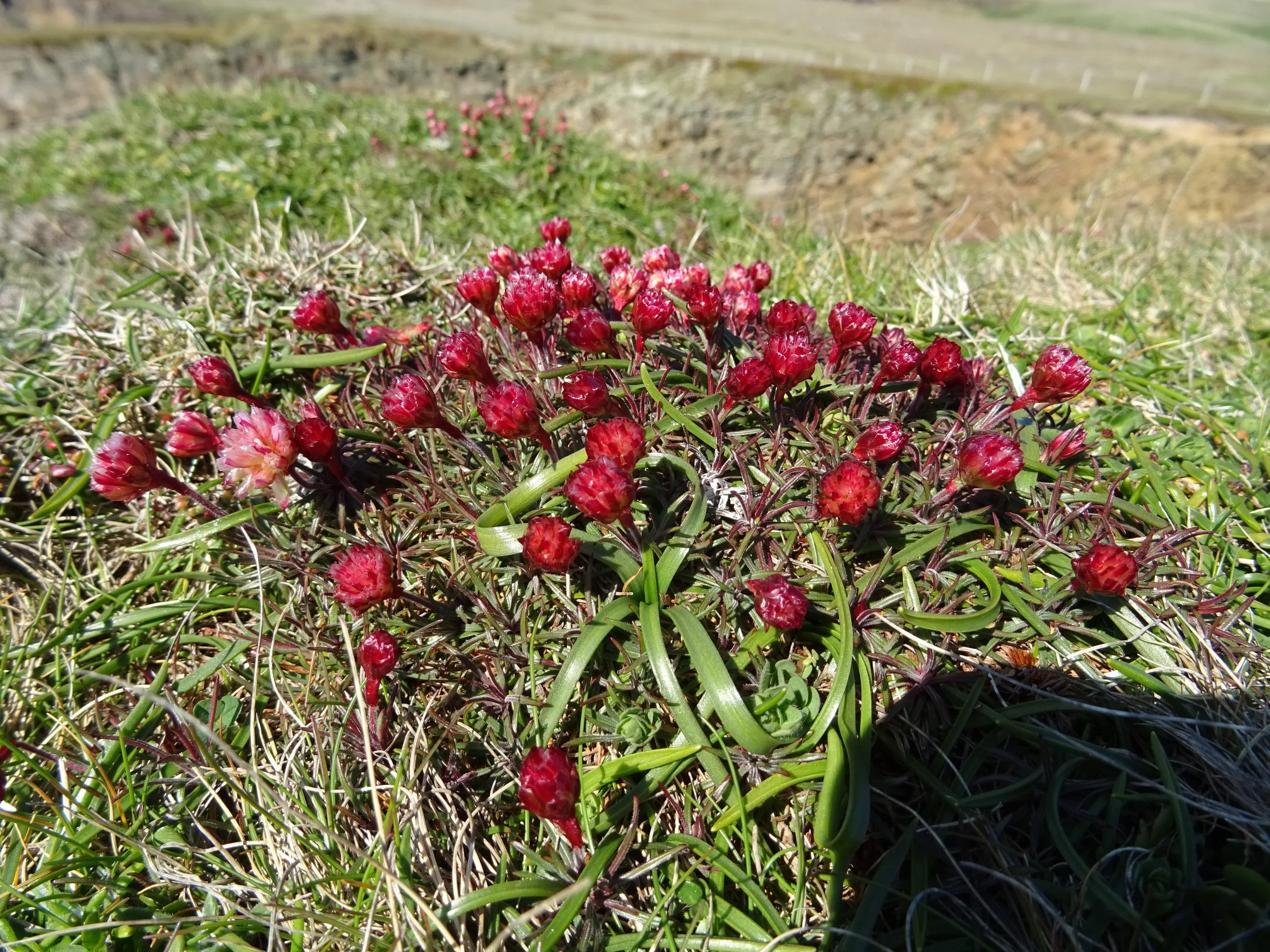
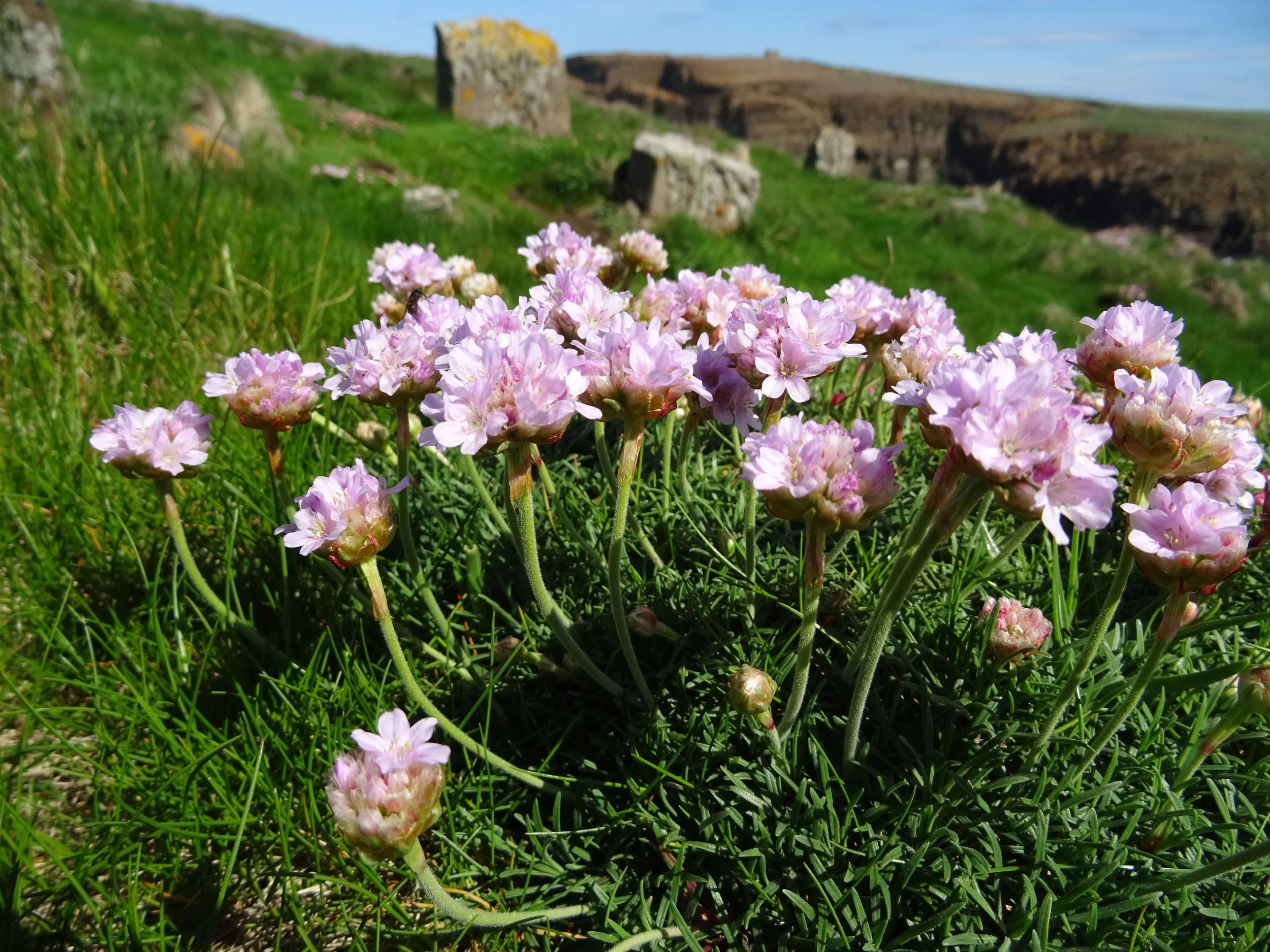
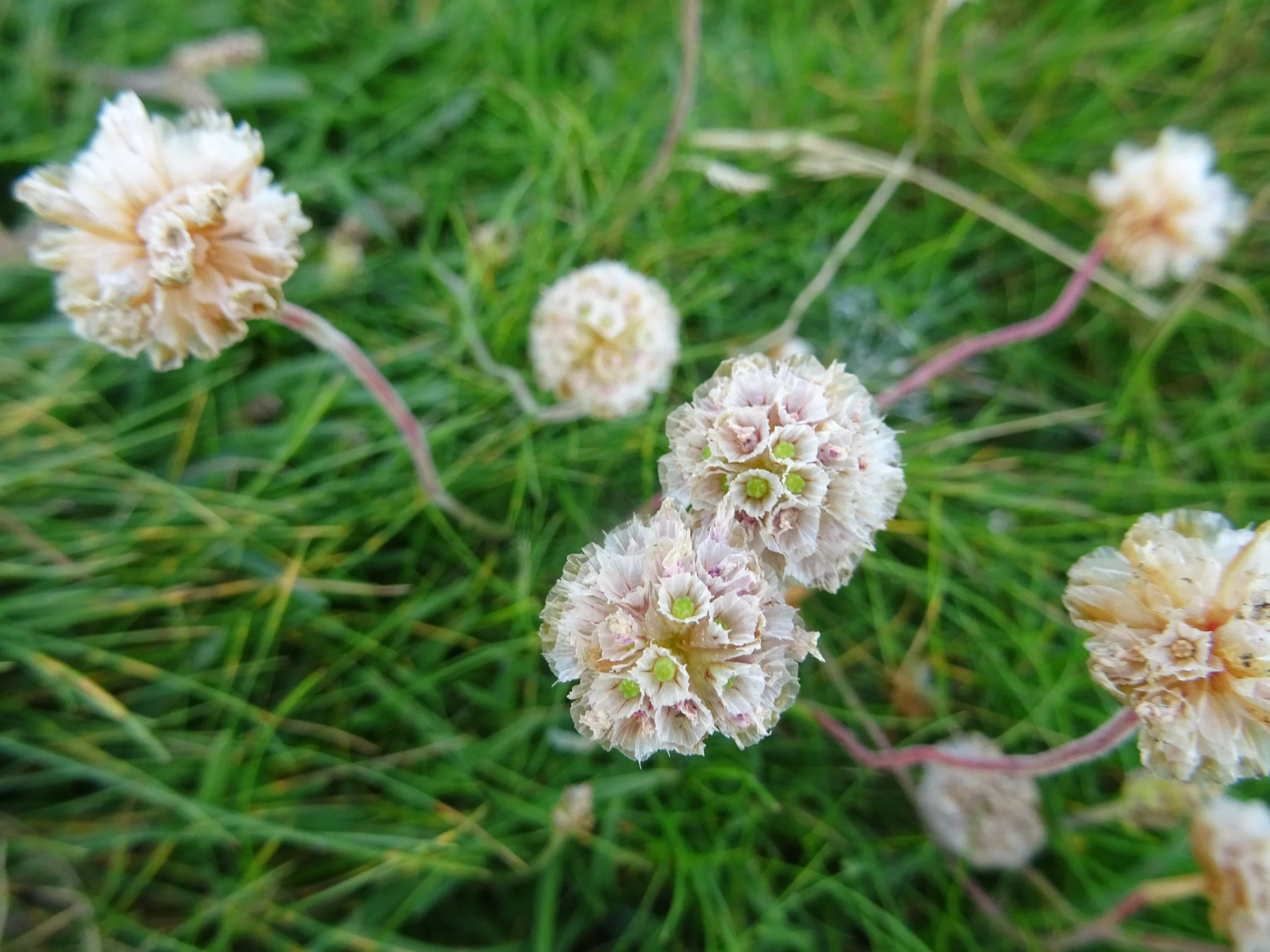
Above L to R A. maritima flowering season - 1) newly formed crimson buds, 2) Madder pink inflorescences and 3) delicate papery seed heads.
Below the line of A. maritima in the heathland, a small number of species also take their opportunity to flower including the tiny creeping stems and flowers of the milkwort’s, Polygola serpyllifolia (Heath Milkwort) and P. vulgaris (Common Milkwort) which despite its name, is the less common of the species. Both nestle amongst the Calluna and Empetrum canopy, along with on the edges nearer the grassland, Glaux maritima (Sea Milkwort) with its fleshy leaves and flowers with deep red inner leaves., a species that can be found from the upper margins of saltmarshes to the salt-sprayed coastal grasslands. Here on Orkney it delimitates the extent to where P. scotica can grow and is a reminder that ecosystems are both dynamic and diffuse, not fixed boundaries in space.
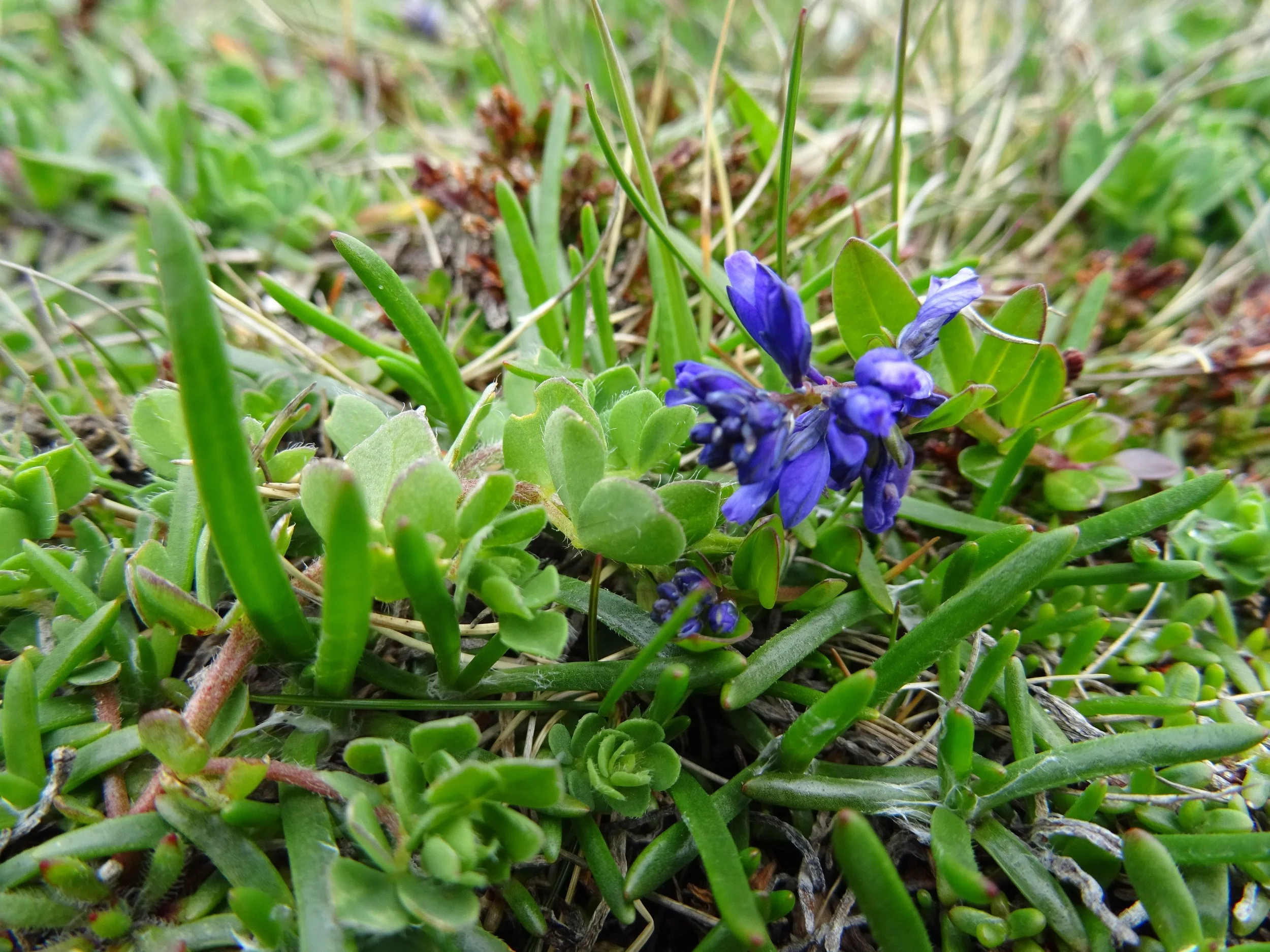
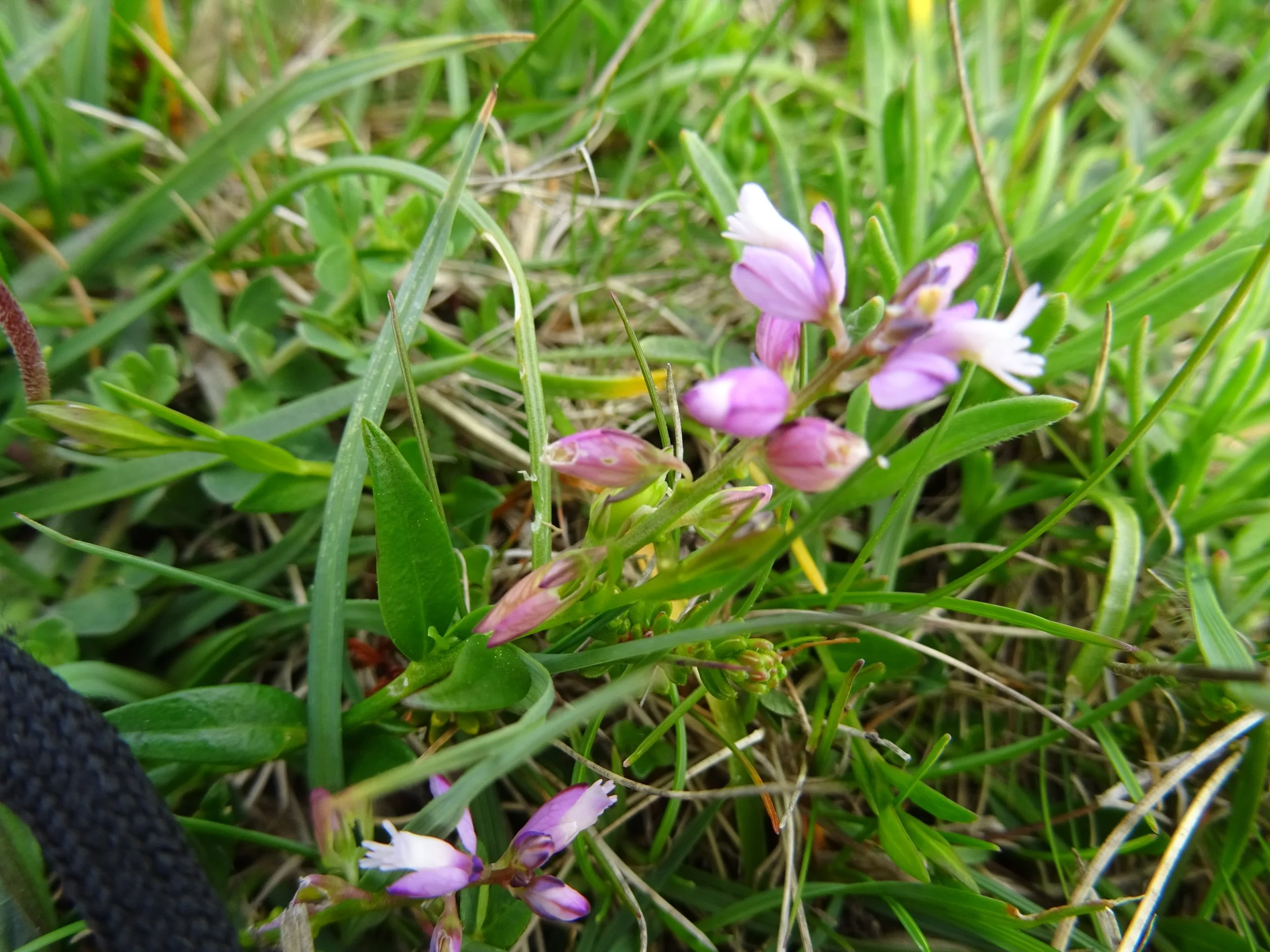
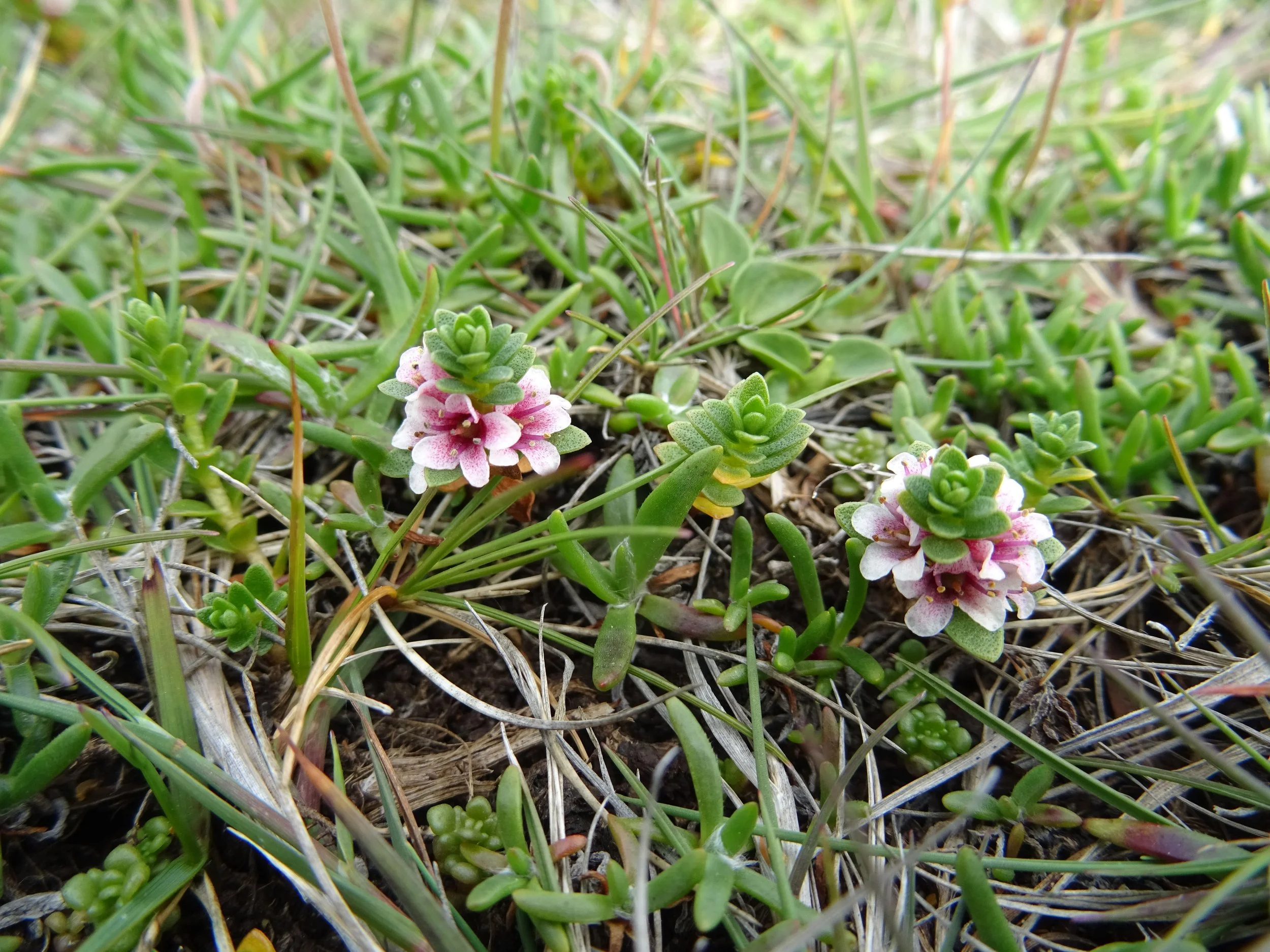
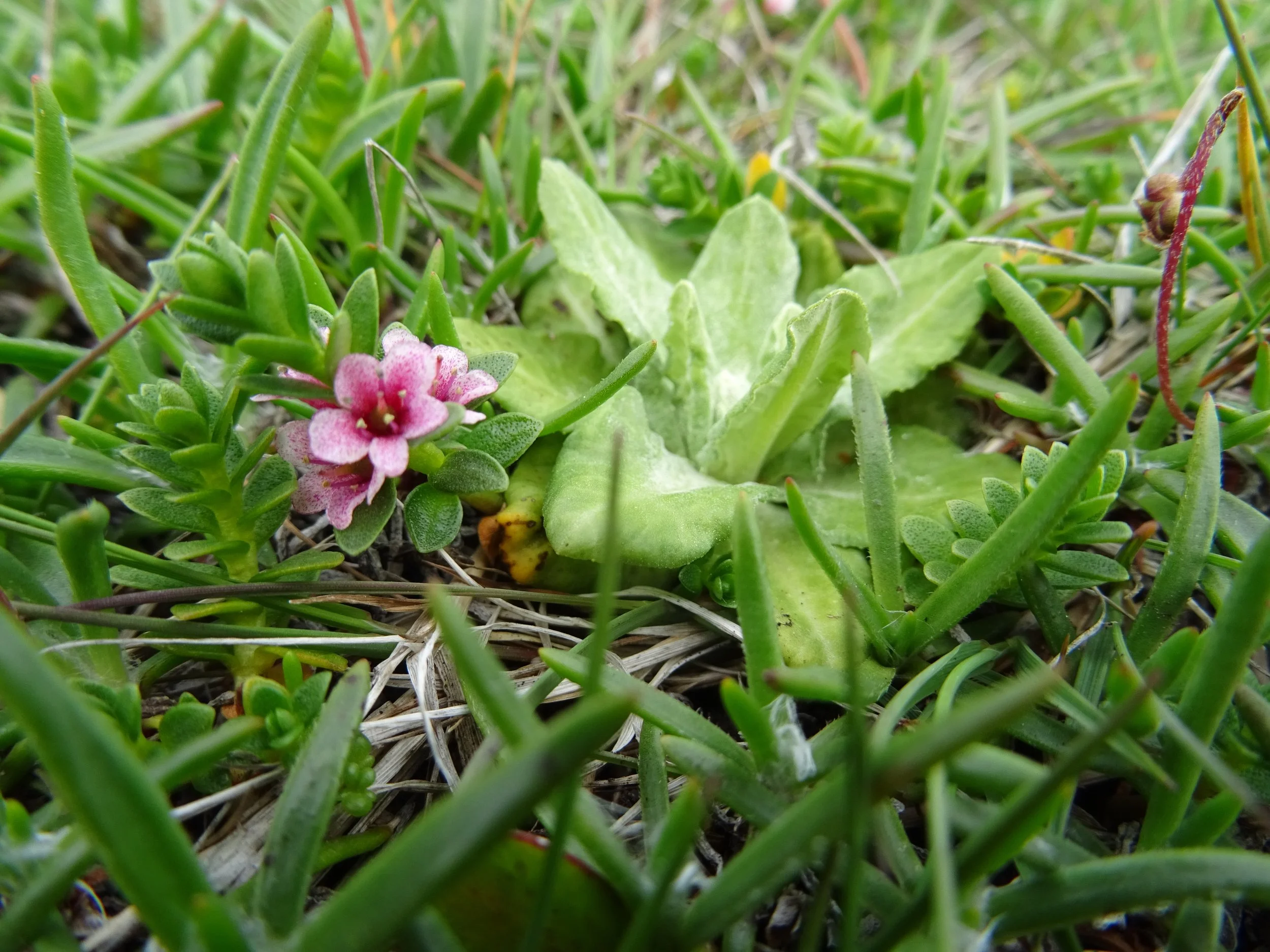
Above L to R: 1) Polygola vulagaris (violet-purple inflorescences and alternative leaves), 2) P. serpyllifolia (pink inflorescences and paired leaves), 3) Glaux maritima and 4) with the leaf rosette of P. scotica.
June through to July sees the gradual emergence of more pockets of colour, providing a range of nectar opportunities for passing butterflies. Particularly abundant is Thymus polytrichus (Wild Thyme) the wild variety of the cultivated thyme used in cookery. Like its cultivated counterpart, the leaves when crushed produce a fragrant oil and scent. Amongst the Thymus nestle the spherical yellow balls of Anthyllis vulneraria (Kidney Vetch), the tiny clusters of Euphrasiaofficinalis (Eyebright) and the pink pyramids of Dactylorhiza maculata (Heath Spotted Orchid). The flowers of Eyebright have a distinct eye-shaped marking in the centre of its bi-symmetrical flower. It is a classic example of a resemblance of a plant to a part of the body as described by The Other Language of Flowers: A doctrine of signatures and is still widely used to treat eye conditions. The wider concept is mostly pseudoscience, and its misinterpretation has led to many deaths and illnesses through not understanding the biochemical compounds found within certain plants.
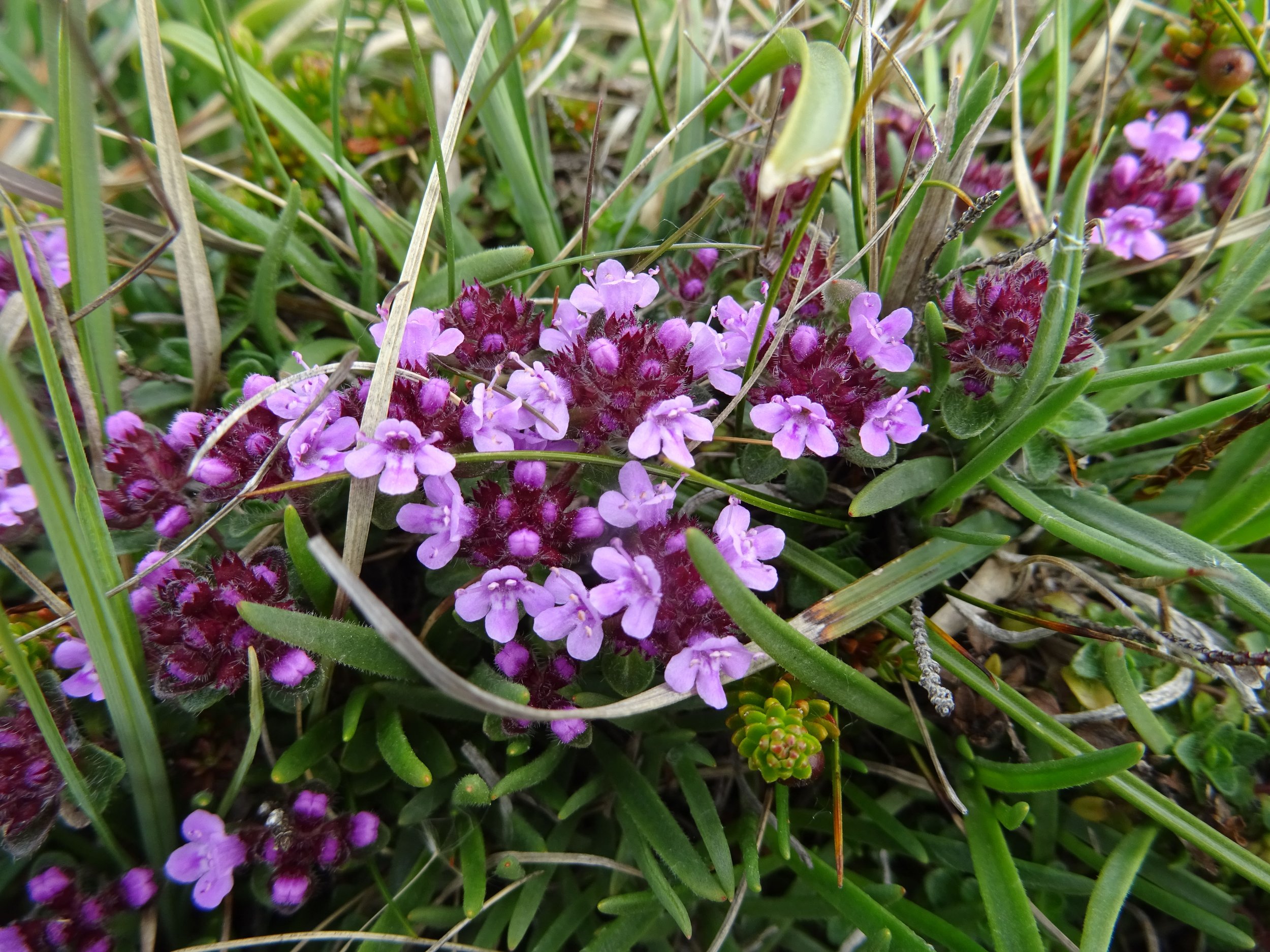
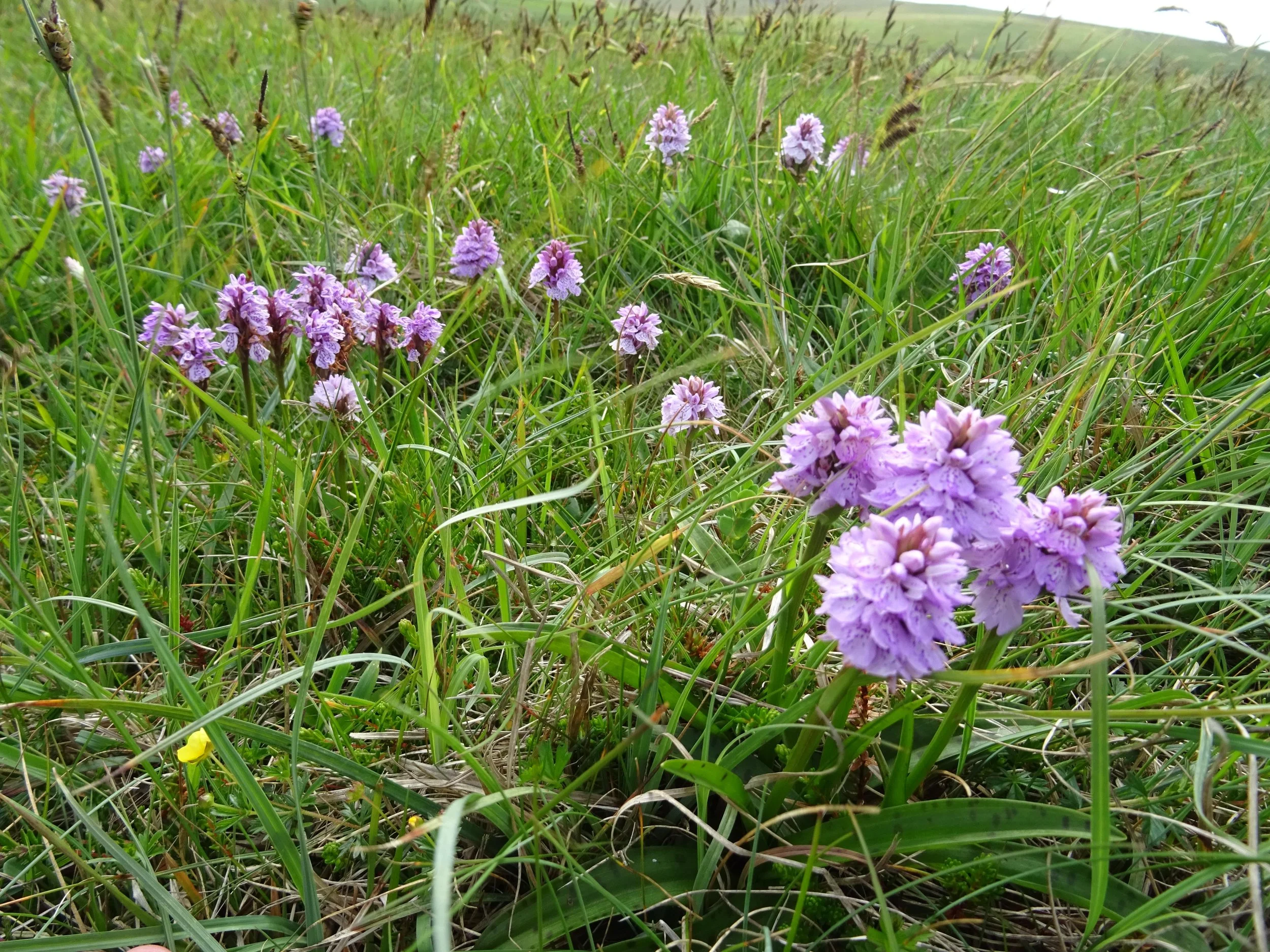
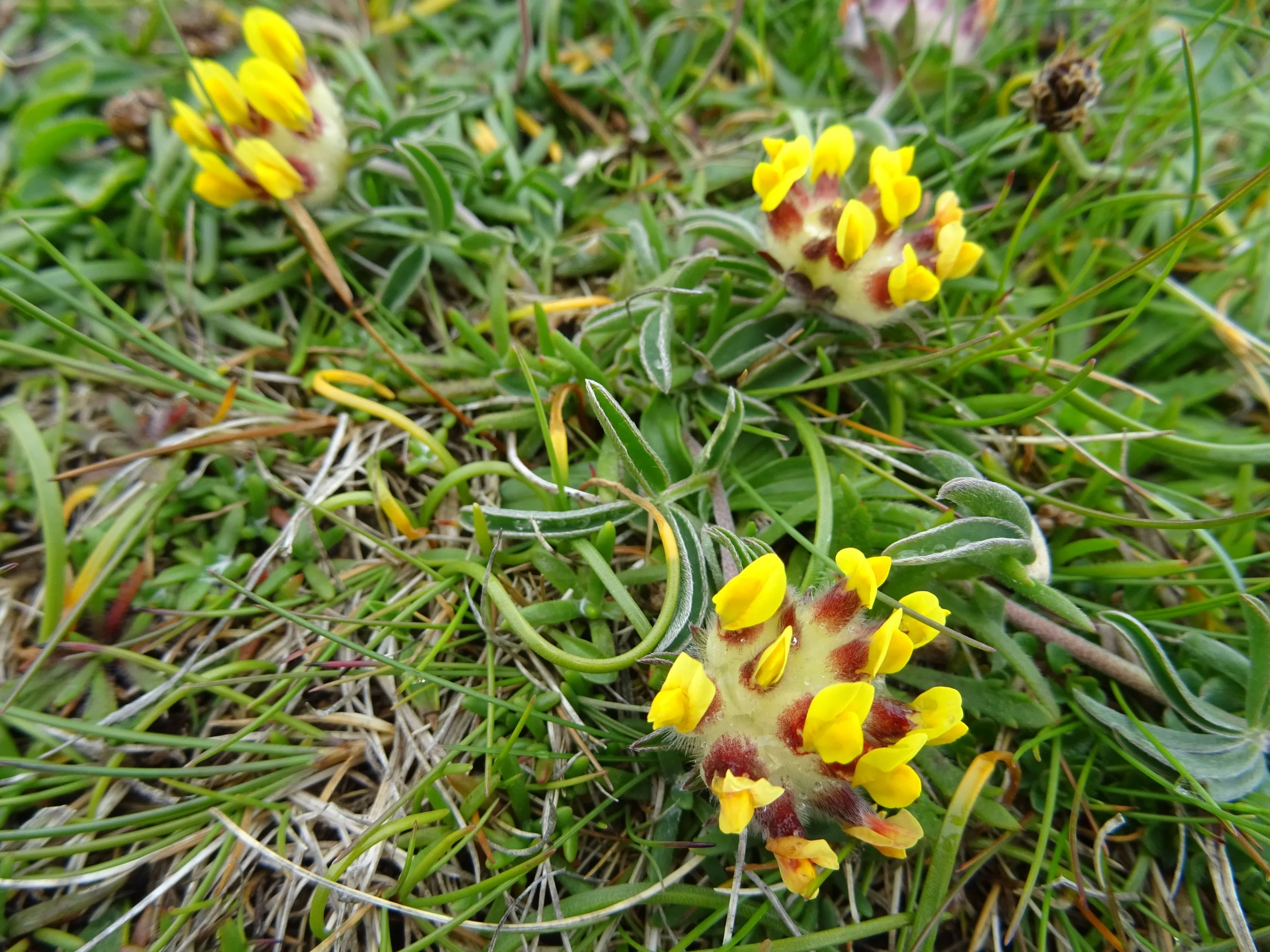
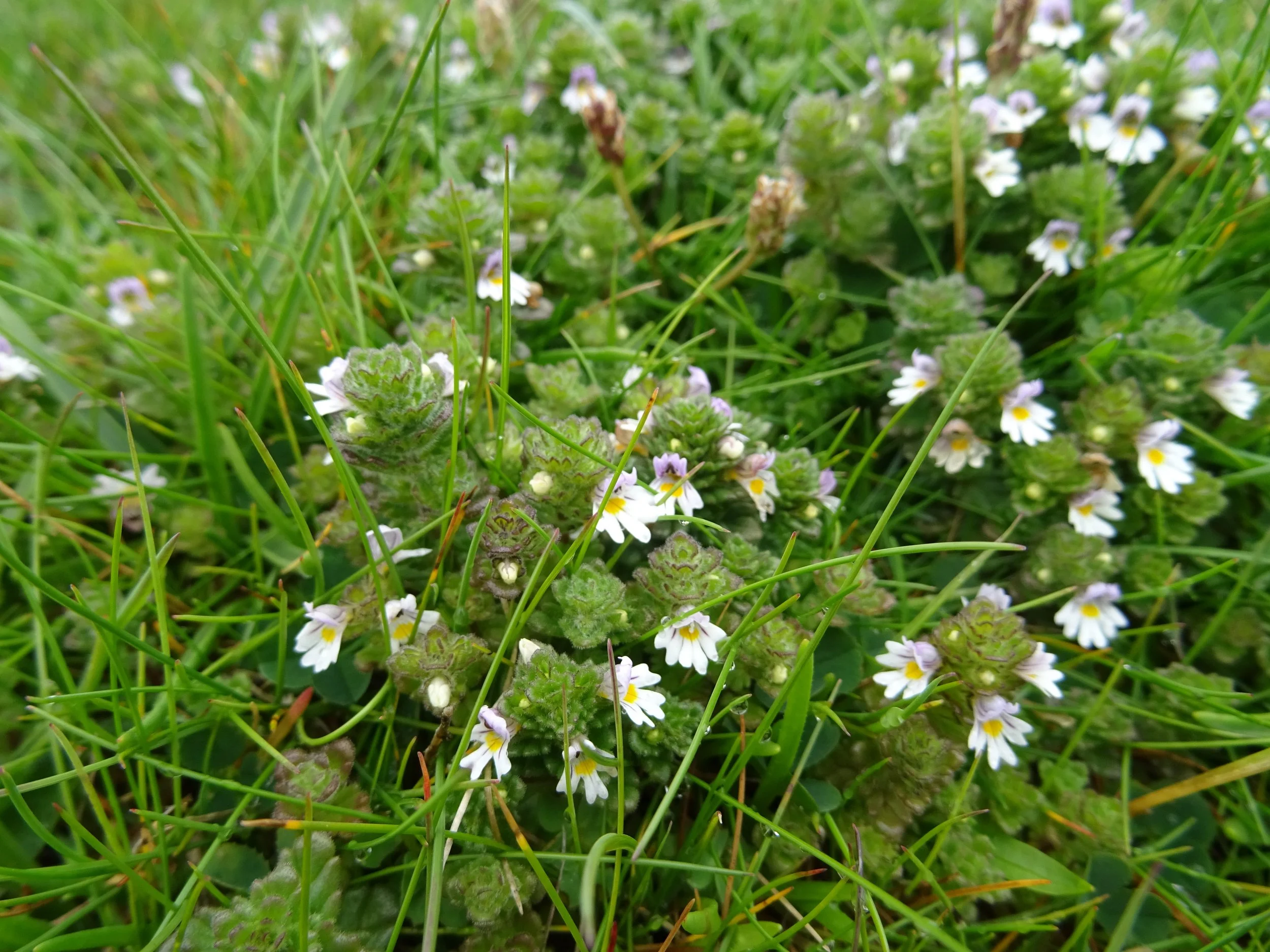
Above L to R: 1) Thymus polytrichus, 2) Dactylorhiza maculata, 3) Anthyllis vulneraria and 4) Euphrasiaofficinalis
Early July also sees the second flowering of Primula Scotia, traditionally the July flowering is said to be more vigorous than the May flowering with greater flowerheads. Much like in May, most other species on the heath and surrounding grassland have already gone to seed, leaving P. Scotia to flower without competition. This isn’t the last of the wildflowers however, The heath has one least show to put on in August and it’s one of my favourites, the bejewelled carpet of Parnassia palustris (Grass-of-Parnassus) named as it was supposedly worthy of the Gods on Mount Parnassus; this species is not a grass at all, but a member of the saxifrage family. It is also the county flower of Cumbria and Sutherland.
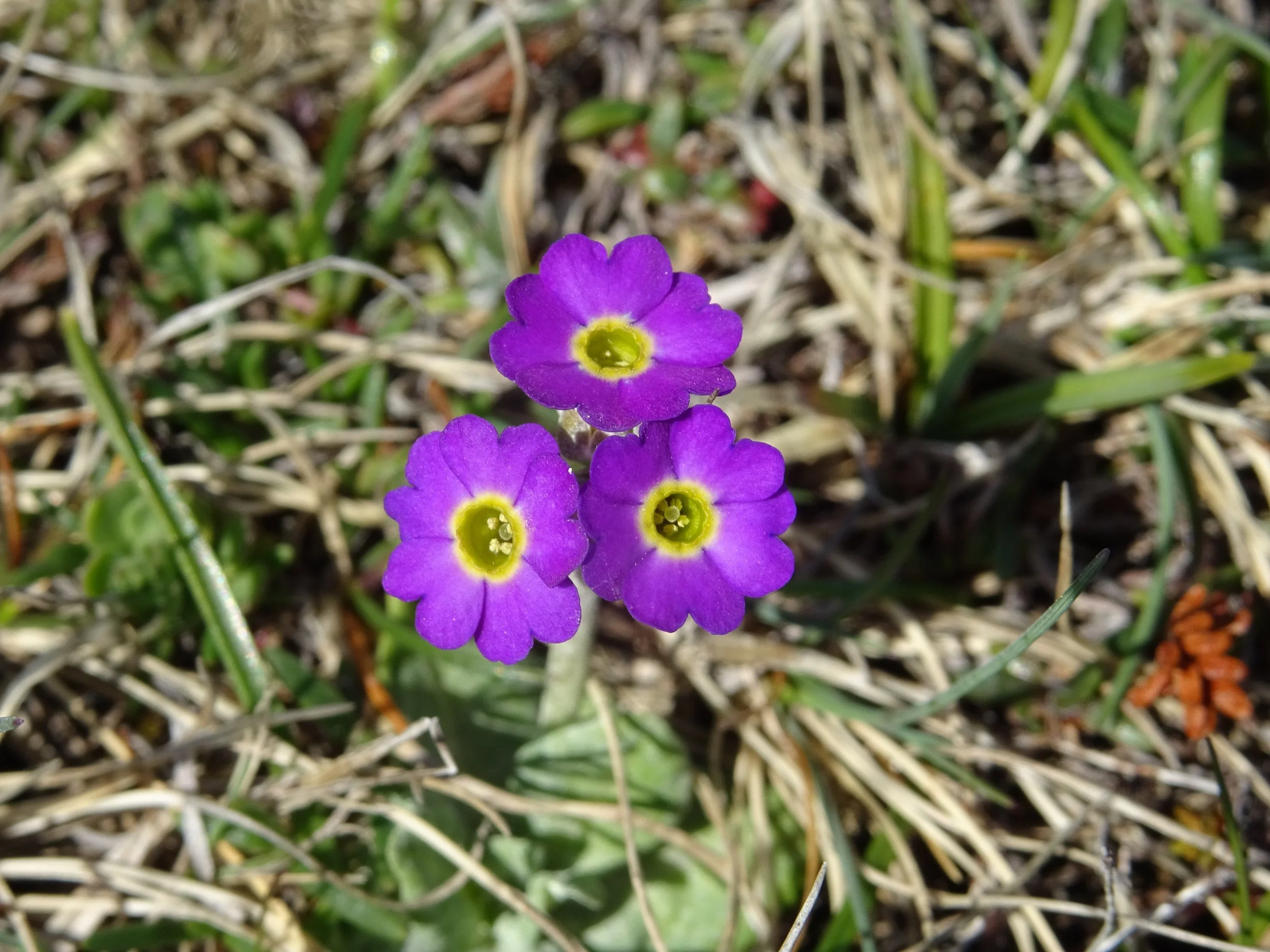
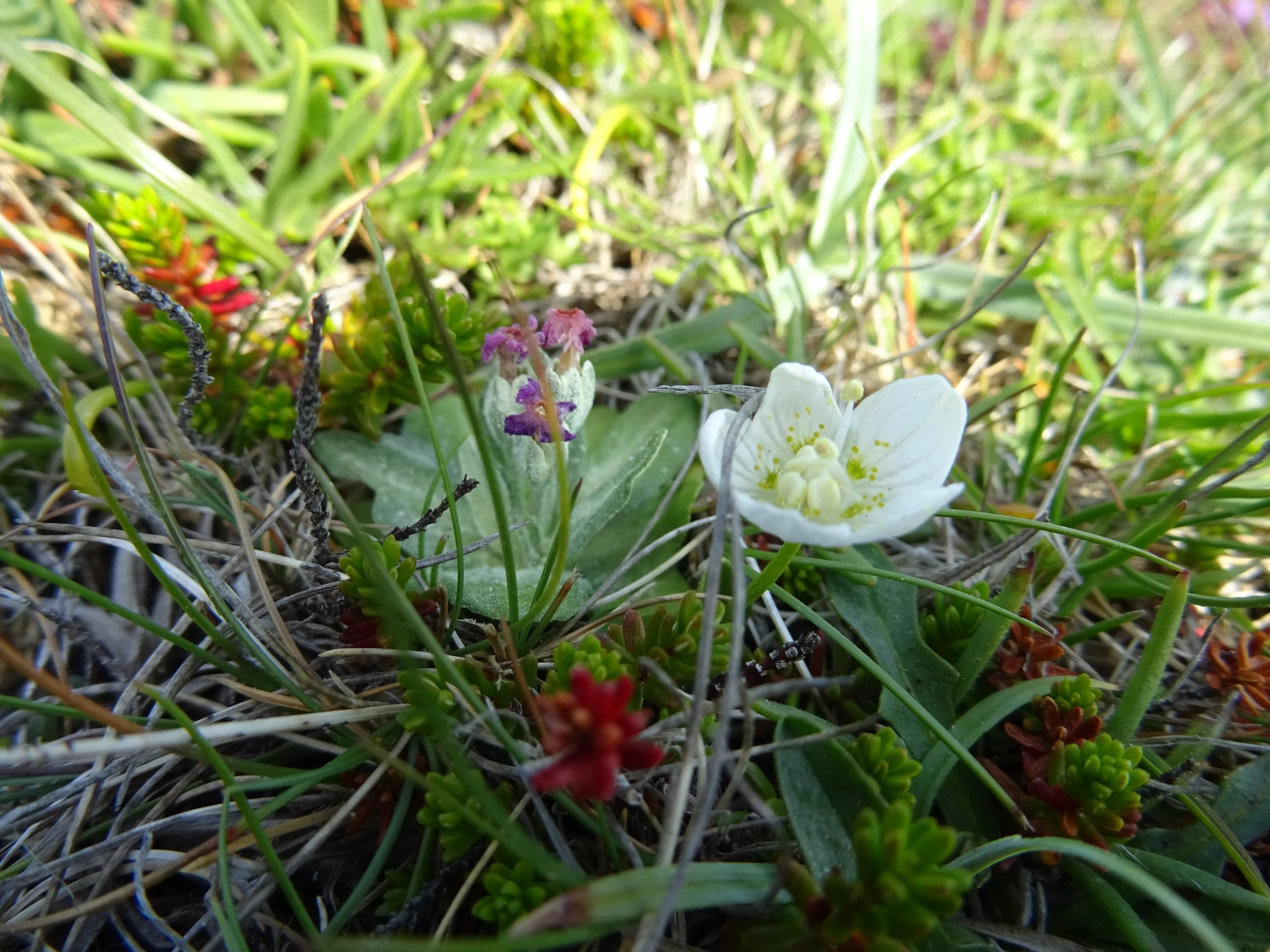
Above L- the second flowering of P. scotia and R - remaining P. scotia seed heads next to an opened flowerhead of P. palustris
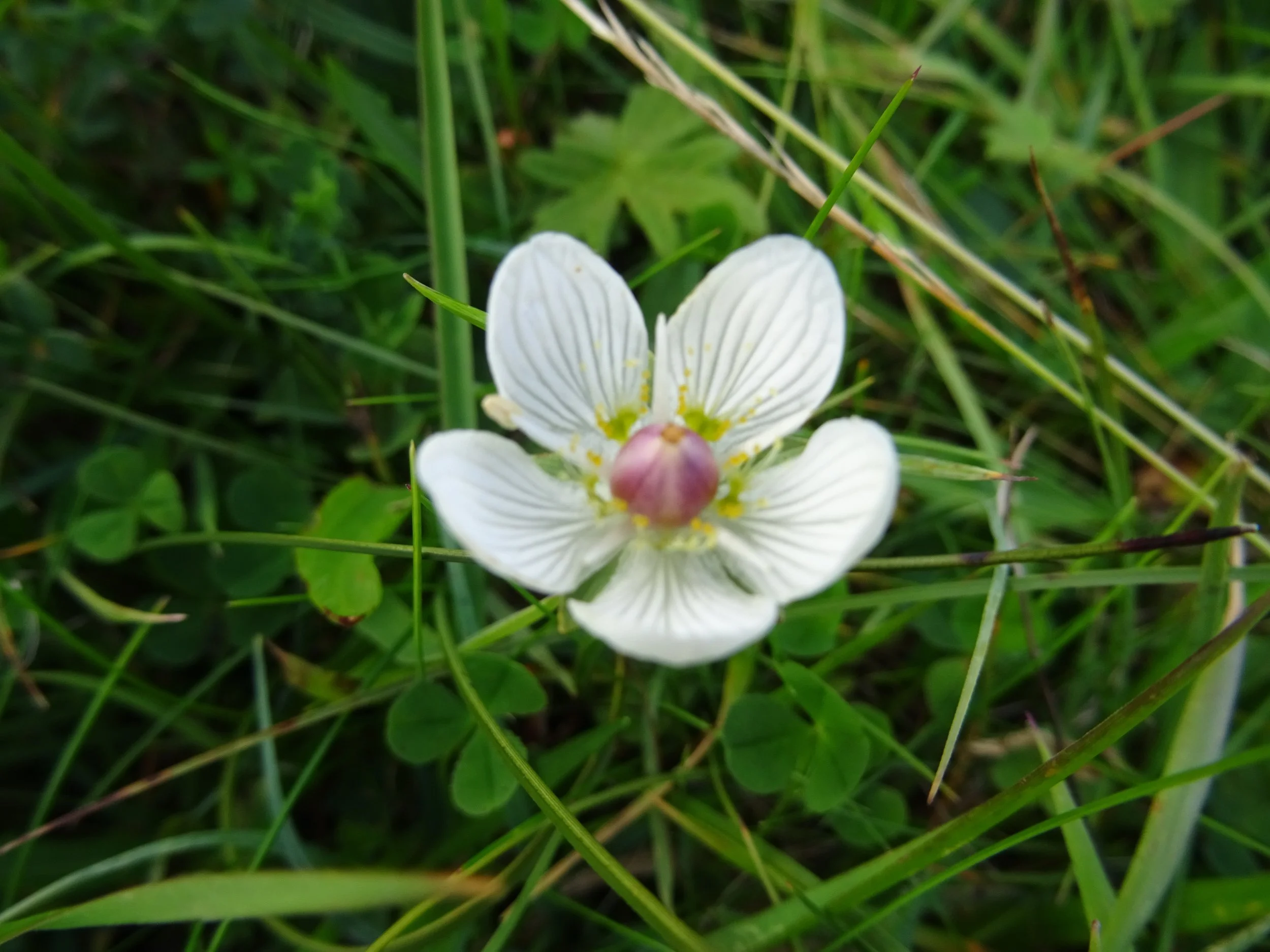
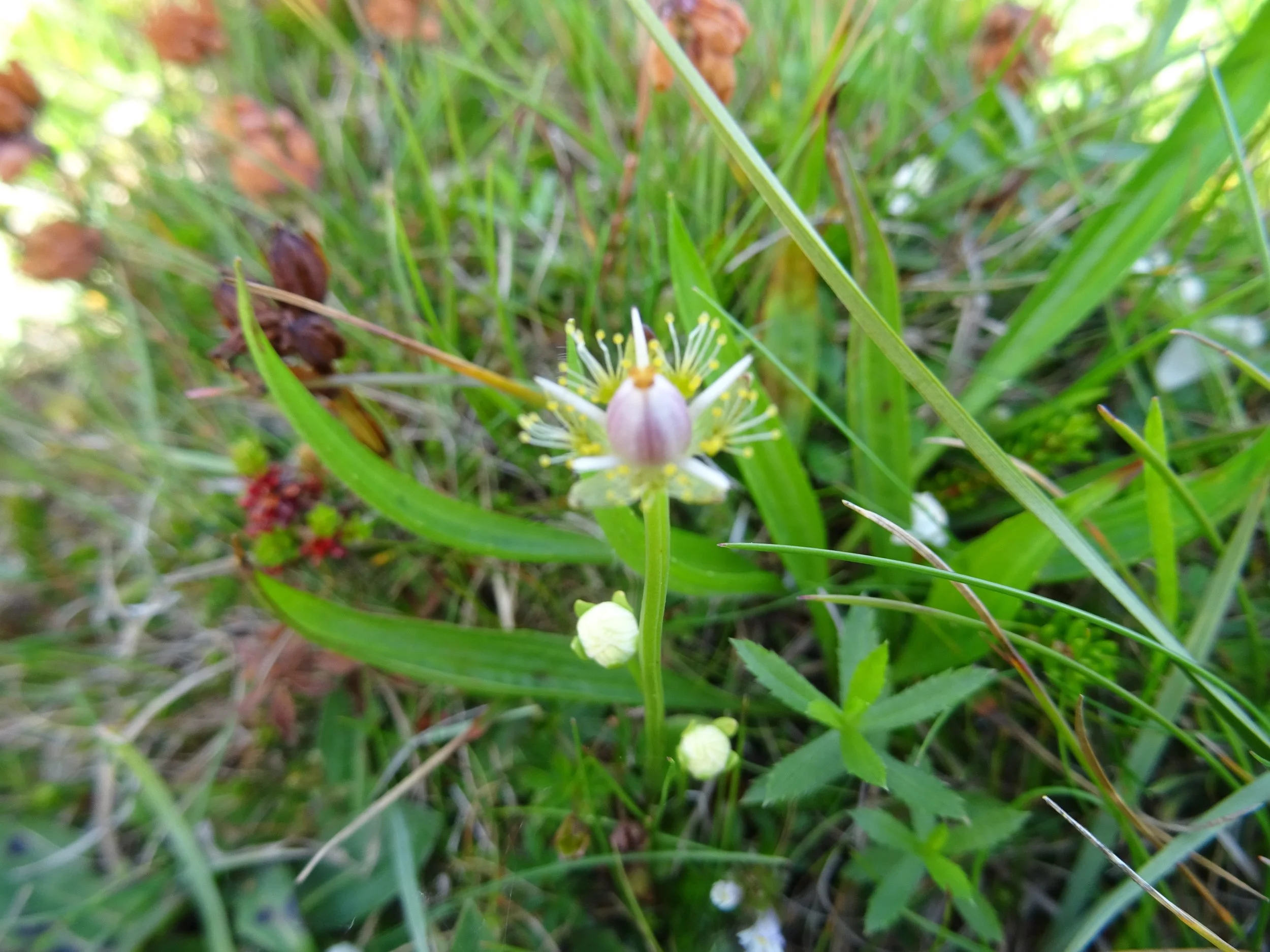
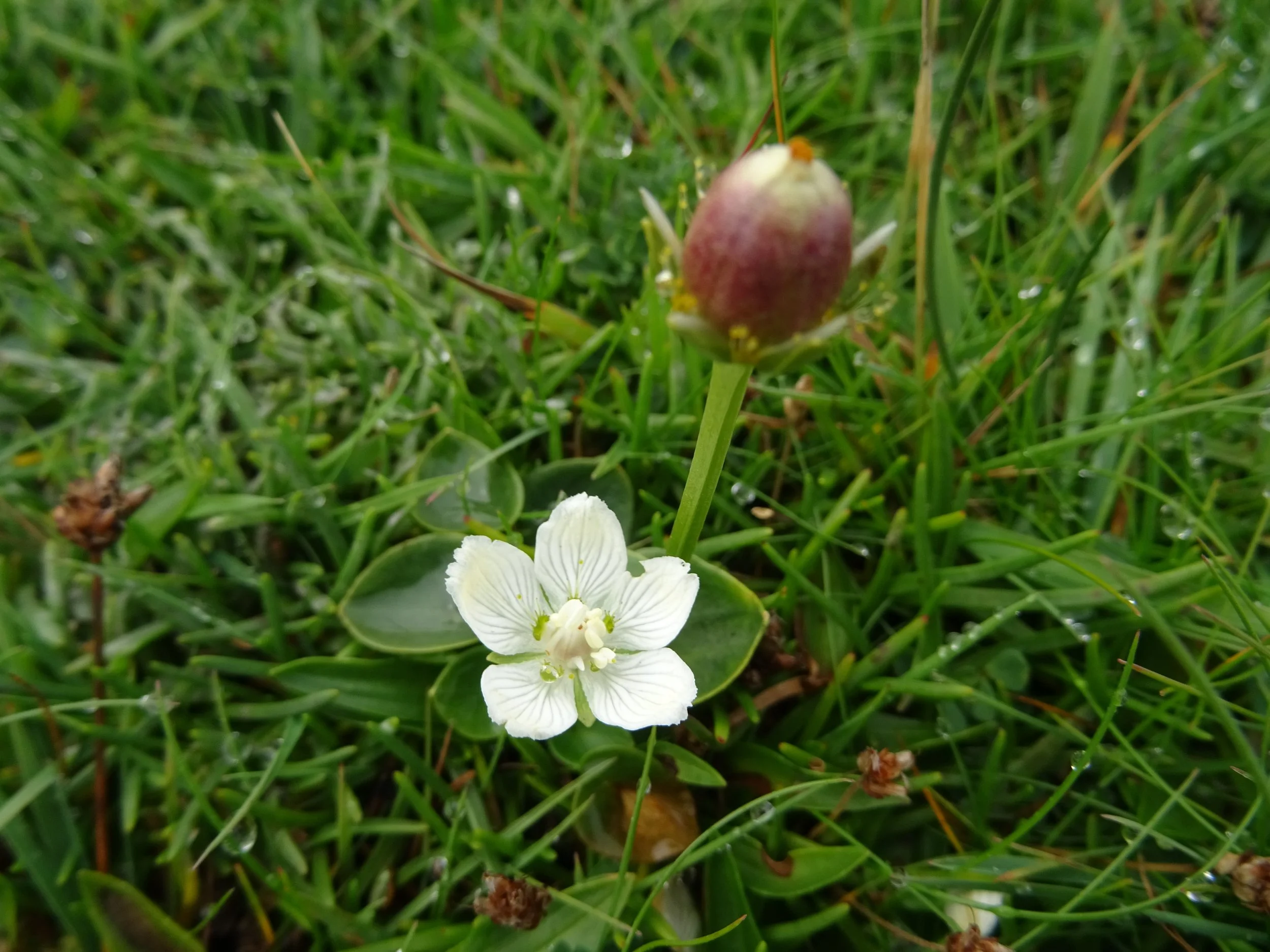
P. palustris other common name is ‘Bogstar’ and hints to the shape left when the petals fall away, leaving the prominent central carpal and radiating sepals behind. The images below (left to right) show the process from the ripening of the carpal (the female part of the plant) to a purple-red colour, once ripened the 5 petals drop of leaving the carpal surrounded by the five sepals and the remains of the stamens (male flower parts), leaving a radiating star shape. Eventually the stamens fall away leaving the main fruit protected by the sepals. The final image also shows a newly opened flower, with the carpal yet to be fertilised.
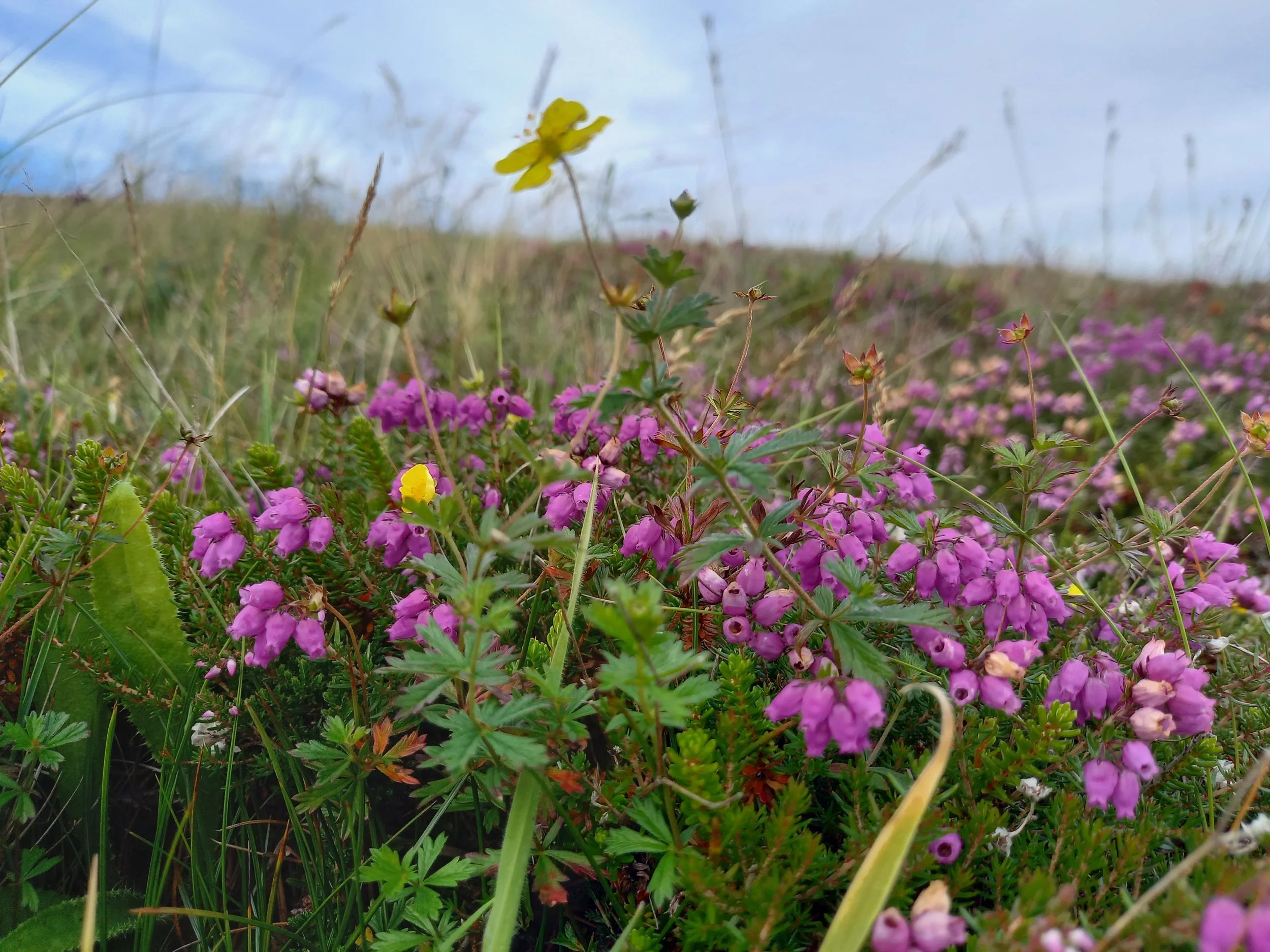
The only remaining flowering that remains after P. palustris, is that of the sub shrub canopy itself with the traditional purple spectacle of C. vulgaris and E. tetralix often accompanied by the purple bobbles of Succisa pratensis (Devil’s-bit Scabious) which lasts until September and brings yet another botanical season on the heath to a close.