
Oh, the Places You’ll go! (Part 2): Bugs and Bikepacking
An ongoing story of Nature, Loss and Reconnection
Welcome back to my ongoing personal journal series; Oh, the Places You’ll go! (named after my favourite Dr Seuss poem), if you haven’t read part 1, I recommend it as it gives a background to my ethos as a creative practitioner.
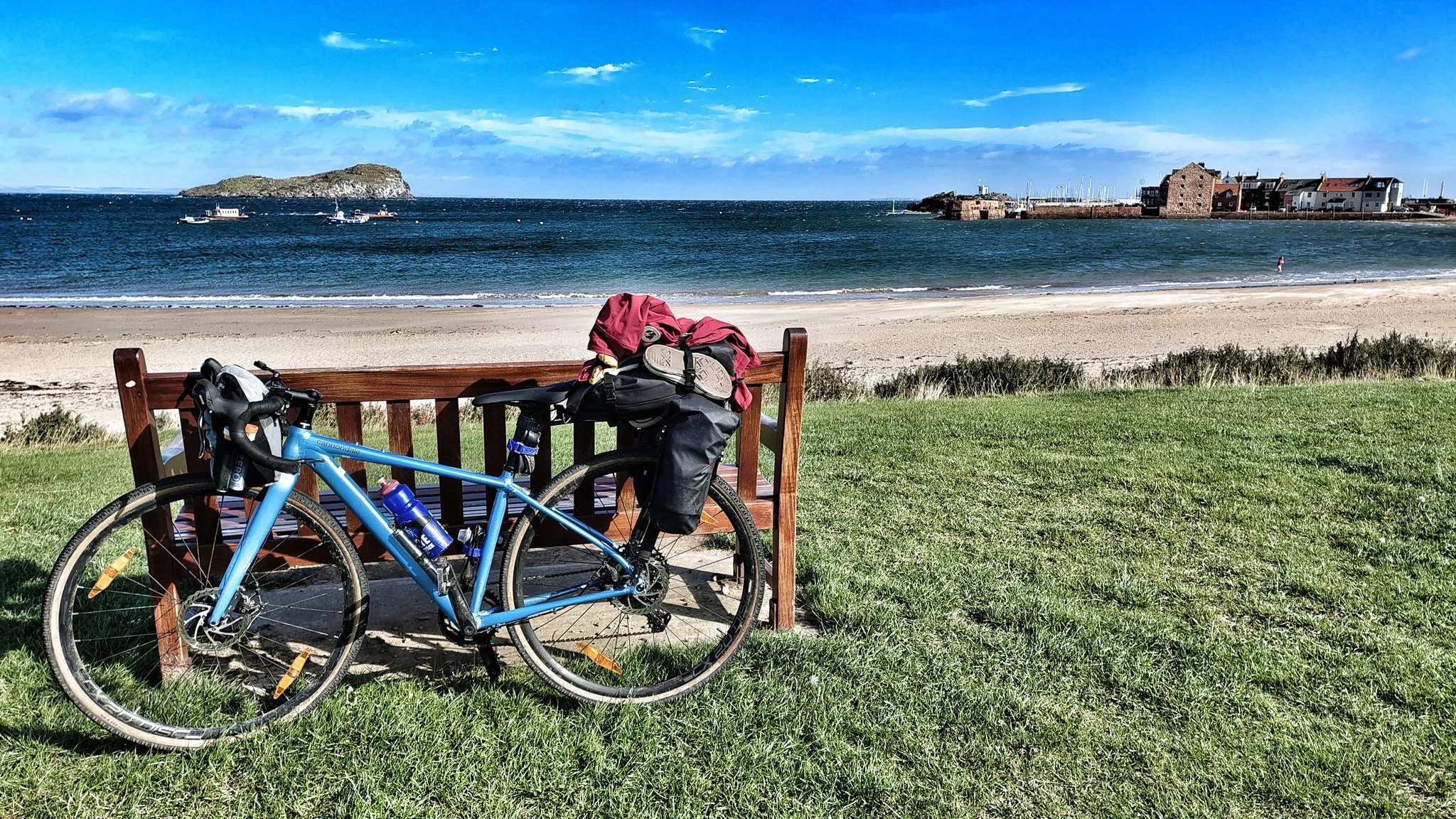
Reaching North Berwick with gale force gusts of wind behind me
I only went out for a walk and finally concluded to stay out until sunrise, for going out I found was really going in
John Muir
John of the Mountains, the unpublished journals of John Muir
Prelude
It feels appropriate to start this journal entry with Scottish-born John Muirs’ most known quote about the therapeutic benefits of immersing yourself in nature. The Sierra Club, a prestigious mountaineering club in the USA that he helped found would go on in the 21st Century to bring together the disciplines of psychotherapy and ecology to create Ecopsychotherapy and its applied form Ecotherapy; bringing an awareness to how the continuing issues our planet faces are impacting (often unseen) on the mental wellbeing of the human population. Perhaps most recently, due to the enforced lockdown of COVID-19 an increasing majority of society is rediscovering and relearning how important nature connection is. Green prescriptions are increasingly being utilised to help people with Depression, Anxiety and Stress-related conditions; their has been a blooming renaissance in Botanical Art and the practice of keeping a sketchbook (despite the Fifth Industrial Revolution and AI); Gardening and Allotment keeping (Horticulture therapy) is also on the increase especially in inner-city areas, and for the esoteric Gen-X escaping on two-wheels with just supplies aka bikepacking is proving to be one of the most enduring of current outdoor activities.
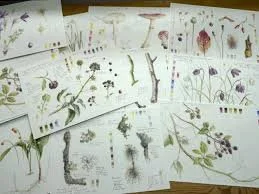
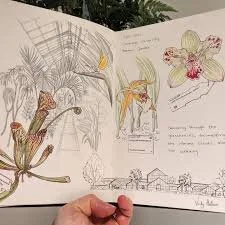
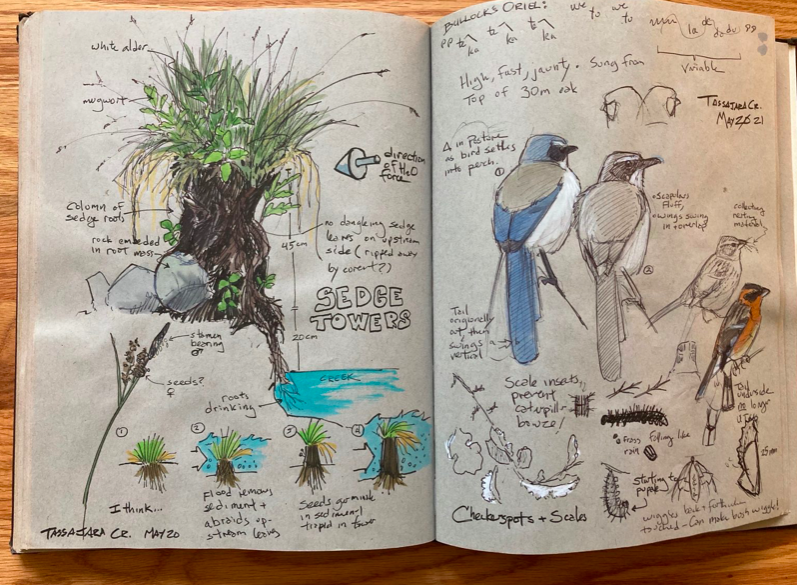
Above images: A 21st Century renaissance in Botanical and Nature Sketchbooking L to R; Botanical artist Diane Sutherlands’ postcards produced from her long-term sketchbooking project she shares on Instagram; The Society of Botanical Artists in 2025 began a Botanical global sketchbook exchange between its fellowship members, The authors own sketchbook, and nature sketchbooking with American Naturalist John Muir Laws.
I have struggled in the last 17 years to find a way to describe the depression and loneliness I have felt since becoming a mother, however one constant has remained the refuge and relief from being amongst nature and its great natural amphitheatre, the outdoors. In Rachel Hewitt’s book, In her Nature she describes how depression and melancholia are sometimes understood as forms of mourning or deprivation; but it is a subconscious loss because it is often not materialistic, however experiences and connections are as important as a job or other human to a healthy human life. My deep personal loss was the individuality connected to my human-self and the rapid nature of it, I felt I had no time or way to rescue what was being removed and I often visually describe it as being pushed of a cliff and then desperately hanging onto the edge; what made it harder was the extremely taboo nature of feeling ‘maternal regret’ and societies inability to understand that this dosn’t mean we don’t love our children, just regret the impact it has had on our human existence. I’m not alone in these feelings, but society expects that women find motherhood a euphoric, natural experience leaving many of us locked in a silent dystopia and struggling with an increasing mental load. Over the years I have partly scrambled back to safety but it has been a fleeting relief; through counselling I now understand I’ve been trying to bargain my way back to superficially getting my life back; such as running, teaching yoga and even social media and whilst running quite literally saved my mind and trail running helped me reconnect with nature, it was never a lasting solution. I have now broke out of the cycle and this journal entry is my ongoing story back.
The memory holds onto
A girl in a hotel room in Grasmere, happy with a set of Derwent coloured pencils from the museum shop; that same girl messing about on her red mountain bike and being outside with her dad and brother. Decades later as I re-find myself; I find those memories resurfacing as I travel about on my blue gravel bike with my camera, sketchbook and pencils in tow, the simplicity of multi-day bikepacking and the freedom it brings with it.
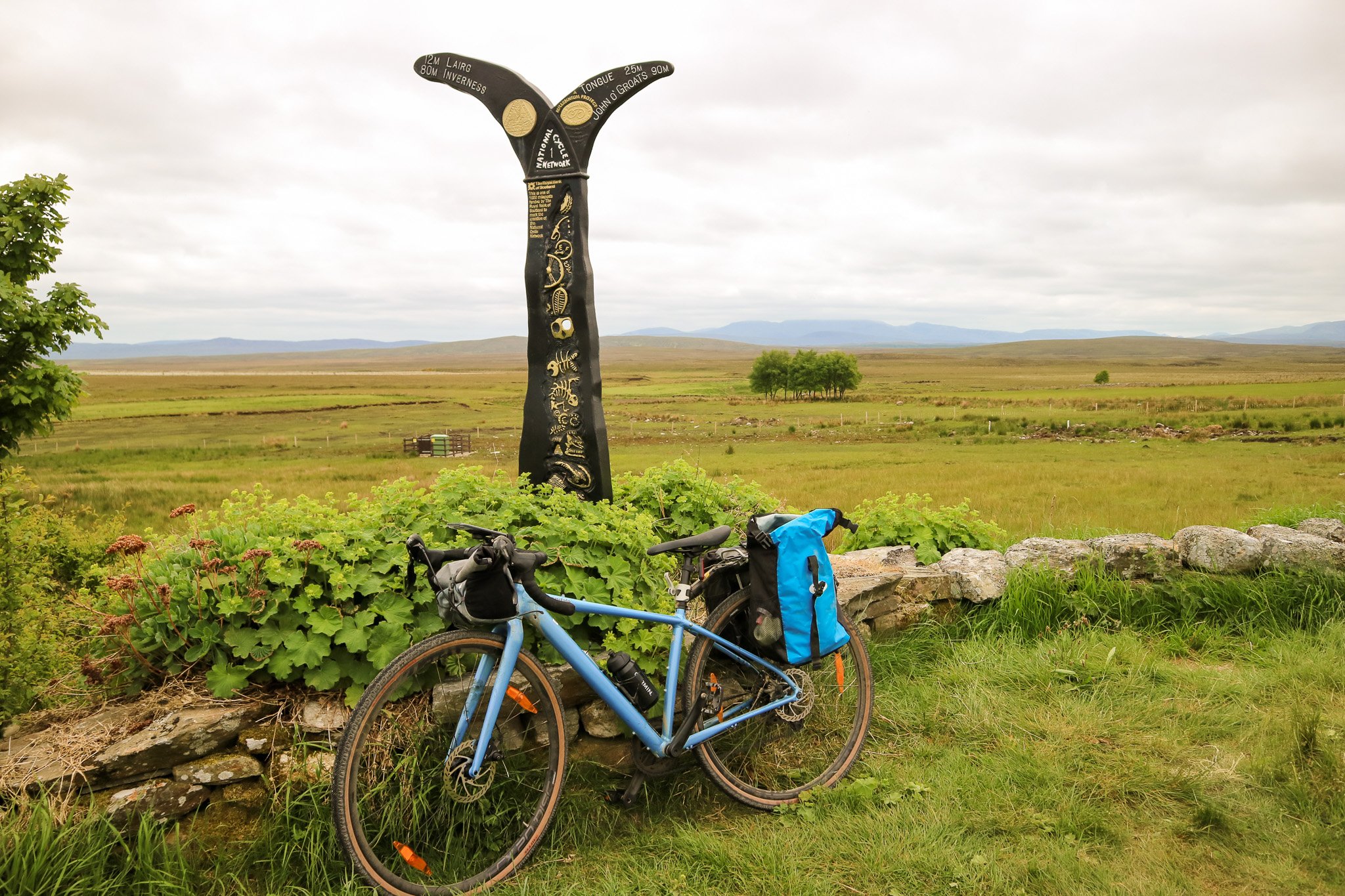
Post-lockdown escape across the Flow Country, Caithness and Sutherland
In 2019 I embarked on an adventure of a different kind; turning my holiday sketches in a more professional direction with a three year diploma in Botanical illustration, unbeknown that year two would be completed under the stress of lockdown with a primary school child and my then partner at home. I graduated with a pass in 2021 and a commitment to practice and improve my skills in graphite, coloured pencil and composition. To keep momentum going in 2021 I applied and successfully received £500 from the John Muir Trust Rubens and De Grant fund, along with £250 from the Alpkit foundation for a bikepacking trip to illustrate plants across the North Highlands. Unfortunately continued post-COVID travel and accommodation issues would delay the project, which would ultimately allow me to re-evaluate and come up with a project with a greater sense of purpose. Like many I never fully understood how much lockdown in deteriorating personal circumstances and a reliance on social media to fill in the gaps would affect me in the long-term; then in December 2024 my mental wellbeing plummeted; a combination of a lockdown mental load, feeling no control over my life and struggling to get my illustration work of the ground; I was referred by my GP to Donna, a community link officer and started to attend a weekly social walk where I would meet Samantha Stringer (Sam), the engagement officer for the Species on the Edge Orkney project and what follows is the journey from that day.
B(ee)-Lines and Bikepacking
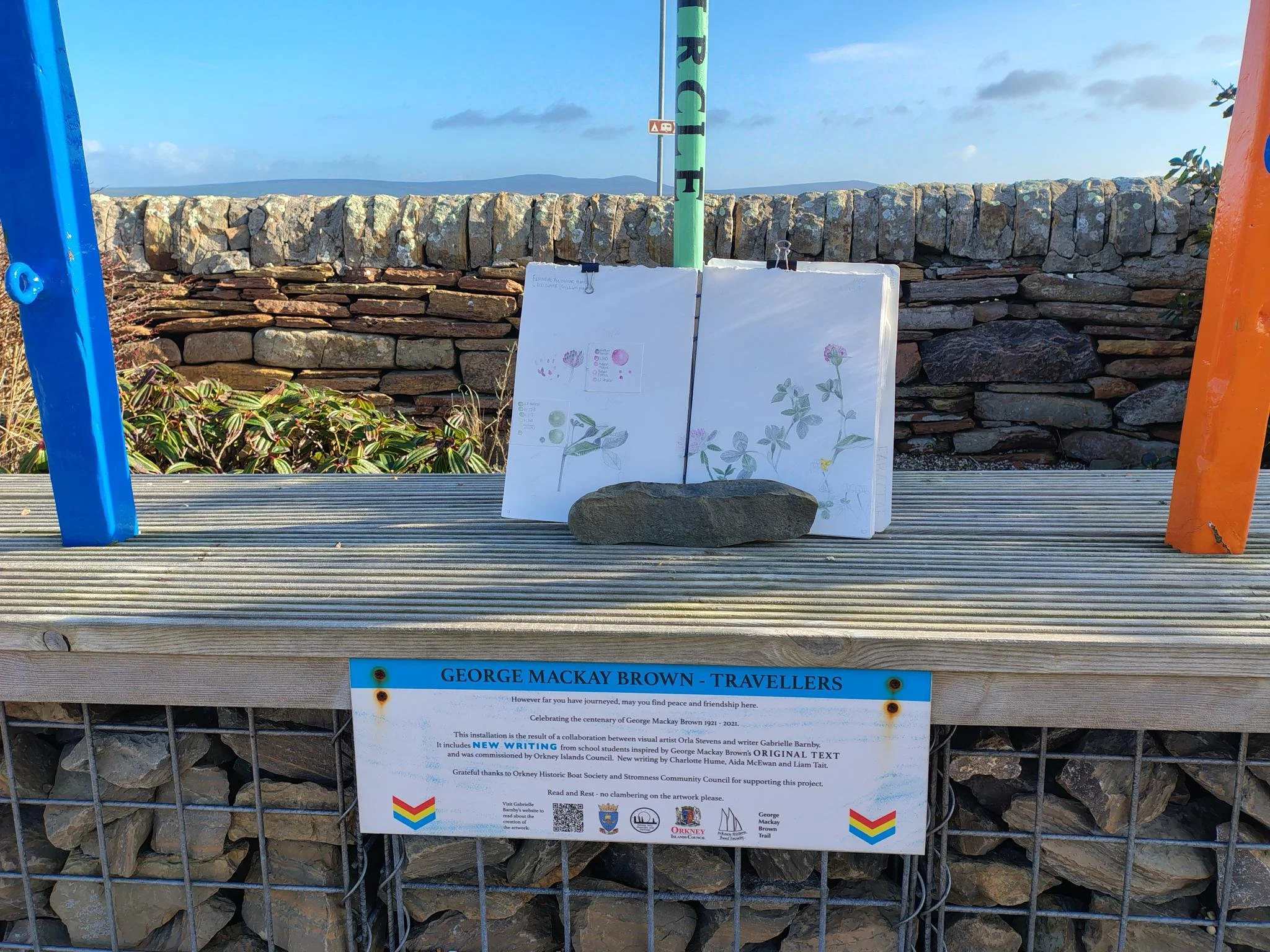
As I’ve learnt from my counselling sessions, personal values are important and along with boundaries have a tendency to be forgotten or trampled on in life. I personally believe this is a major cause of depression and loneliness in humans, we simply ‘forgot ourselves’ and we feel it through deep loss. This is ecspecially true for women who tend to give up almost their entire humanity to please others; something we our socialised to do and feminism has failed to undo. The loss of my career as a plant biogeographer was huge as it was central to who I was as a human being; making the decision to reset as a botanical illustrator helped but since 2021 I had struggled to find a meaningful way to reconnect it with my former career, that also sat well with my values I’ve had since being a nature loving girl and then a young eco-feminist women. I sat with my lovely blue gravel bike I’d bought with the John Muir Trust and Alpkit funding wanting to identify a more meaningful, positive form of environmentalism that wouldn’t be another full stop. At this point I was now a volunteer contact between Species on the Edge and The Orkney Blide Trust and was helping regularly in their garden; with Sam we began to establish the foundations of a native wildflower patch with Trifolium pratense [Red Clover] as part of a large connected attempt to establish a Machair-style wildflower corridor for pollinators in particular the Great Yellow Bumblebee [Bombus distinguendus], in return for my volunteer time Sam was working hard to secure me some commissioned illustration work; including the artwork for a new interpretation board at Barrier 4 car park on the Churchill Barriers; it would take the best part of a year to confirm the work but I now had the start of a link between work; Plants and Pollinators which began to feel like the beginning of a meaningful jigsaw puzzle.
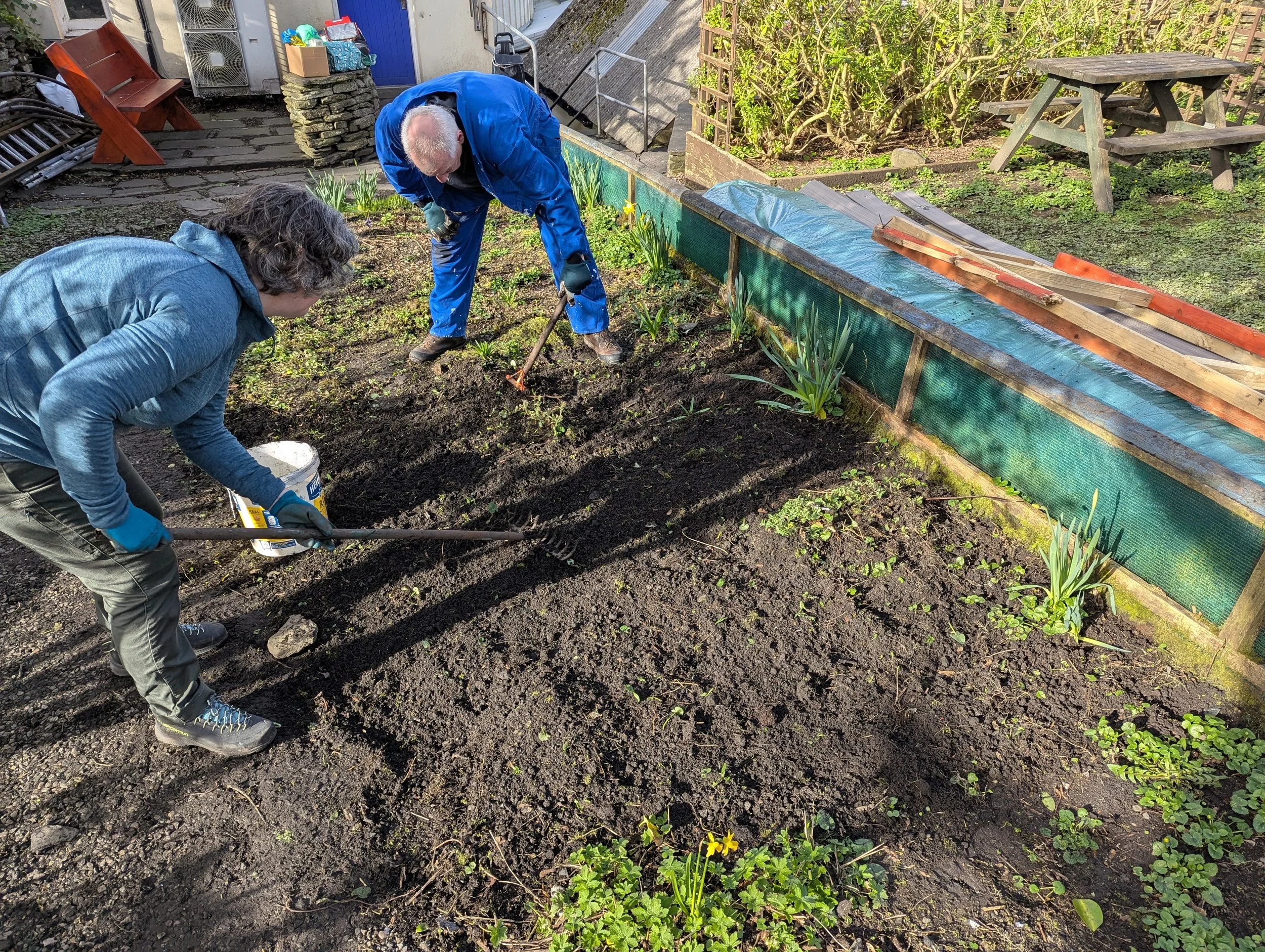
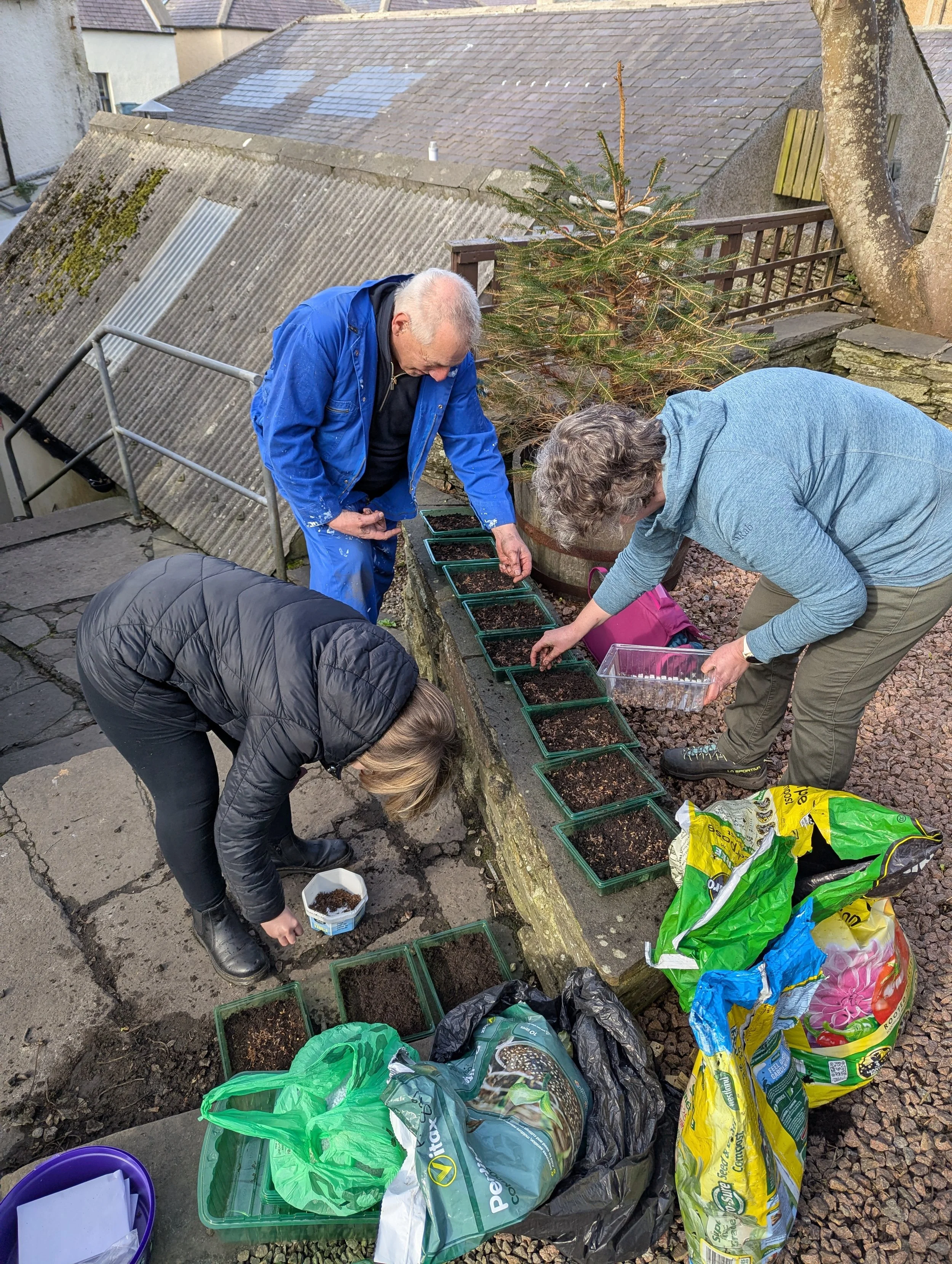
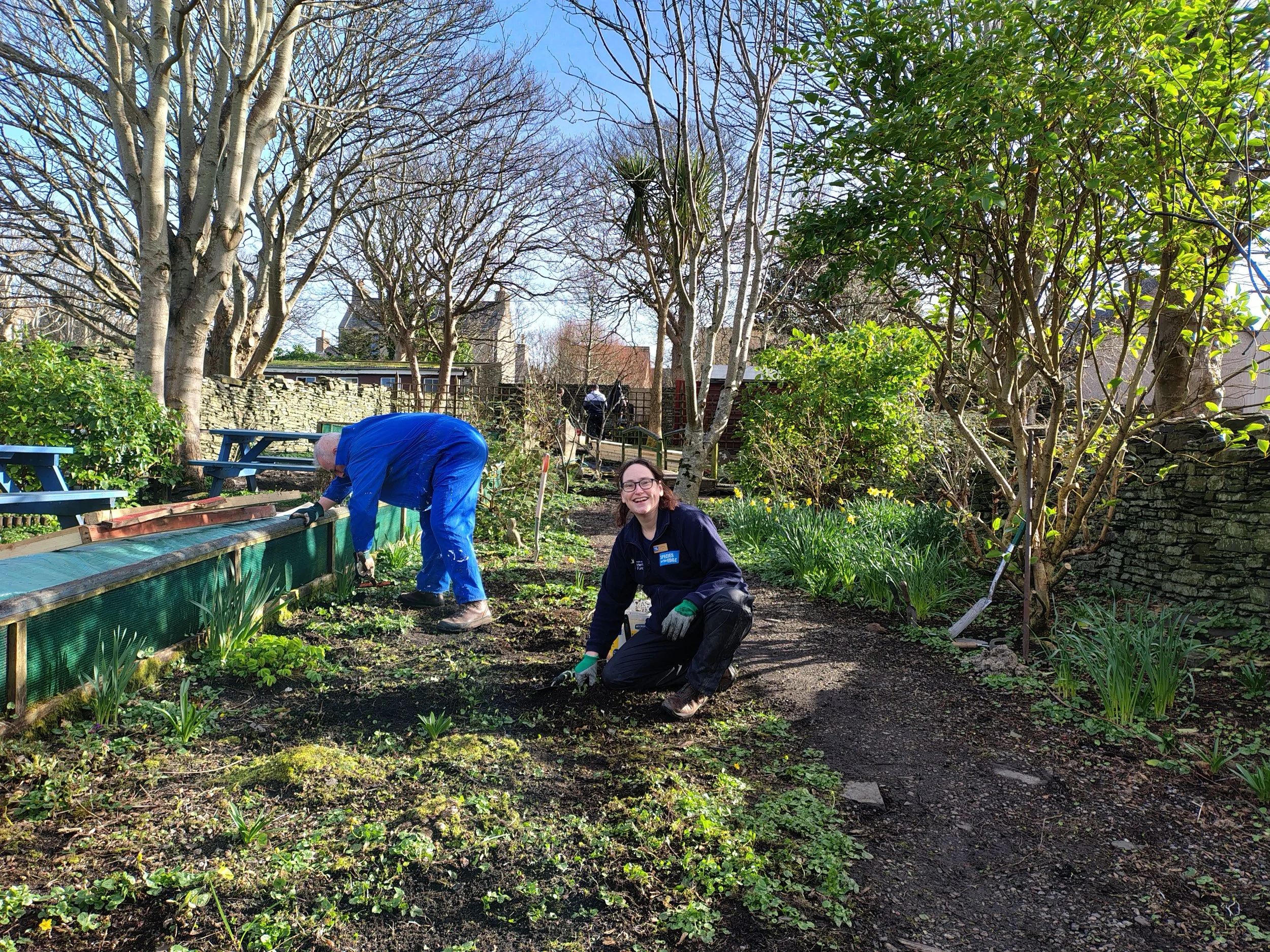
Above images: Establishing the start of a wildflower patch for pollinators with Red Clover in the Orkney Blide Trust garden, March 2025. The author is the one in the light blue hoody, with Sam facing the camera in photo 3.
Earlier in 2025 at a Ramblers Walk, I’d found myself talking to the Arts Officer for Orkney Islands Council, Emma Gee about trying to get momentum for my work and she mentioned that the last round of the Creative Scotland Visual Artists and Craft Makers Award (VACMA) for Orkney had been under-subscribed and that they planned an extra round in November 2025, with an information evening beforehand to help encourage applications. It was during the information event; that I got talking to one of the previous recipients who also bikepacked as part of her project on blackbird migration that made me feel that I could put an application in based on using my bike as part of a project. After receiving feedback from Emma that I needed to clarify ‘a link’ between my previous work and proposed project, that during searching wildflowers of the John Muir Way I came across the Buglife ICT B-Lines web page, a project about creating a network of pollinator corridors across the UK and looked across the map; there was the route of the John Muir (Pollinator) Way (the first B-line in Scotland established between 2015-2019) along with a corridor across Orkney including Barrier 4. There was the link; bikepacking B-line routes and recording the existing natural and recreated habitats for pollinators. I resubmitted my application for a check and got the go ahead that it was suitable to submit and in late November 2025 I got conformation that I’d been successful.
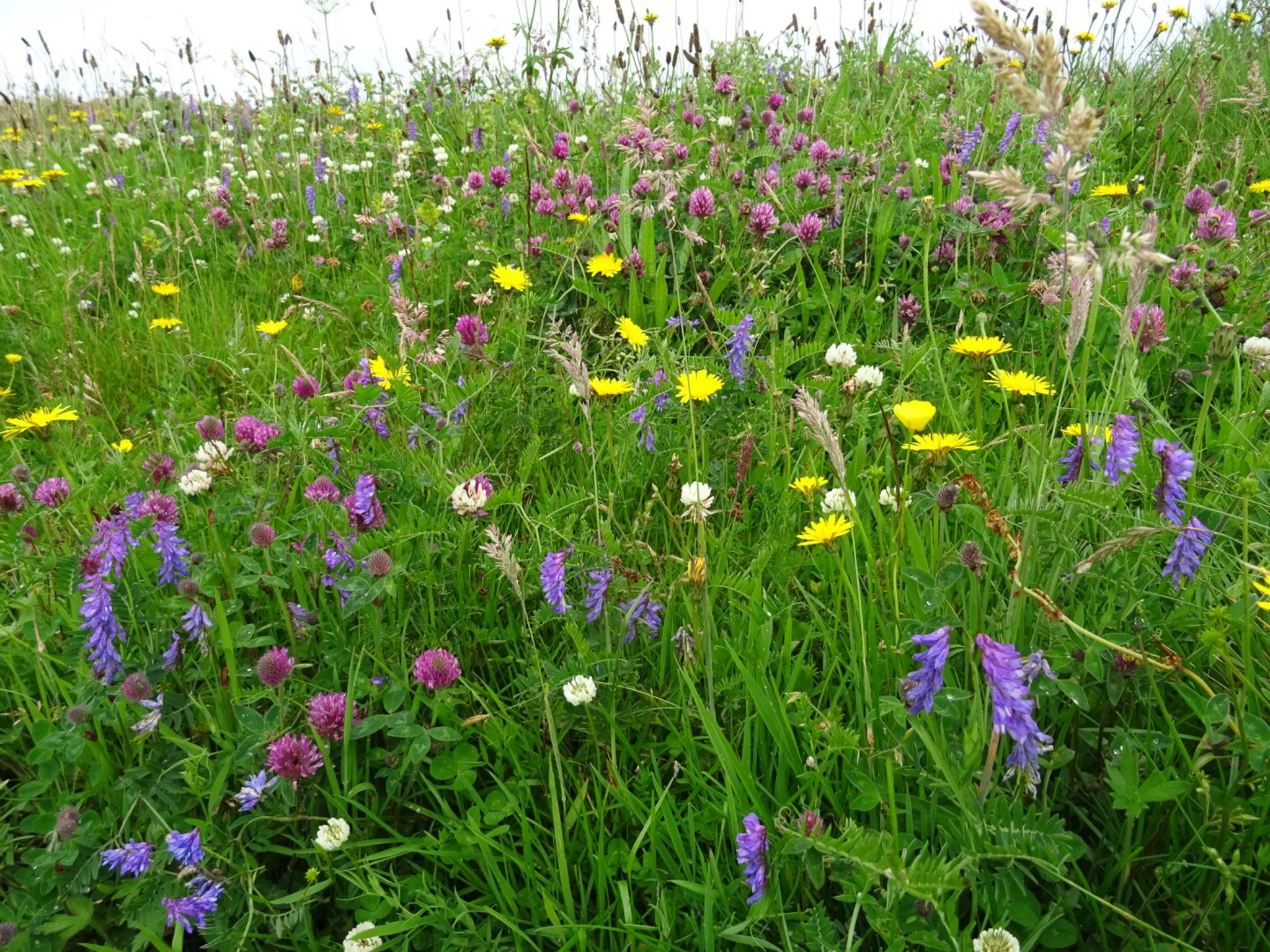
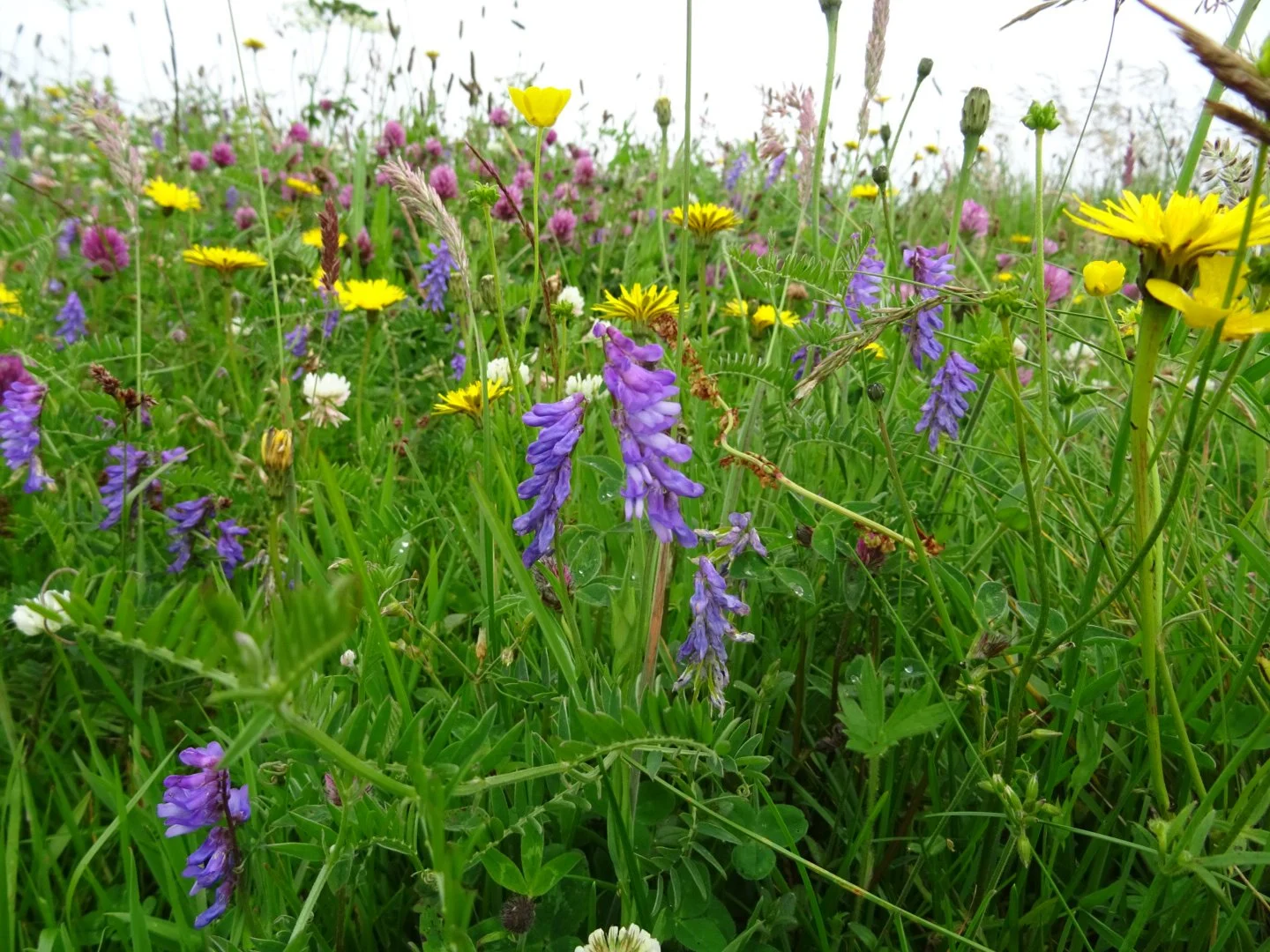
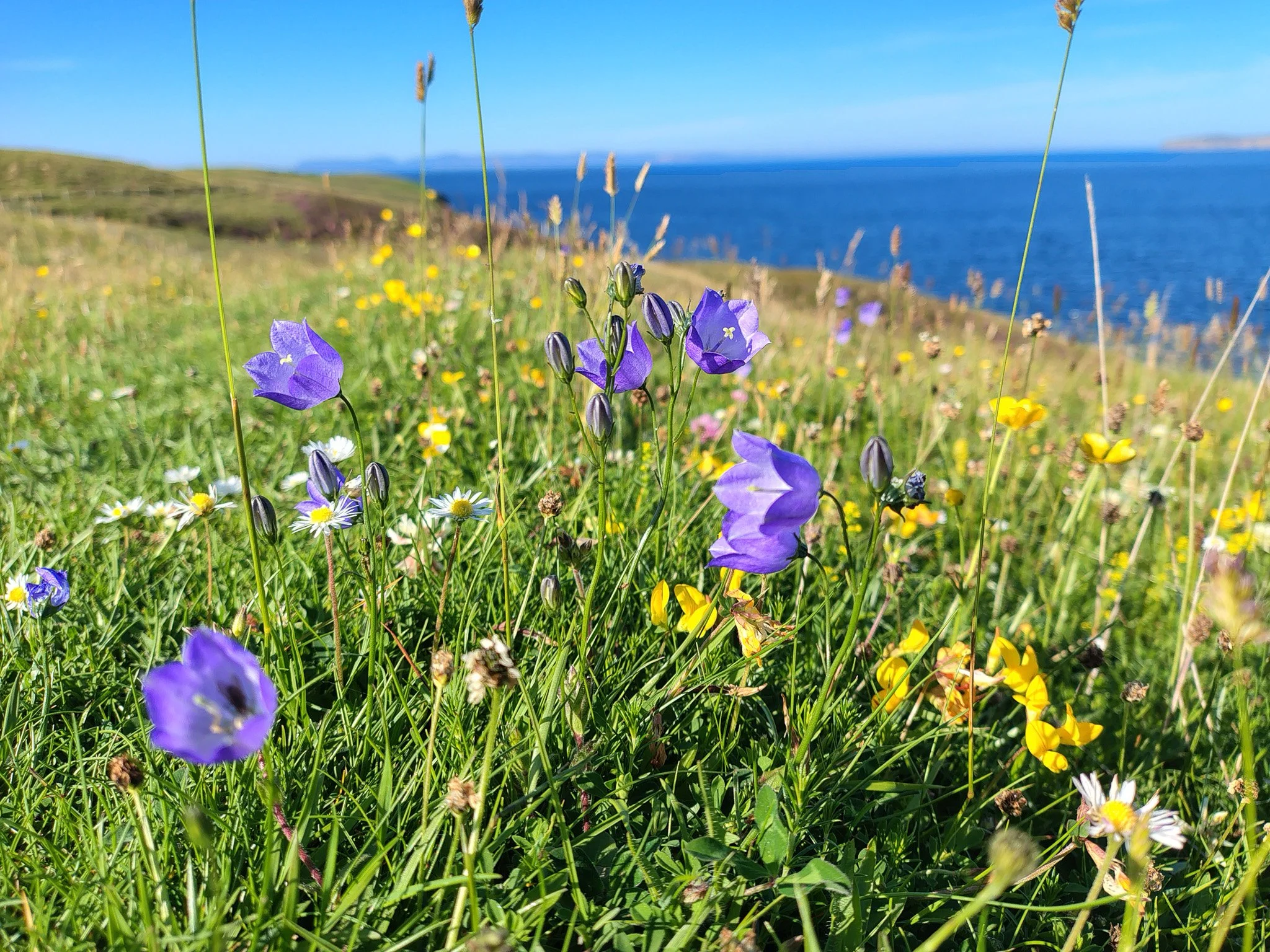
Above images: Local and North Highland examples of wildflower rich (machair-style) grassland which is essential for pollinators including the Great Yellow Bumblebee; species include; Trifolium pratense [Red clover] Lotus corniculatus [Common Birds-foot Trefoil}, Trifolium repens [White Clover], Vicia cracca [Tufted Vetch]
Moving forward
As an illustrator, 2026 is a year of momentum for me. At the time of publishing this my first major piece of commissioned work, illustrations to be partly used in the new Barrier 4 Interpretation Board will be finished and the project page for that is here. This has also created a major piece of portfolio work for myself and is the first completed work from a B-lines location, with its central coloured pencil illustration of Red Clover, Common Birds-foot Trefoil with the Great Yellow Bumblebee and Red Admiral Butterfly (which now forms my business logo). In addition I have produced four other pieces for the board of: The Little Tern, Ringed Plover, Skylark and Fulmar in watersoluble tinted graphite (which I’ve included on my business cards) I have also worked with a class of local schoolchildren who are completing their John Muir Award and have been learning about another Species on the Edge, the Plantain Leaf Beetle where I have done an illustration class with them on drawing the beetle followed by a botany class of the beetles food plants (project page here).
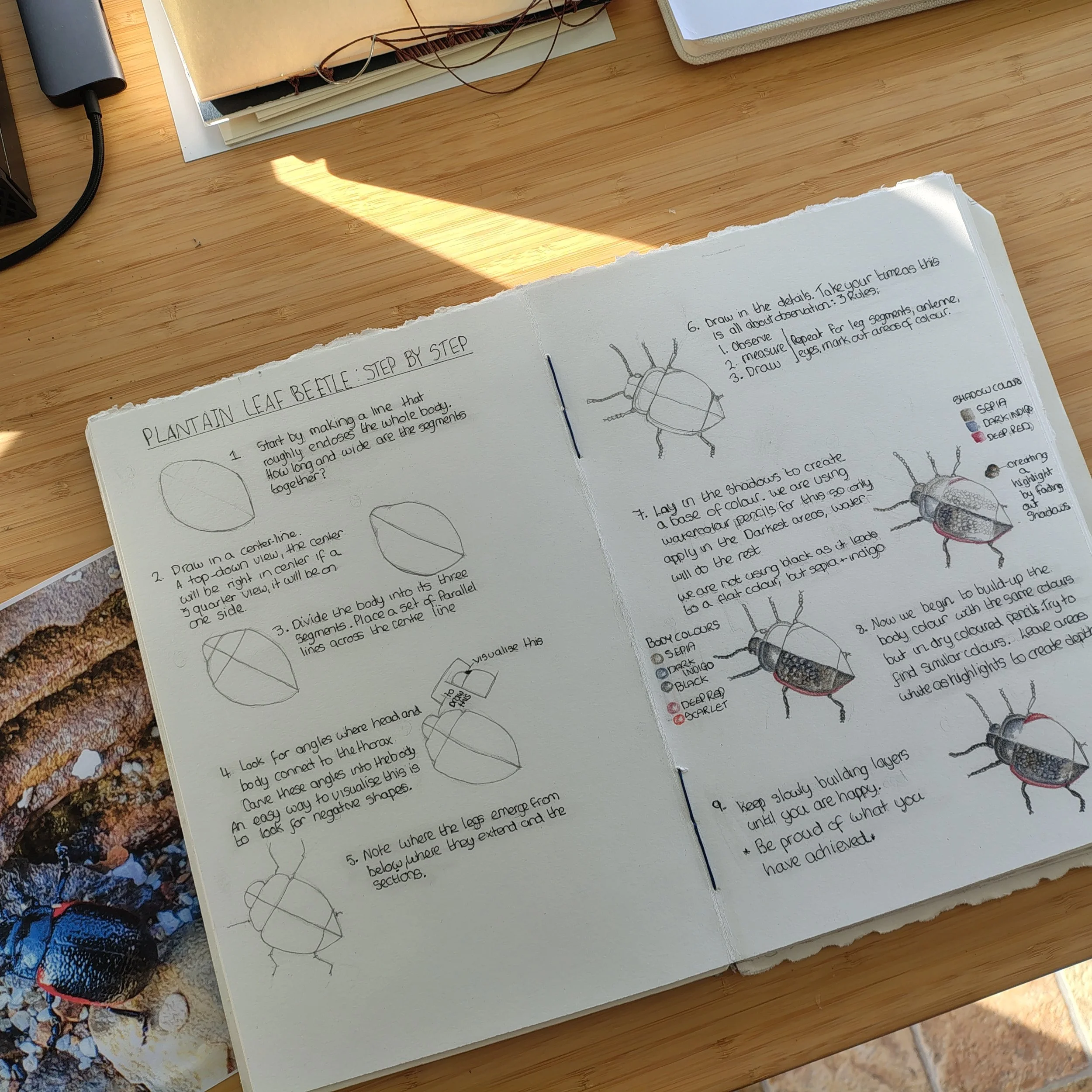
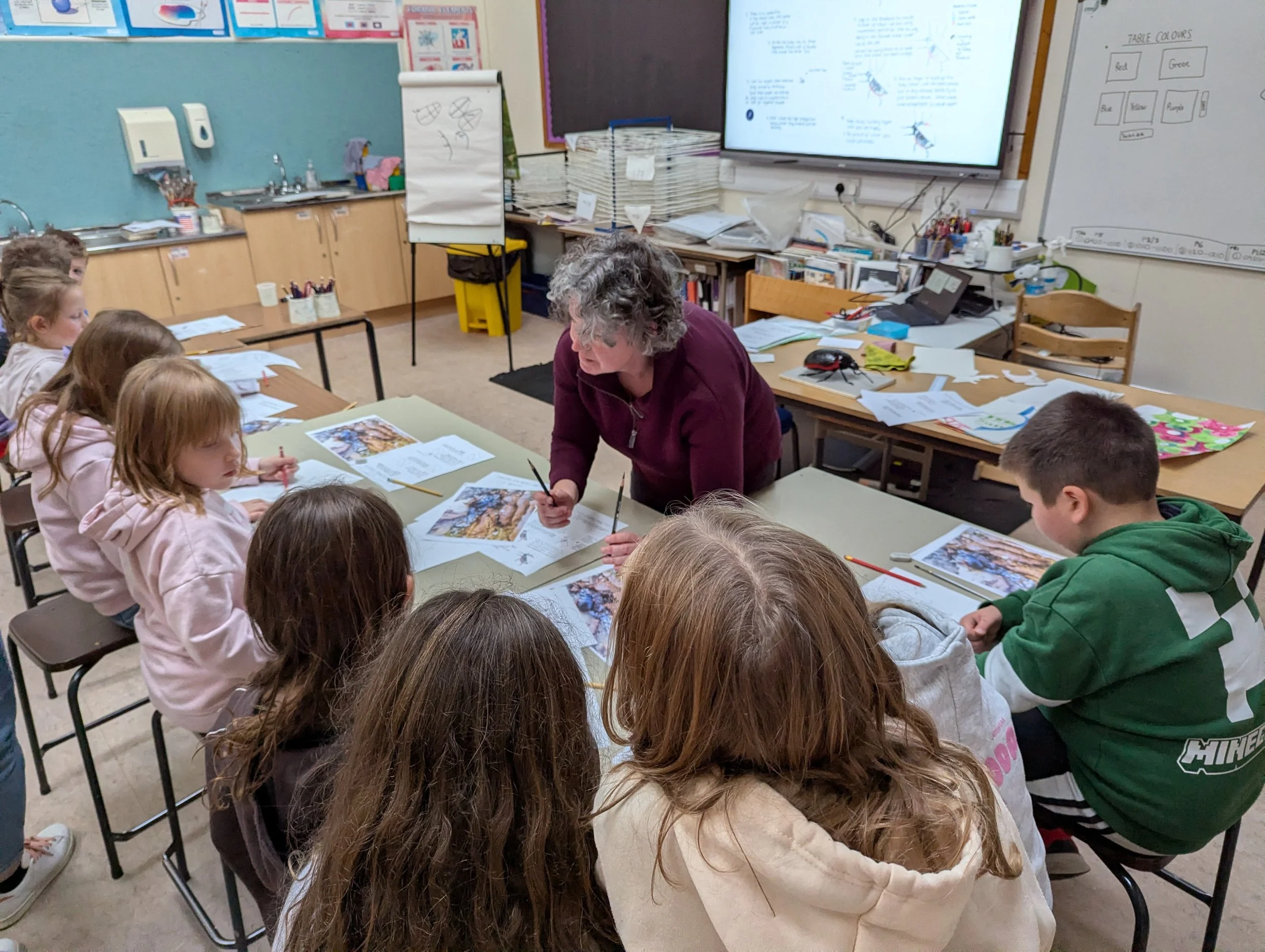
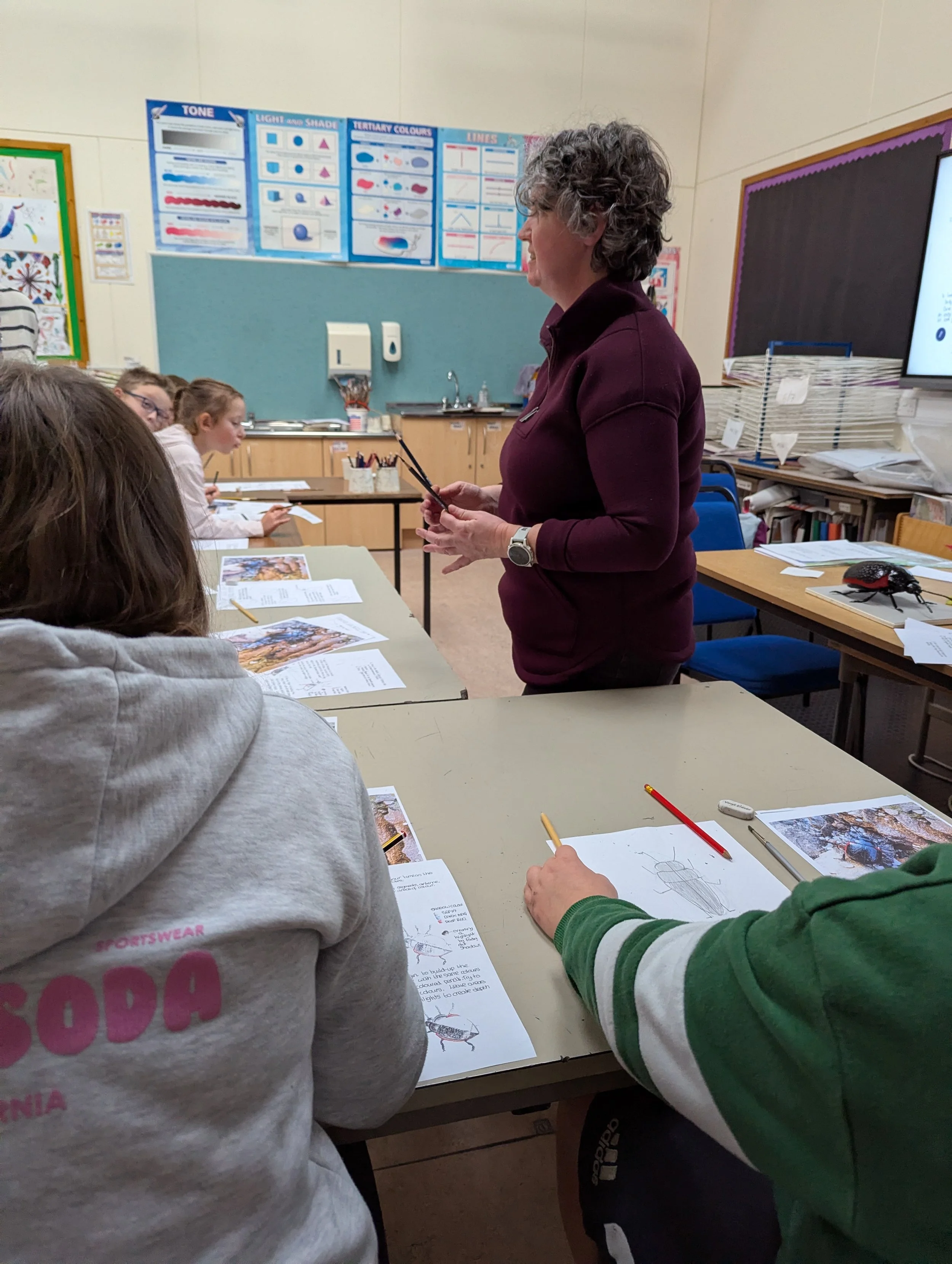
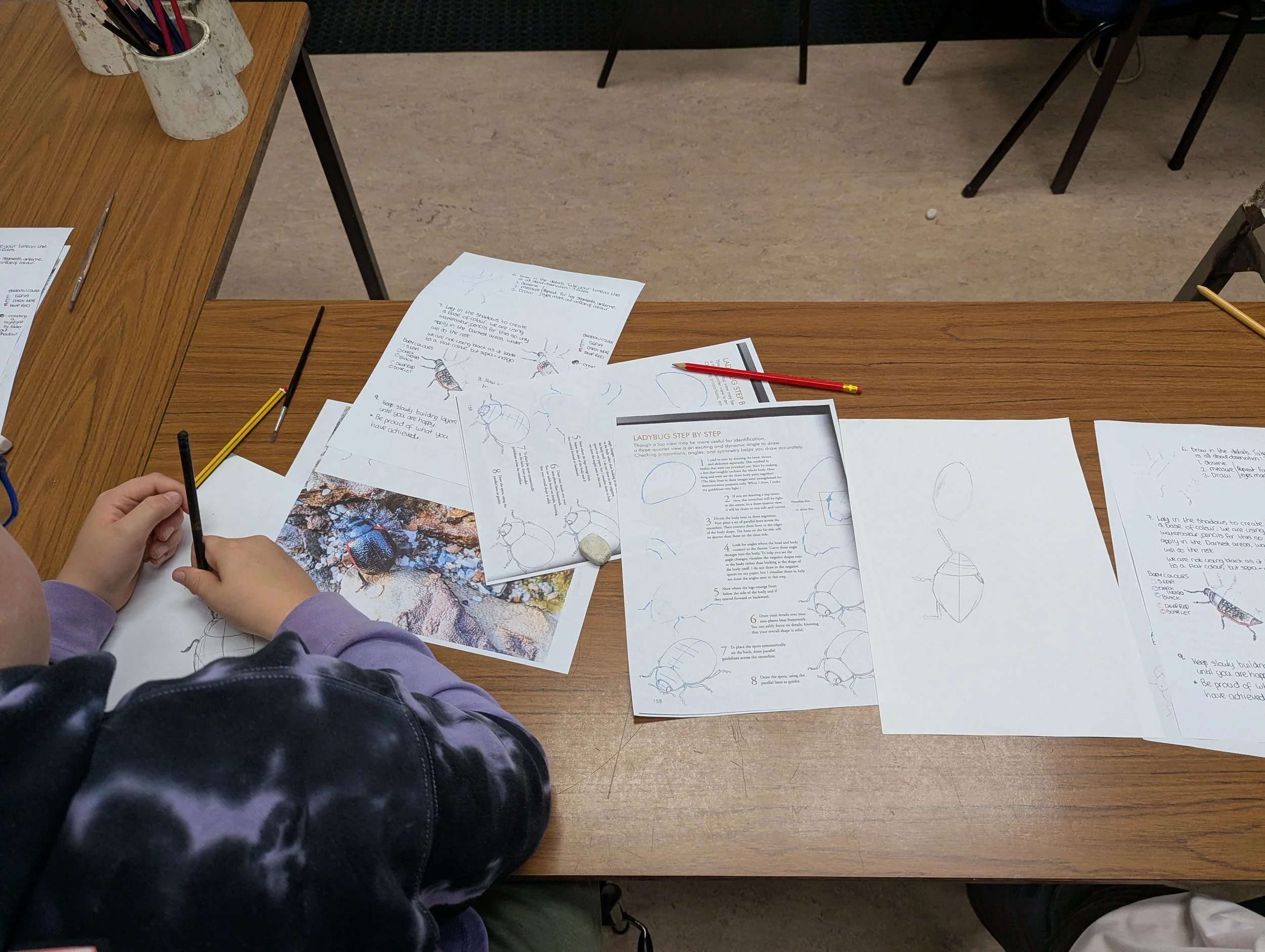
The beetle I helped them learn to illustrate, I have worked up into a full colour illustration in watercoloured pencil, traditional coloured pencil and Ink for a Buglife/ Species on the Edge postcard (project page here).
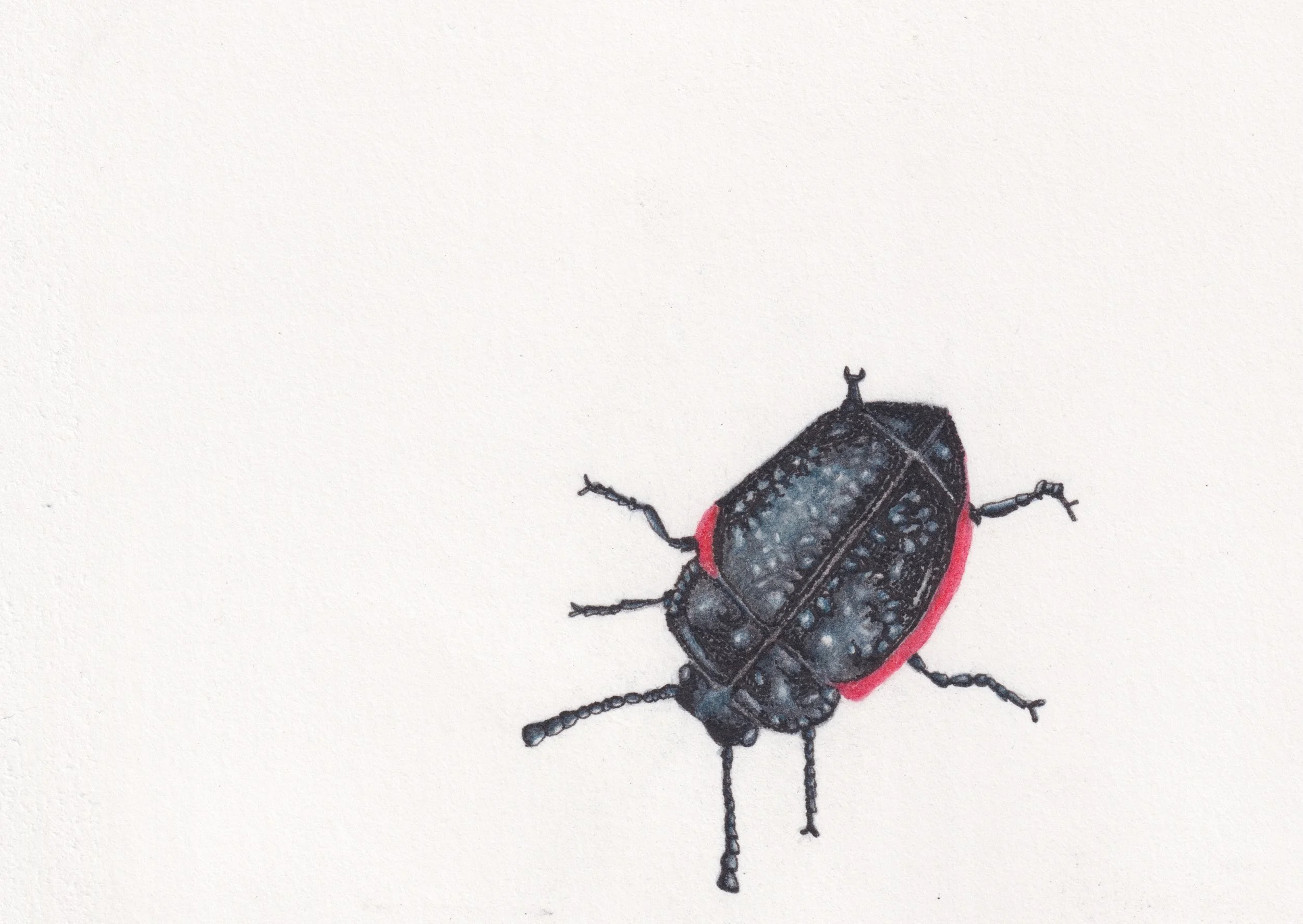
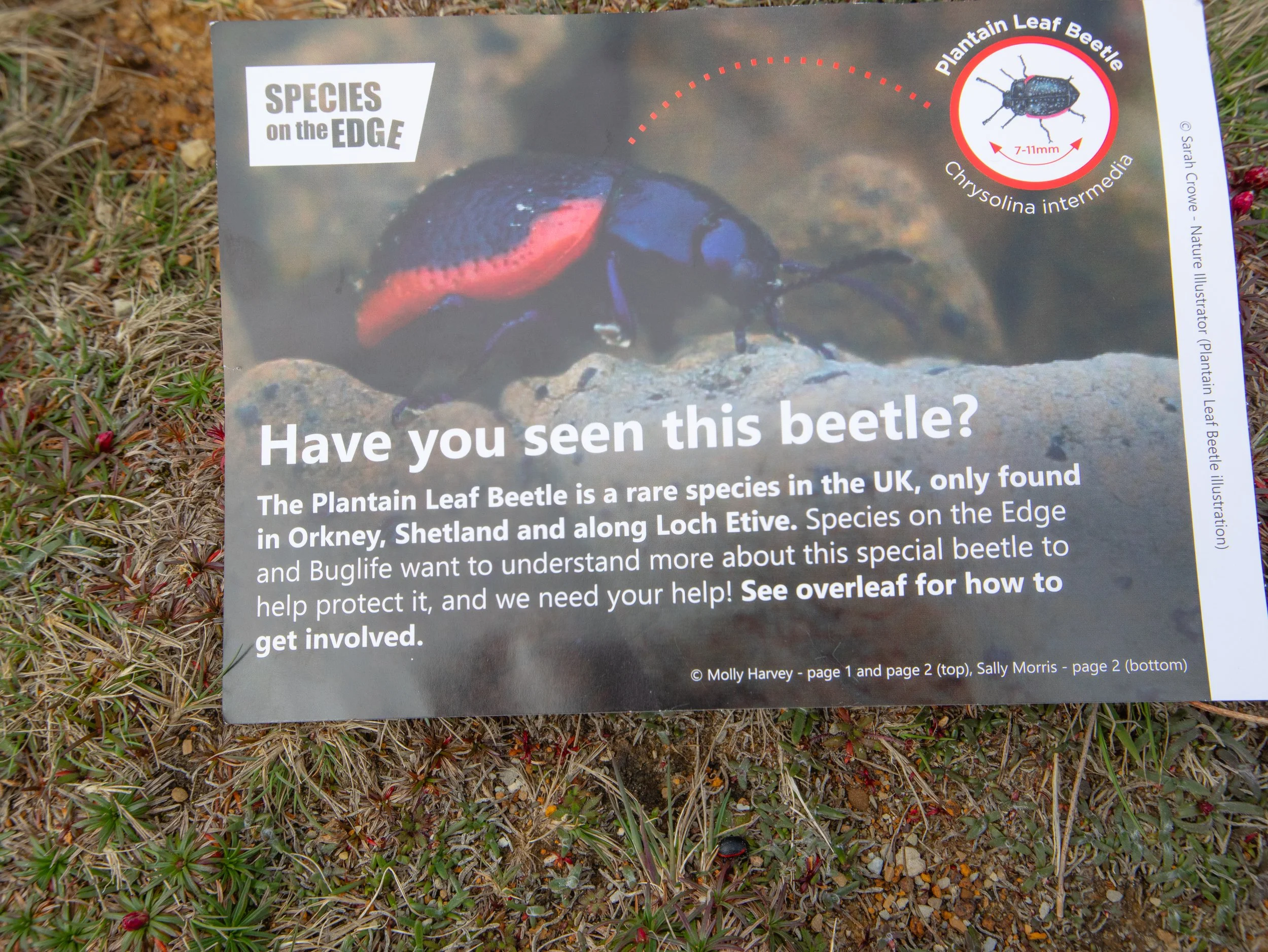
Above images: Left - Original beetle illustration and Right - The illustration in the postcard inset produced by Species on the Edge and Buglife ICT to encourage people to keep a lot out for, and record sightings of the Plantain leaf Beetle. The actual beetle is also in the photograph, look close and you’ll find it.
Looking ahead for Summer, after much reflection I decided to rework my John Muir Trust funded trip into an early summer exploration of the rest of Orkney’s B-line via bike, focusing on the section from Stromness to Birsay, then along to Evie. This will allow a natural expansion of what I’ve completed for Barrier 4, as well as helping improve my fitness and sketchbooking skills before my late June VACMA funded trip along the John Muir Way over 6 days, linking and recording natural sites and established wildflower areas. The John Muir Way is a varied landscape moving from the Eastern Lothian Coast, into the urban canalised central-belt, following disused railway lines which are now cycleways, passing through areas of woodland before emerging into the Campsie Fells and connecting with the first part of the West Highland Way, before passing below Loch Lomond and over to Helensburgh, utilising local accommodation along the way.
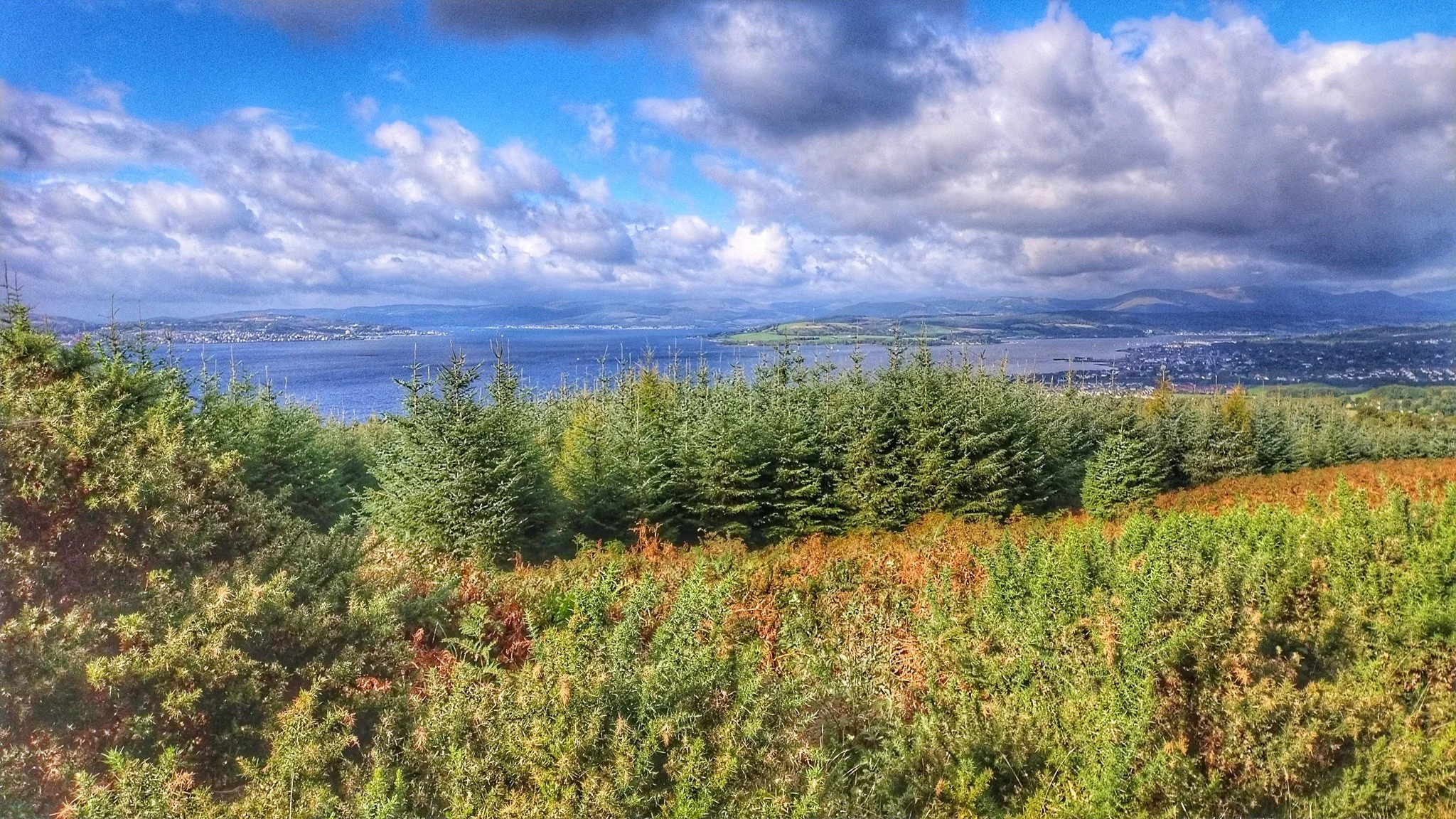
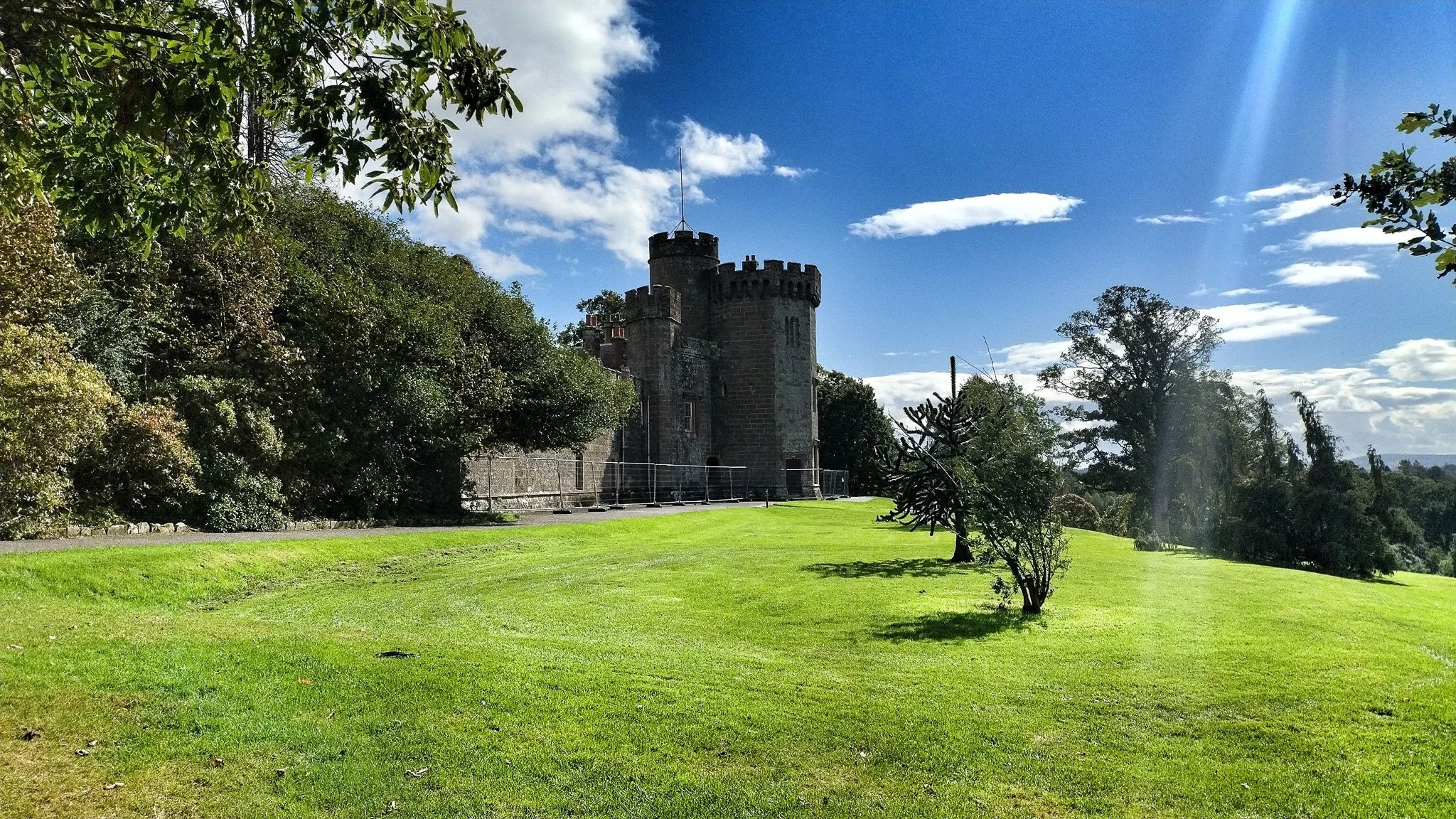
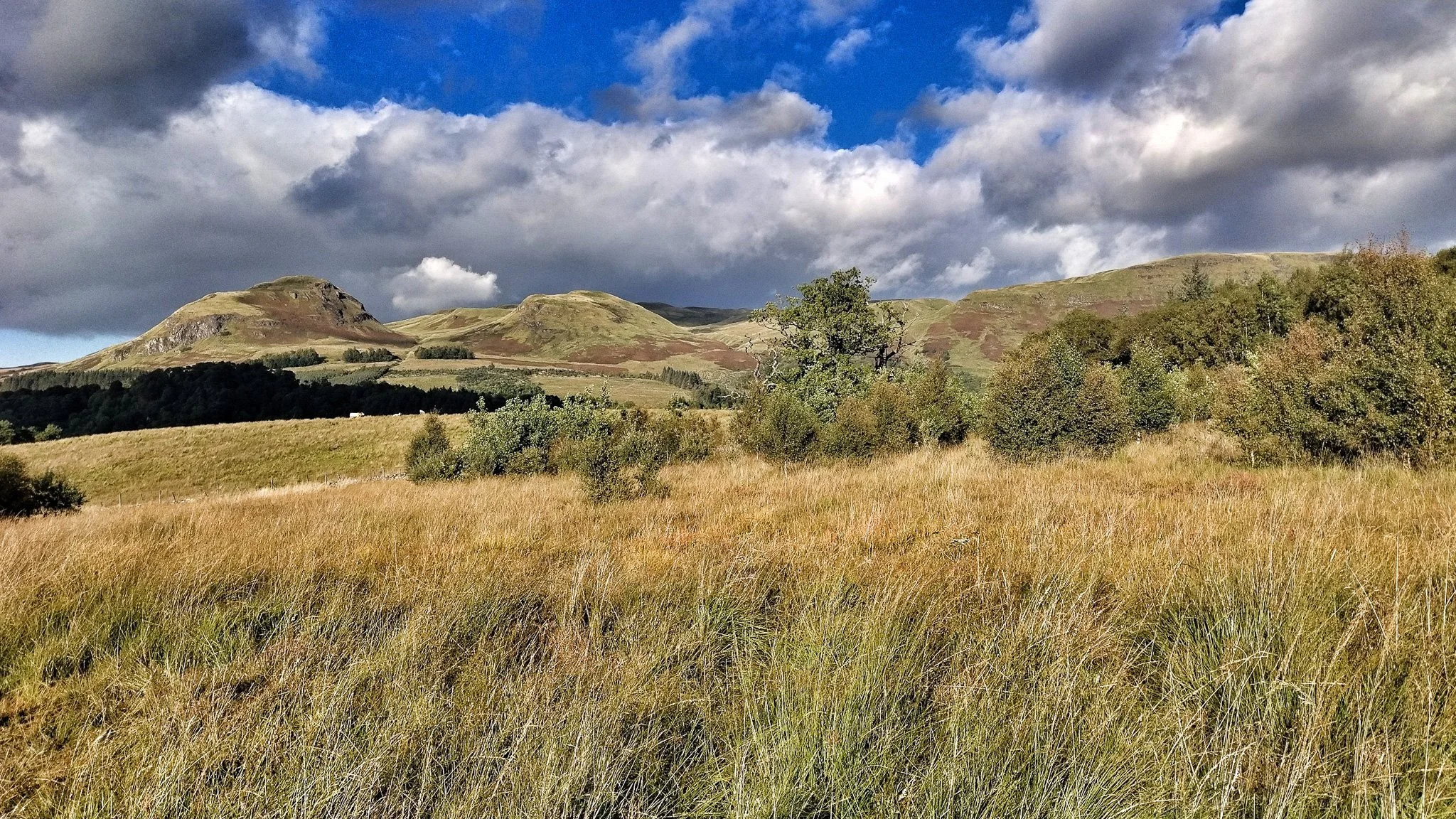
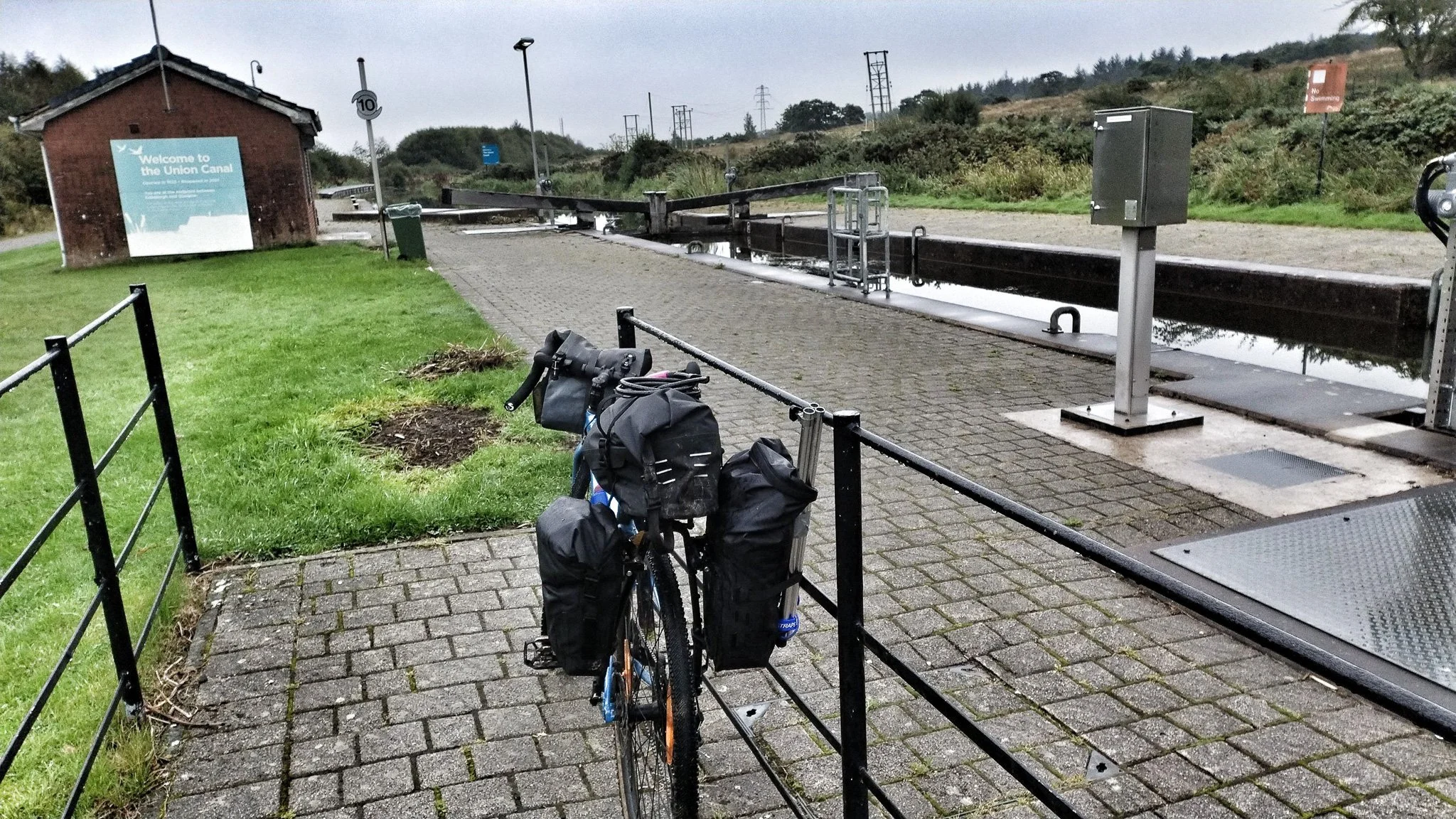
Above images: Landscapes of the John Muir Way from my autumn 2025 Bikepacking trip with Fellow Orkney Blide member, David. L to R; Views back over Port of Glasgow, Balloch Castle, Campsie Fells and The Great Union Canal, Falkirk
These journeys are about the plants and what they support; a Bees journey documented in pencil, Plant Biogeography re-imagined in a time of global climate uncertainty to help inspire; and equally a new journey back to myself and the future that comes with it; as there are many B-lines in the UK and potentially in Europe as well.
To be continued.